Stop asking “which wood crusher is best?” You might be wasting time and money chasing the wrong machine. Choosing incorrectly leads to inefficiency, high costs, and poor results. Getting it right starts here.
There’s no single “best” machine. The right choice—chipper, grinder, or shredder—depends entirely on your specific input material (wood type, size, contamination) and your desired output product (chips, sawdust, rough shreds).
The term “wood crusher” is actually quite broad. In the industry, we at Fude Machinery often talk about three main categories based on how they work and what they produce. It’s like comparing a hammer, a screwdriver, and a wrench – each is designed for a different job. Trying to use a chipper for a shredder’s job (or vice-versa) leads to frustration, damaged equipment, and wasted resources. Let’s clarify what these machines do and help you figure out which type fits your needs.
What’s the First Step to Choosing the Right Machine?
Confused about whether you need chips, sawdust, or just smaller pieces? Worried about damaging equipment with the wrong kind of wood waste? Choosing blindly is a recipe for disaster.
The critical first step is clearly defining your raw material (type, size, purity, moisture) and your target output (size, shape, uniformity, quantity). This information dictates the best machine type.
Before you even look at specific models, you need absolute clarity on two things: what are you feeding into the machine, and what do you need to come out? Answering these questions honestly and in detail is non-negotiable. Trying to use a machine designed for clean branches on demolition waste with nails will only lead to breakdowns and frustration. Similarly, expecting fine sawdust from a machine designed to make rough chips is unrealistic.
Analyzing Your Raw Material
This is fundamental. Be specific:
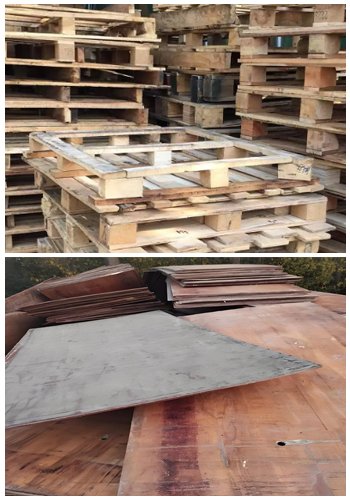
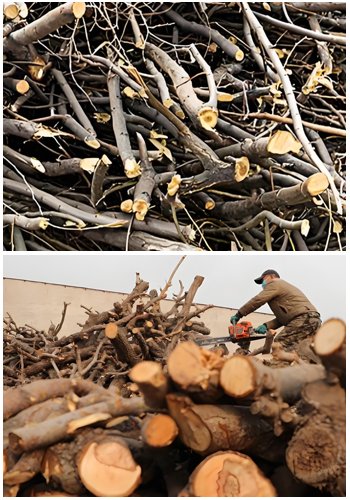
Type: Is it clean forestry residue (branches, small logs)? Factory offcuts? Used pallets (with nails/staples)? Construction and demolition (C&D) waste (mixed with dirt, concrete, metal)? Tree roots? Bamboo? Coconut shells?
Size: What are the maximum dimensions (diameter, length, width) of the pieces going in?
Purity/Contamination: How clean is the material? Does it contain soil, stones, metal (nails, hinges, rebar), plastic, or other non-wood items? The level of contamination drastically influences machine choice.
Moisture Content: Is it freshly cut green wood (high moisture) or seasoned dry wood? High moisture can affect the efficiency of some machines, particularly hammer mills, and may cause clogging.
Defining Your Target Output
What do you need the machine to produce?
Product Type: Uniform chips? Fine sawdust or powder? Fibrous material? Irregular shredded pieces?
Size Specification: Do you need a specific size range (e.g., 1-3 cm chips, 5mm sawdust)? How consistent does the size need to be?
End Use: What will the processed material be used for? (Biomass fuel, panel board, animal bedding, compost, mulch, pellet production, charcoal making, waste volume reduction?) This often dictates the required output characteristics.
Throughput: How much material do you need to process per hour or per day (in tons or cubic meters)? This determines the required machine size and power.
Key Questions
Your Specific Answer
Why it Matters
What is the main material?
e.g., Pine branches, Oak offcuts, Mixed demolition wood
Determines required machine robustness, cutting type
e.g., +/- 5mm consistency, Exact spec not critical
Impacts need for screens, machine type precision
Hourly throughput needed?
e.g., 2 tons/hour, 10 cubic meters/hour
Determines necessary machine model size and power
What Exactly Does a Wood Chipper Do Best?
Need consistently sized wood chips for high-quality applications? Processing relatively clean logs or branches? Using the wrong machine might give you inconsistent results or damage the equipment.
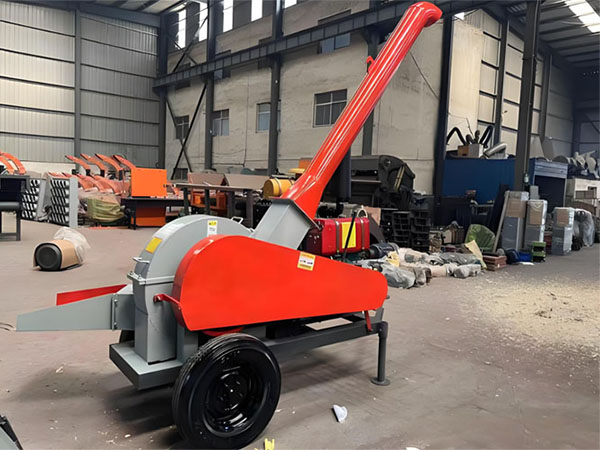
Wood chippers excel at producing uniform, precisely cut wood chips from cleaner wood sources like logs and branches, using sharp knives for a slicing action. Ideal for quality fuel or material feedstock.
Think of a wood chipper as a specialist focused on precision cutting. It’s not designed for rough, dirty jobs, but it excels at creating a specific, high-value product from suitable raw materials. We manufacture both drum and disc chippers at Fude Machinery, each with nuances, but the core principle is similar.
How Chippers Work
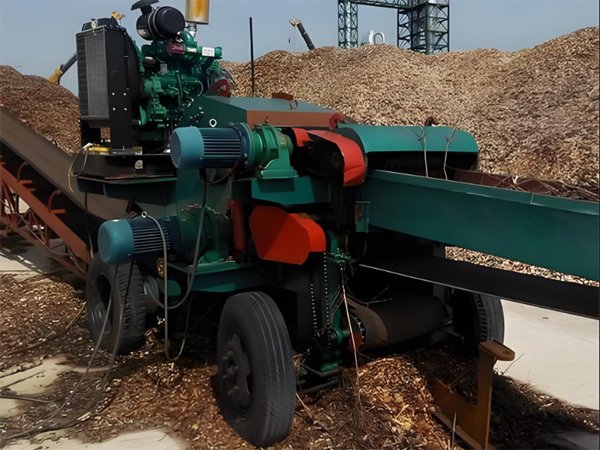
Chippers typically use a rotating disc or drum mounted with sharp knives. As the wood is fed into the machine (often aided by feed rollers), it meets these high-speed knives which slice off chips against a stationary anvil or bed knife.
Disc Chippers: Generally produce very uniform chips, often preferred for pulp/paper. Feed is usually perpendicular to the disc.
Drum Chippers: Often handle larger volumes and slightly more varied input (like branches with leaves). Knives are mounted on the surface of a heavy drum. Feed is usually tangential to the drum. The size of the output chips can typically be adjusted by changing the knife projection, the number of knives, or sometimes through screen systems in drum chippers.
Best Use Cases for Chippers
Chippers are the preferred choice when:
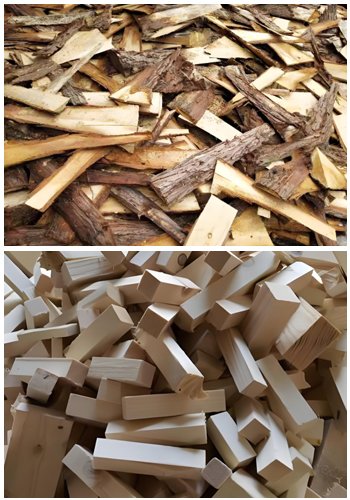
Input Material: Relatively clean logs, branches, sawmill offcuts, or debarked wood without significant contamination (nails, rocks).
High-quality biomass fuel for sensitive boilers requiring consistent sizing.
Raw material for pulp and paper production.
Feedstock for engineered wood panels (particleboard/fiberboard).
Decorative landscaping mulch.
Feature
Wood Chipper Characteristic
Benefit
Mechanism
High-speed rotating knives cutting action
Produces clean-cut, uniform chips
Input Material
Clean logs, branches, un-contaminated wood
Protects knives, ensures output quality
Output Product
Uniform wood chips (size adjustable)
Meets specs for fuel, pulp, panel boards
Contaminant Tol.
Low
Cannot handle nails, rocks, metal well
Key Goal
Precise size, high-quality chip production
Ideal for specific industrial feedstocks
When Should You Consider a Wood Grinder or Hammer Mill?
Need finer material than chips? Processing a mix of wood types, maybe even agricultural waste? A chipper won’t give you sawdust, and a shredder might be overkill or produce too coarse a product.
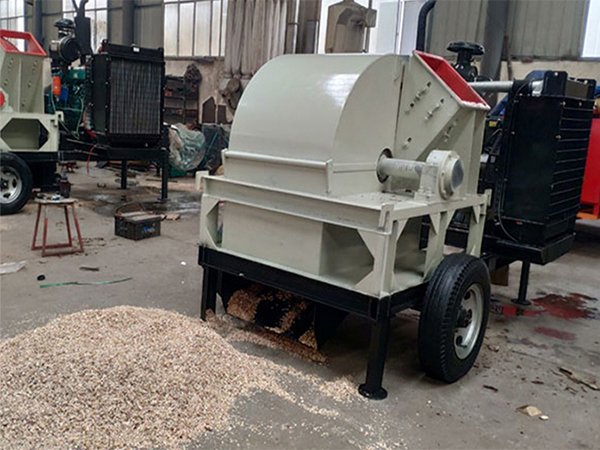
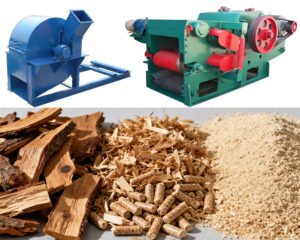
Wood grinders (often hammer mills) use high-speed rotating hammers to pulverize material against screens, producing finer, particle-like or sawdust-like output. They handle diverse biomass but are sensitive to contaminants.
If your goal is particle size reduction beyond what a chipper produces, or if you’re dealing with varied biomass materials, a grinder, particularly a hammer mill, is often the workhorse you need. At Fude Machinery, our hammer mills are designed for versatility in biomass processing.
Inside a Hammer Mill
Imagine a chamber lined with grating or a perforated screen, inside which a rotor spins at high speed. Attached to this rotor are numerous swinging hammers. Material fed into the chamber is repeatedly struck by these hammers, shattered, and ground against the screen and breaker plates. It remains inside until it’s small enough to pass through the screen openings.
Output Size Control: The final particle size is primarily determined by the hole size in the screen. Changing the screen is the main way to adjust the output fineness.
Material Flexibility: They can process wood chips (often used after a chipper for finer results), sawdust, shavings, bark, crop stalks (straw, corn cobs), and other fibrous materials.
Applications for Grinders
Grinders/Hammer Mills are commonly used when:
Desired Output: Fine particles, sawdust, or fibrous material. Size control via screens is a key feature.
Input Material: Can handle less uniform input than chippers, including pre-chipped wood, small wood blocks, agricultural residues. Must be relatively free of hard contaminants (stones, metal) which cause rapid wear and damage. High moisture can sometimes lead to screen blockage.
Primary Applications:
Raw material preparation for wood pellet production.
Making sawdust for animal bedding or absorbent uses.
Creating substrate (wood dust/bran) for mushroom cultivation.
Producing feedstock for wood-plastic composites (WPC).
Grinding material for mechanized charcoal briquette production lines.
Processing biomass for composting or soil amendment.
Feature
Wood Grinder / Hammer Mill Characteristic
Benefit
Mechanism
High-speed hammers impacting against a screen
Pulverizes material into smaller particles
Input Material
Chips, blocks, biomass, agri-residues (clean)
Versatile for various organic materials
Output Product
Sawdust, powder, fibrous (screen controlled)
Adjustable fineness for specific applications
Contaminant Tol.
Low to Medium (accelerates wear significantly)
Best with pre-cleaned or low-contaminant feed
Key Goal
Fine particle size reduction, biomass processing
Ideal for pellets, bedding, substrate, etc.
Why Might You Need a Powerful Wood Shredder?
Dealing with bulky waste pallets containing nails? Processing tough tree stumps or mixed demolition wood? A chipper’s knives would be destroyed, and a grinder might choke or wear out instantly.
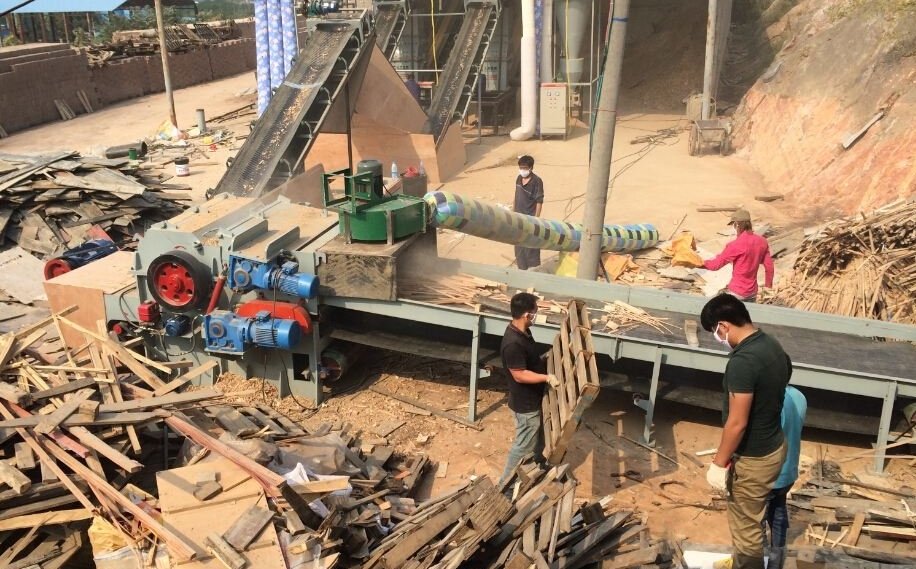
Wood shredders use low-speed, high-torque cutters to aggressively tear and shear bulky, tough, or contaminated wood waste. Their main goal is volume reduction and coarse pre-processing, not fine output.
When the going gets tough, the tough get shredding! Shredders are the heavy lifters of the wood processing world. They are designed with brute force and resilience in mind, sacrificing output uniformity for the ability to handle difficult materials that would destroy other machines. Fude Machinery offers robust shredders specifically for these challenging applications.
The Power of Shredding
Shredders typically employ one, two, or four shafts equipped with thick, hook-like cutters or knives rotating at low speed but with immense torque. Material is grabbed by these cutters and pulled down, where it is sheared, torn, and ripped apart between the rotating cutters and stationary elements or between counter-rotating shafts.
High Torque, Low Speed: This design allows them to process tough materials and handle moderate contamination without the catastrophic failures high-speed machines might experience.
Contaminant Tolerance: They are designed to handle items like nails, screws, hinges, and small amounts of concrete or rocks often found in waste wood, although large metal pieces should still be removed. Magnetic separators are often used after shredding.
When Shredders Shine
Shredders are the best choice when:
Input Material: Bulky items (pallets, furniture, C&D wood), tough materials (stumps, large logs), contaminated wood (with nails, staples, some debris). Material uniformity is low.
Desired Output: Irregularly sized chunks or strips. The primary goal is volume reduction or liberation (breaking things apart), not precise sizing. Output size depends on cutter width and configuration.
Primary Applications:
Waste volume reduction for lower transport and landfill costs.
Pre-processing material for Waste-to-Energy (WTE) plants (producing Refuse-Derived Fuel – RDF).
Initial size reduction before feeding material into a secondary grinder for finer processing.
Core machine in wood recycling facilities dealing with mixed inputs.
Breaking down oversized logs or stumps.
Feature
Wood Shredder Characteristic
Benefit
Mechanism
Low-speed, high-torque cutters shearing/tearing
Handles tough, bulky, contaminated materials
Input Material
Pallets, C&D wood, stumps, mixed waste wood
Robustness to handle difficult inputs
Output Product
Irregular chunks/strips (coarse)
Primarily for volume reduction, pre-processing
Contaminant Tol.
High (designed for nails, moderate debris)
Suitable for recycling and waste streams
Key Goal
Volume reduction, handling difficult materials
First step in processing challenging waste wood
How Do Different Industries Choose Their Machines?
Knowing the differences is one thing, but how does this translate to real-world operations? Seeing which machine fits where can help solidify your understanding and guide your own choice.
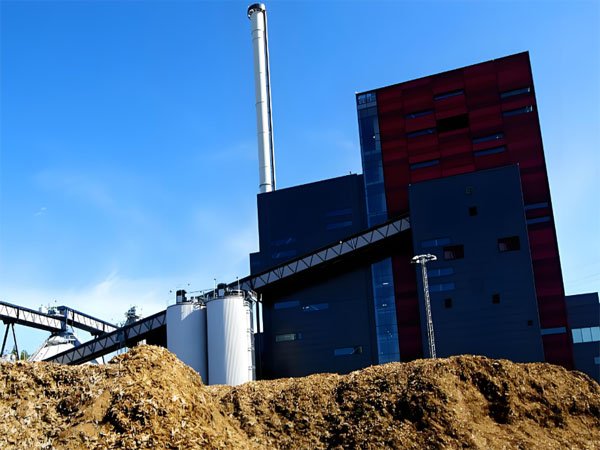
Industry choice depends on the typical feedstock and required product: Biomass often uses chippers or shredder+grinder combos, panel boards need precise chippers/flakers, recycling centers rely heavily on shredders.
Let’s look at some common scenarios I’ve encountered working with clients at Fude Machinery:
Biomass Power Plants
The choice here depends heavily on the fuel source and boiler specifications.
Clean Forestry Residue: Large drum chippers are often used to produce specified chip sizes (e.g., P31S, P45S according to ISO 17225) directly.
Recycled Waste Wood: This often requires a more robust approach. A primary shredder breaks down the mixed, potentially contaminated waste wood. Magnetic separation removes ferrous metals. Screening might remove fines or oversized pieces. Then, a secondary grinder (hammer mill) achieves the final required particle size for the boiler (often finer than standard chips).
Panel Board Factories (Particleboard/MDF)
Precision is paramount here.
Particleboard: Often uses specialized machines called flakers or knife ring flakers, which are similar in principle to chippers but designed to produce specific thin flakes or strands from logs or blocks. Standard chippers might be used for initial sizing or processing residues.
Medium Density Fiberboard (MDF): Typically uses chippers to produce uniform chips first. These chips are then processed in refiners or defibrators (a specialized type of high-energy grinding/fiberizing process, often involving steam) to create wood fibers. Grinders might be used for processing recycled material or internal waste streams.
Waste Wood Recycling Centers
These facilities receive highly variable input.
Shredders are the workhorses. They handle the mixed stream of pallets, furniture, C&D wood, etc., reducing volume and liberating materials. Robustness and contaminant tolerance are essential.
Downstream processing depends on the target market: screening to sort sizes, further grinding if finer material (like animal bedding or biomass feedstock) is desired, and always metal separation.
Landscaping / Arboriculture / Forestry Operations
Needs vary by scale and material.
Tree Care / Landscaping: Mobile disc or small drum chippers are very common for processing branches and small logs into chips for mulch or easy disposal. For mixed green waste or occasional larger pieces, compact shredders or multi-purpose grinder-chippers are sometimes used.
Forestry: Larger mobile chippers (often drum style) process logging residues directly in the field for biomass fuel.
Industry
Typical Input Material
Primary Goal(s)
Common Machine(s)
Biomass Power
Clean logs OR Recycled wood
Fuel prep (specific size)
Chipper OR Shredder + Grinder
Panel Board (PB/MDF)
Logs, clean wood
Precise flakes OR fibers
Chipper, Flaker, Refiner
Wood Recycling
Mixed waste wood, pallets, C&D
Volume reduction, material liberation
Shredder (Primary), +/- Grinder (Secondary)
Landscaping/Forestry
Branches, logs, green waste
Volume reduction, mulch, biomass
Mobile Chipper (common), Shredder (for tougher)
Conclusion: Making the Smart Choice for Your Needs
Choosing between a chipper, grinder, and shredder doesn’t have to be confusing. There is no single “best,” only what’s right for your specific situation.
Focus first on your material and desired output. Then, match those needs to the machine designed for the job—chipper for uniform chips, grinder for fine particles, shredder for tough waste.
Choosing the wrong wood processing machine wastes time and money. Are you unsure if you need a chipper, crusher, or shredder? Let us guide you to the perfect fit. The best machine depends entirely on your raw material type (clean wood vs. waste...
A wood chipper is a powerful machine that cuts large pieces of wood into small, uniform pieces called wood chips. We at FUDE Machinery are a specialized B2B manufacturer of these machines. The main job of a wood chipper is to take low-value raw m...
 Fude Machinery-wood crusher manufacturer

HelloPlease log in