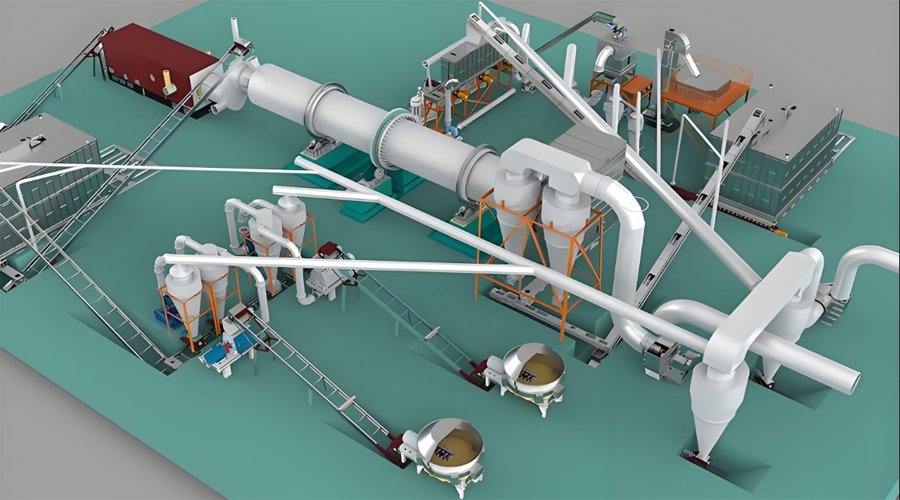
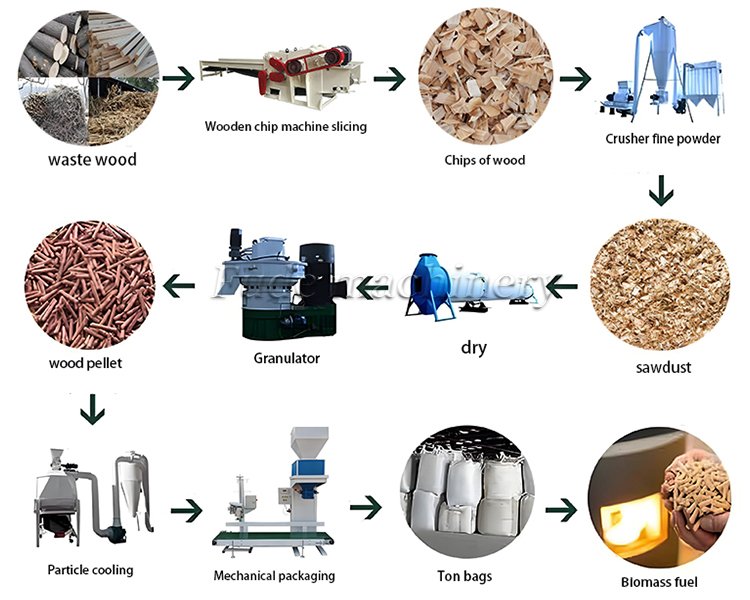
The biomass pellet manufacturing technology mainly includes steps such as raw material collection and pretreatment, crushing, drying, pressing, cooling, and packaging. By compressing biomass raw materials under high temperature and high pressure, high-density and combustible pellet fuels are finally produced.
Introduction to Biomass Pellet Fuel
Energy is the foundation of our existence and development, The continuous consumption of non-renewable energy makes human beings turn to exploit and utilize renewable, environmental-friendly biomass energy, which takes biomass fuel as a representative. Biomass energy has become a strategic choice for the sustainable development of civil society and the development direction. It can not only supplement the shortage of theconventional energy sources, but also has great environmental benefits. Compared with other biomass energytechniques, biomass pellet fuel is easy to achieve mass production and use. It can rival gas and fuel oil in convenience.
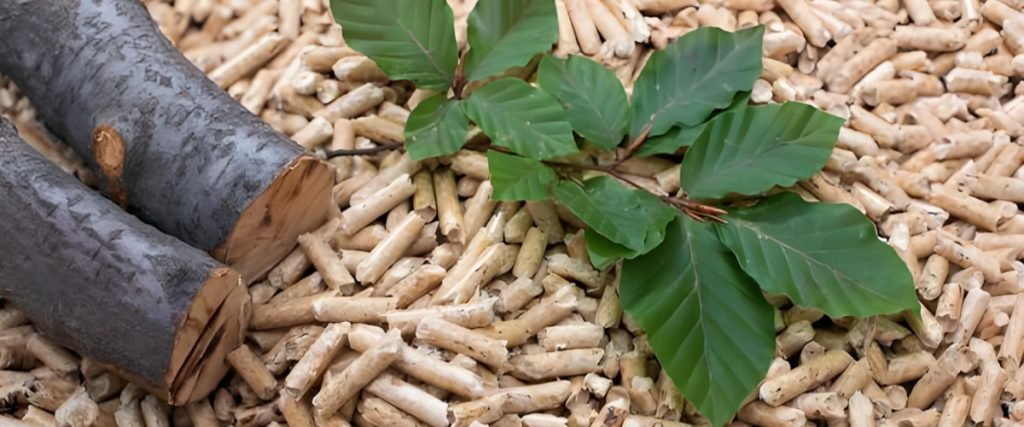
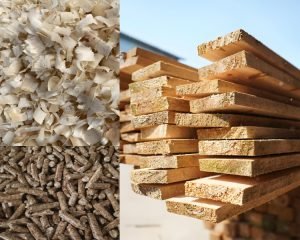
Biomass pellet fuel is a high-density, combustible solid fuel made from agricultural waste (such as straw, rice straw, forestry residue, etc.) through processes such as crushing, drying, and compression. It has the advantages of being clean, environmentally friendly, efficient, energy-saving, and renewable, and is widely used in industrial boilers, household heating, and power generation.
The Necessity of Developing Biomass Fuel
With the increasing consumption of traditional energy, new energy should be exploited because of serious shortage of resource. In China, we own rich pellet fuel resources. At present, the main resources can be exploitedand used includes: crop straw, fuel wood, residues, waste wood in the municipal solid waste and something else.According to the theoretical calculation, our wood pellet fuel resources can be up to 5 billion tons. Biomass pelletfuel usually refers to solid fuel of cylinder shape which is less than 25mm in diameter. The density of pellet isincreased before compression can be up to 1.2-1.4kg/m3. A 7596 to 909% reduction in volume, so that it’s easy tobe stored and transported. The size is in uniformity with good fluidity, facilitating automated transmission andcombustion. Pellet fuel is a kind of natural biomass fuel, during producing process, there is no need to addadhesive. Result of low moisture content, it’s easy to adjust combustion air and the combustion effciency is highAverage gas emission produced by combustion is 1.2g/h which is much lower than 7.5g/h stipulated by USEPA.Biomass pellet fuel imn granular or block-shaped may greatly raised the combustion efficiency of materialsThermal efficiency can increase by more than 8o%. According to calculations, heat generated by 1.2 t wood pelletand 1t coal is equivalent, Biomass pellet fuel comes from biological waste without chemical substances, such asfissile and explosive chemicals. The poisoning, explosion, leakage accident wil not happen during combustion.
Development history of biomass pellet fuels at home and abroad
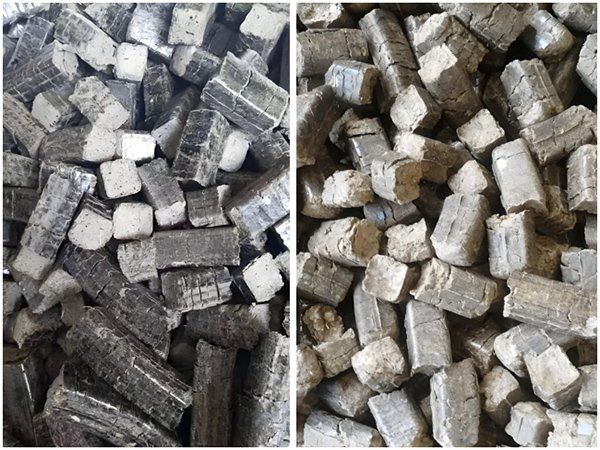
The usage of biomass pellet fuel burner started in 197os, but until later 1g80, many European countries(like Sweden, Finland, Belgium, France, Germany, Italy) began to attach importance to research and exploitationof biomass fuel technology result of world energy crisis and rising price of oil. Nowadays, it has formed the industrialized production with remarkable achieyements, France starts to use straw pellets as the dairy cow feedIn recent years, they also research and produce block-shaped fuel. Converting forestry waste in briguettes withcertain shape by mechanical pressing has reached the practical stage.
Pelletizing Technology
Drying: because of high moisture content in sawdust (usually 50%), it should be dried to the 99-12% moisturecontent in the raw material to satisfied the need of forming. The dryer is equipped with direct heating rotarydrum(rotary drum dryer).
Powdering: After drying, raw material need to be powdered, hammer powder machine. The general size is 1mmQuenching and tempering treatment: it refers to soften wood fber in raw material, replenishing and increasinghigh-temperature steam into raw material. More than half pellet fuel plant adopted this technique duringproduction.
Pellet-forming: Most of the biomass pellet plants adopt the die roll extrusion molding principle, that meansvertical ring die forming machine, and capacity is 2-4t/h. The major components have long service lifeRing die is 2000-30ooh and the compression roll is 1000-150oh.
Cooling: The temperature of pellets discharged from pellet mill is about 100 ,, pellet in that condition is easy tobe break and should not be stored and transported. Therefore, pellets need to be cooled down by cooler withcounter flow cooling principle.
Picking and packing: After cooling, pellets are picked and packed according to consumers different needs.Packing specification may be classified into small bag(16kg) and large bag(gookg) by different needs. For thelarge customer like thermal power plant can be transported by trunk or boat in bulk.
Research on Ring Film Granulation Technology
Structure and working principle of ring film granulator
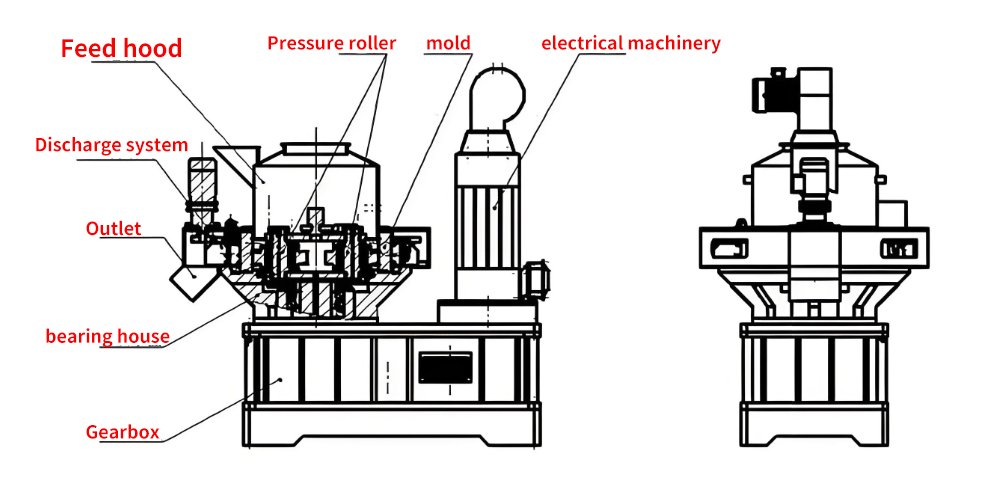
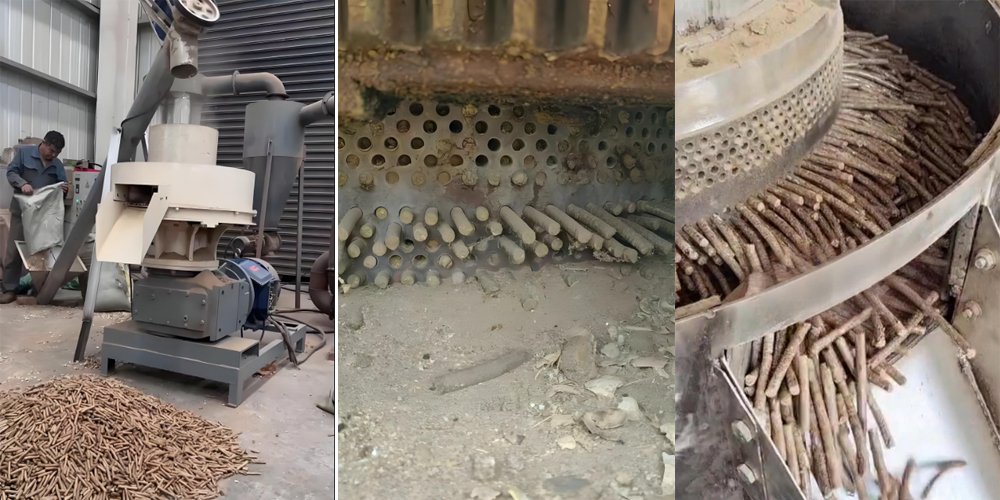
The ring film granulator consists of a motor, a reducer gearbox, a main shaft, a transmission shaft, a ring mold, a pressure roller, a forced feeding machine, a body, and a gate. The motor drives the rotation of the annular mold, and the external material in the annular mold drives the rollers to rotate. When the material is transported to the working area through the forced feeding machine, as the annular mold and the pressure roller rotate, the material in front of the pressure roller is crushed into a compression zone, and the material is crushed in this zone. The gap in the material rapidly narrows, and the stress and density inside the material increase. The elastic deformation of the material changes to plastic deformation. When the material reaches its density, it will be forced through the mold hole, and under a certain pressure, the material with a certain density will be extruded from the mold hole, becoming biomass particle fuel.
The development prospects of biomass pellet machines are broad, but due to different types of resources, foreign development experience is not suitable for China. We should formulate relevant policies to effectively encourage and supervise the development standards of biomass pellet fuel and related industries. The ring mold granulator has great potential, and Zhengzhou Fude Machinery can effectively improve the production speed of the ring mold granulator by selecting the appropriate feeding angle and increasing the material guide refining roller.
Are you dealing with large amounts of wood or agricultural waste? Disposing of it is often costly and wasteful. A biomass pellet mill offers a smart solution, turning residues into valuable products. A biomass pellet mill presses raw materials ...
If you run a plywood factory,Every day, your operation generates mountains of wood residue: sawdust from sanding, veneer clippings, core cut-offs, and edge trimmings. For most factories, this waste represents a significant cost and a logistical h...
In the thriving charcoal industry, the charcoal making machine price plays a crucial role for charcoal producers and manufacturers. The affordability and cost-effectiveness of these machines directly impact the profitability and competitiveness o...
 Fude Machinery-wood crusher manufacturer


HelloPlease log in