At FUDE Machinery, we see potential where others see waste. You probably have piles of waste wood chips, sawdust, or agricultural residue. These materials can seem like a disposal problem. But we can show you how to turn this waste into a valuable product. A charcoal machine is the key. It transforms these leftover materials into high-quality, eco-friendly charcoal. This process is not just good for the environment. It is also a smart business move that can create a new source of revenue for you.
Last Updated: July2025 | Estimated Reading Time: 9 Minutes
This article will explain:
What is machine-made charcoal?
What materials can a charcoal machine use?
How does the charcoal production process work?
What are the benefits for your business?
How can you start making charcoal?
What Exactly Is Machine-Made Charcoal?
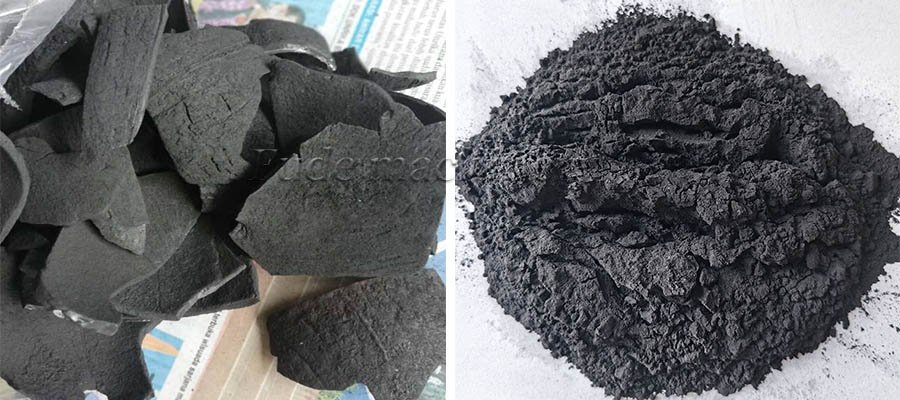
Machine-made charcoal is a clean, high-density fuel made from biomass waste. Many people call it manufactured charcoal or smokeless clean charcoal. Unlike traditional charcoal, its production does not require cutting down forests. Instead, we use a charcoal machine and a complete production line to process materials like wood chips, sawdust, and rice husks. The final product is a uniform briquette. It has a high heating value and produces no smoke or odors when burned. This makes it an ideal fuel for many applications. It is internationally recognized as a green and environmentally friendly product because it turns waste into a valuable resource.
This modern approach to charcoal production directly addresses environmental concerns. Traditional methods contribute to deforestation. They damage our ecological environment. Our process does the opposite. It takes waste products that would otherwise be discarded and gives them a purpose. You can use waste from your furniture factory, wood processing plant, or farm to create a high-energy fuel. The charcoal has a fixed carbon content of around 80%. This is much higher than ordinary charcoal. It provides more heat, burning at 7500-8000 kcal/kg. It is also cleaner, producing very little ash and no sparks. This makes it a superior and responsible choice for both commercial and residential use.
How Is It Different from Traditional Charcoal?
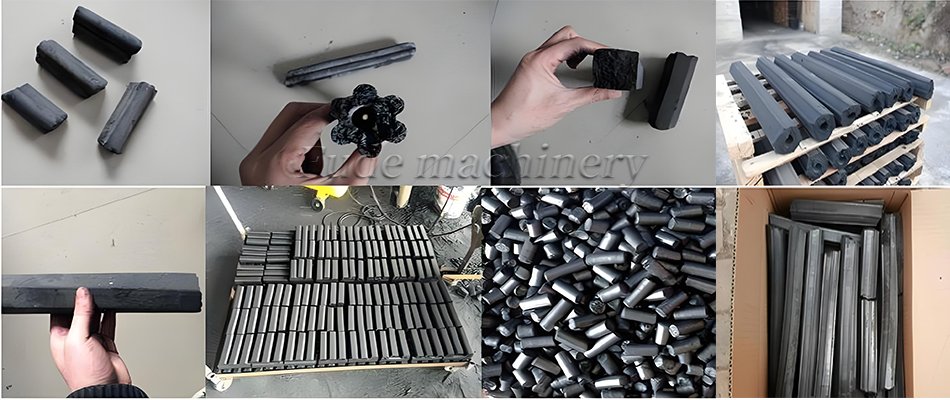
The main difference is the source material and the process. Traditional charcoal comes from burning large logs of wood directly from trees. This process is inefficient and harmful to forests. Machine-made charcoal uses waste biomass. This includes things like sawdust, bamboo shavings, and corn cobs. The process is highly controlled. We use machines to crush, dry, and press the material into dense briquettes before carbonizing them. This results in a product with a consistent shape, size, and density. The uniform, hollow structure makes it easier to light and ensures it burns evenly. It also has a much lower moisture content, typically under 5%, which contributes to its high efficiency. Essentially, you are creating a high-performance fuel from low-cost or no-cost materials.
Feature
Machine-Made Charcoal
Traditional Charcoal
Why This Matters to You
Raw Material
Biomass waste (sawdust, branches)
Whole trees
You can use your existing waste, lowering costs.
Environmental Impact
Turns waste into treasure, protects forests
Causes deforestation
Enhances your company’s green credentials.
Energy Value
High (7500-8000 kcal/kg)
Lower (approx. 6500 kcal/kg)
Provides more heat per kilogram, offering better value.
Cleanliness
Smokeless, odorless, few sparks
Produces more smoke and sparks
Safer and more pleasant to use for BBQ or heating.
Shape & Size
Uniform, regular shape
Irregular chunks
Easy to package, store, and use. Predictable burning.
Practical Tips for You:
Assess your waste: Identify the types of biomass waste your operation produces. Sawdust, wood shavings, and bamboo are excellent starting points.
Start small: You don’t need a massive plant to begin. We offer scalable solutions, like a 1-3t/d production line, for new businesses.
Think about your market: Machine-made charcoal is great for BBQ, home heating, and even industrial uses. Knowing your target customers helps shape your business.
A Real-World Example: A client in Saudi Arabia had a wood factory that generated a lot of wood chips. He saw this as a disposal cost. We helped him set up a mechanism charcoal production line. Now, he turns that waste into high-quality charcoal briquettes. He sells them to the local market for a significant profit, meeting the demand for eco-friendly fuel.
How Does the Charcoal Production Line Work?
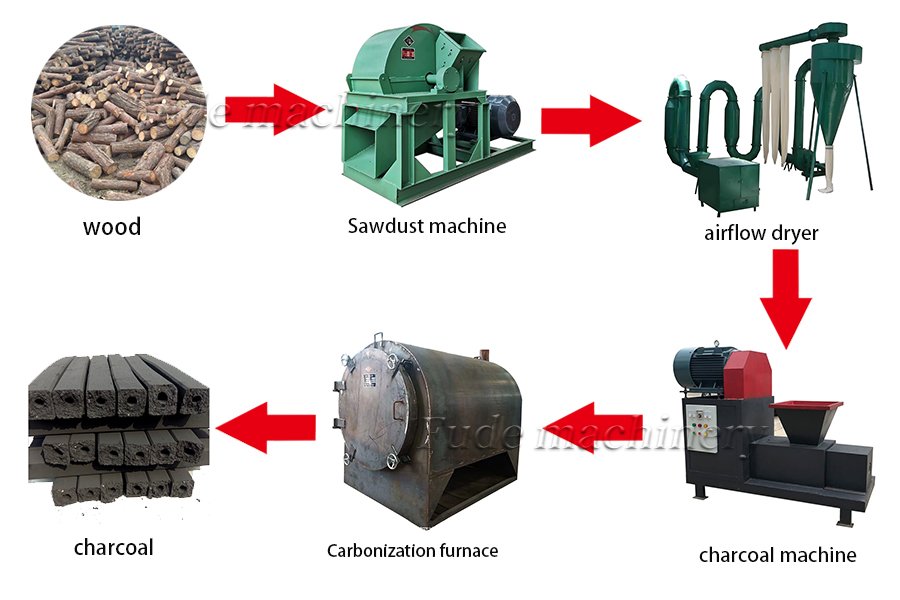
The process is a multi-step journey that turns loose biomass into dense charcoal briquettes. It begins with preparing the raw material and ends with a finished, carbonized product ready for sale. Each step is crucial for ensuring the final charcoal is of high quality. At FUDE Machinery, we design complete lines of wood processing equipment to handle this entire process efficiently. The main stages are crushing, drying, briquetting, and carbonization. This systematic approach ensures a consistent and reliable output. You can think of it as an assembly line for creating value from waste.
The entire system is designed for mechanized operation. This improves production efficiency and makes it possible to meet large-scale demand. By controlling each step, from the particle size of the raw material to the temperature in the furnace, you get a final product with stable quality and superior burning performance. Let’s break down each step so you can understand exactly how your waste wood becomes a valuable treasure.
Step 1: Crushing Your Waste Wood
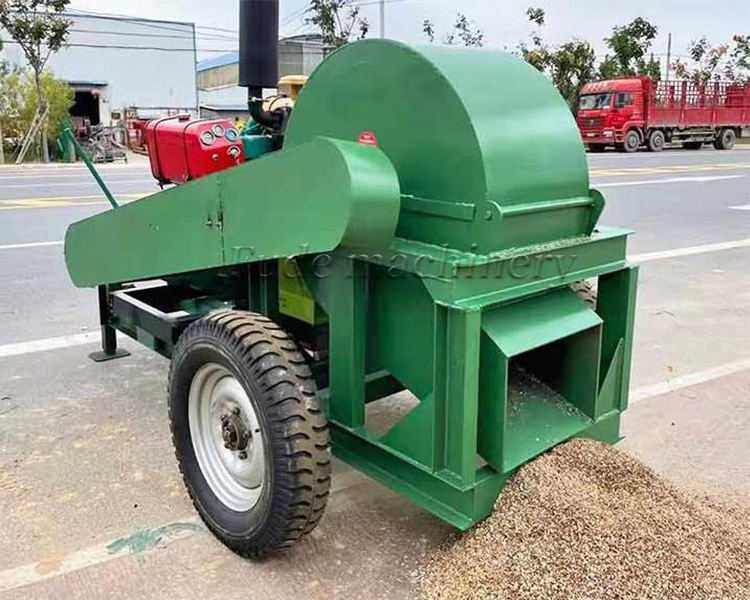
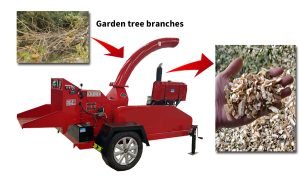
The first step is to get your raw material to the right size. If you are using large tree branches, wood offcuts, or bamboo poles, you need to break them down. A Wood Crusher or hammer mill is used for this task. The goal is to create small, uniform particles, typically around 3-5mm in size. Uniformity is very important. If the pieces are too big, they won’t press correctly in the next stage. If they are inconsistent, the final briquettes will lack density and strength. This initial crushing step ensures that the material can be processed smoothly by the rest of the machinery.
Step 2: Drying the Material to Perfection
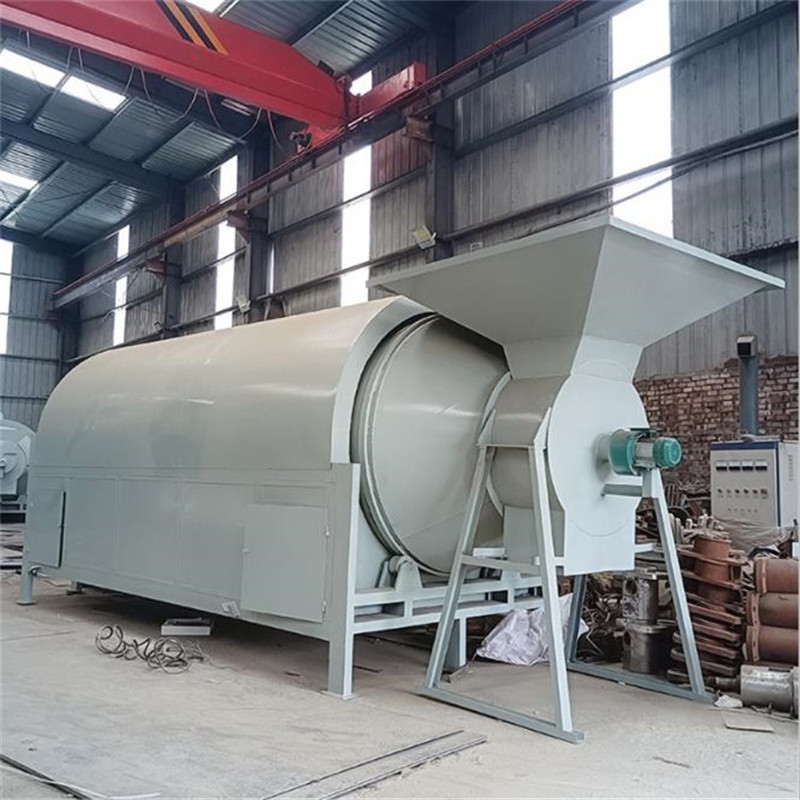
After crushing, the wood particles likely contain too much moisture. For high-quality briquettes, the moisture content needs to be below 12%. A rotary dryer or an airflow dryer is used to achieve this. The crushed material is fed into the dryer, where hot air removes the excess water. This step is critical. If the material is too wet, it will produce steam during the high-pressure briquetting stage. This can cause the briquettes to crack or even explode. Properly dried material leads to dense, stable briquettes.
Step 3: Forming High-Density Briquettes
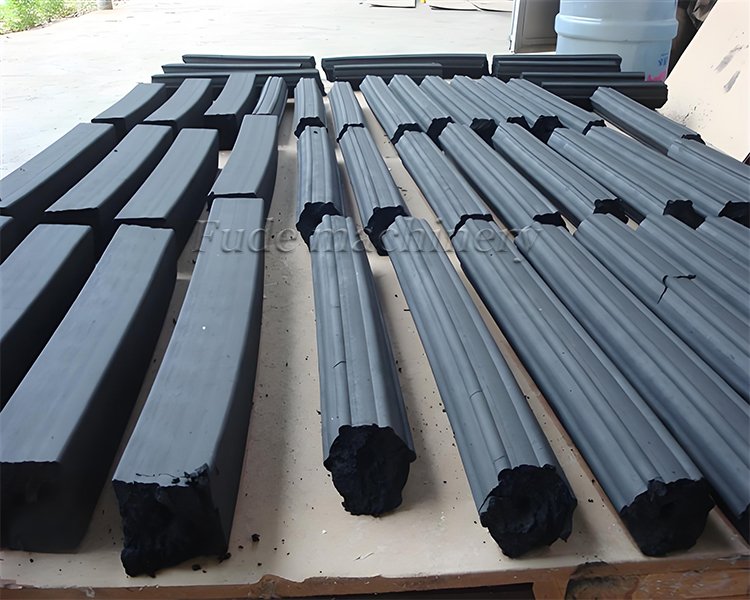
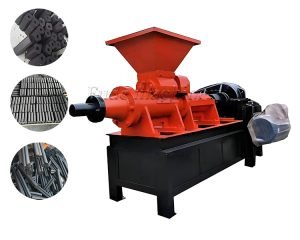
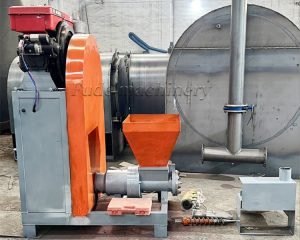
This is where the transformation really begins. The dry, powdered material is fed into a sawdust briquette machine. This machine uses extremely high pressure and temperature to press the material into dense rods or briquettes. The high temperature, often around 300°C, causes the natural lignin in the wood to melt. Lignin acts as a natural glue, binding the particles together without any need for chemical additives. The result is a hard, dense, and dark-colored briquette, sometimes called a “pini kay” briquette. These briquettes are a semi-finished product, but they are already a highly efficient fuel source.
Step 4: Carbonizing Briquettes into Charcoal
The final step is to turn the biomass briquettes into true charcoal. The briquettes are loaded into a carbonization furnace. Inside the furnace, they are heated to a very high temperature in a low-oxygen environment. This process, called carbonization, burns off all the volatile compounds and water, leaving behind almost pure carbon. This is what gives machine-made charcoal its high energy value and clean-burning properties. There are different types of furnaces, such as vertical furnaces or brick kilns, depending on the scale of your operation. After cooling, the finished charcoal briquettes are ready for packaging and sale.
What Are the Main Advantages for Your Business?
Adopting a charcoal machine line offers significant environmental and financial benefits. You are not just making charcoal; you are building a sustainable business model. The primary advantage is turning low-value waste materials into a high-demand product. This solves a disposal problem and creates a new revenue stream simultaneously.
The process is environmentally friendly, which can improve your company’s image and appeal to eco-conscious customers. The charcoal itself is a superior product with high energy, which means customers get more value for their money.
The market for this type of fuel is broad and growing. It is used for everything from home BBQ and heating to industrial applications in steel plants and foundries. The production line is also scalable. Whether you are a small start-up or a large wood processing plant, there is a configuration that fits your needs and budget, from 1 ton per day to over 10 tons per day. At FUDE Machinery, we help you design a plan that lets you enter this market and see a quick return on your investment. The equipment is designed to be efficient, durable, and easy to operate, minimizing your production costs and maximizing your profits.
Key Benefits Summarized:
Waste Valorization: You transform waste materials like sawdust, wood chips, and crop stalks into a profitable product. This reduces disposal costs and creates income.
Environmental Protection: You use waste instead of cutting down trees. This positions your business as a green enterprise.
High-Quality Product: The finished charcoal is high in energy, smokeless, odorless, and has a regular shape for easy use. This commands a better price in the market.
Diverse Market: The charcoal can be sold for residential use (BBQ, heating) or to industries like metallurgy and chemical production. This gives you flexible sales channels.
Scalable Production: You can start with a small line and expand as your business grows. We offer lines with capacities from 1-10 tons per day.
2025 Developments in Charcoal Production
The world is rapidly moving away from fossil fuels. This shift is creating huge opportunities for biomass energy. As of 2025, we are seeing a major trend towards more efficient and automated production lines. Smart sensors and controls are being integrated into our charcoal machine systems. This allows for better monitoring of things like material moisture and furnace temperature, leading to higher quality charcoal and less waste. Companies are looking for complete, one-stop solutions. They want a single supplier who can design, build, and support the entire production line.
Another key trend is the diversification of raw materials. While wood waste is still a primary source, there is growing interest in using other agricultural residues. Things like coconut shells, coffee husks, and rice husks are being tested and used more widely. This expands the potential for charcoal production to new regions and industries. At FUDE Machinery, we are at the forefront of these developments. We continuously innovate our equipment to handle a wider range of materials and to operate more intelligently, ensuring our clients stay ahead in a competitive market. Discussing other uses for biomass, like using a Biomass Pellet Machine, also shows the versatility of these raw materials.
Frequently Asked Questions (FAQ)
1. Is the charcoal production process really environmentally friendly? Yes, it is very friendly to the environment. The process uses waste materials that would otherwise be thrown away, preventing them from ending up in landfills. It also saves trees from being cut down for traditional charcoal production. Modern carbonization furnaces can also be equipped with systems to treat and recycle the smoke produced, further reducing emissions.
2. How much does a charcoal production line cost? The investment cost varies widely depending on the production capacity you need. A small line for a start-up business, producing 1-3 tons per day, will have a lower initial cost. A large-scale industrial plant producing 10 tons per day requires a larger investment but offers faster returns. We can provide a customized quote based on your specific raw materials and production goals.
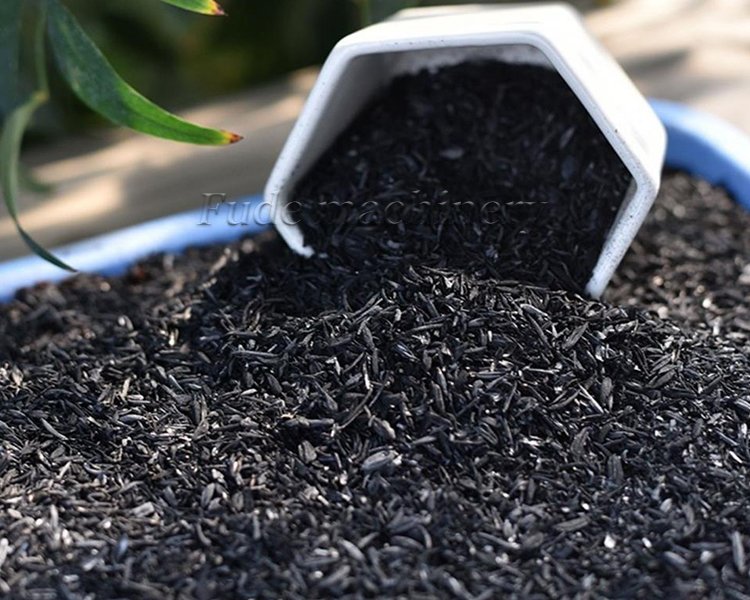
3. Can I use materials other than wood chips? Absolutely. Our machines are designed to be versatile. You can use a wide range of biomass, including rice husks, peanut shells, corn cobs, bamboo shavings, coconut shells, and various crop stalks as raw materials. The key is to ensure the material is properly crushed and dried before briquetting.
4. How much profit can I make from a charcoal business? Profitability depends on your local costs for raw materials (which may be free), labor, and energy, as well as the market price for charcoal in your area. However, since you are turning a waste product into a high-demand fuel, the profit potential is significant. Many of our clients see a fast return on their initial investment.
Summary and Your Next Steps
We have shown you how a charcoal machine can transform simple waste wood into a valuable and eco-friendly treasure. The process is straightforward: crush the material, dry it, press it into briquettes, and carbonize it. This method is far superior to traditional charcoal making. It protects the environment, uses waste efficiently, and creates a high-energy, clean-burning fuel. For your business, this means a new revenue stream, lower waste disposal costs, and a stronger green reputation.
Are you ready to turn your waste into wealth? The opportunity is clear. The demand for renewable energy sources is only growing. You can be part of this solution. Contact us at FUDE Machinery. Our team of experts will work with you to design a custom charcoal production line that fits your specific needs and budget. Let’s build a profitable and sustainable future together.
FUDE Machinery is a professional manufacturer of wood processing machinery based in Zhengzhou, China. We specialize in B2B solutions for the garden, farm, and construction industries. Our product line includes crushers, chippers, pellet machines, and complete charcoal production lines. With a large factory and a dedicated R&D team, we export our high-quality, customizable equipment to over countries. We offer factory-direct prices and full-service support, from design and installation to training and maintenance.
Yard waste piling up? Confused whether you need a shredder or a chipper? Choosing the wrong machine means wasted money, frustration, and a job poorly done. Let's clear this up. The right machine depends entirely on your waste: Garden Shredders ...
Just like people need different food at different ages, do geese? Do young geese eat the same pellets as adult ones? Yes, there are different types of goose feed pellets. The type changes based on the goose's age and purpose. Young goslings ne...
 Fude Machinery-wood crusher manufacturer

HelloPlease log in