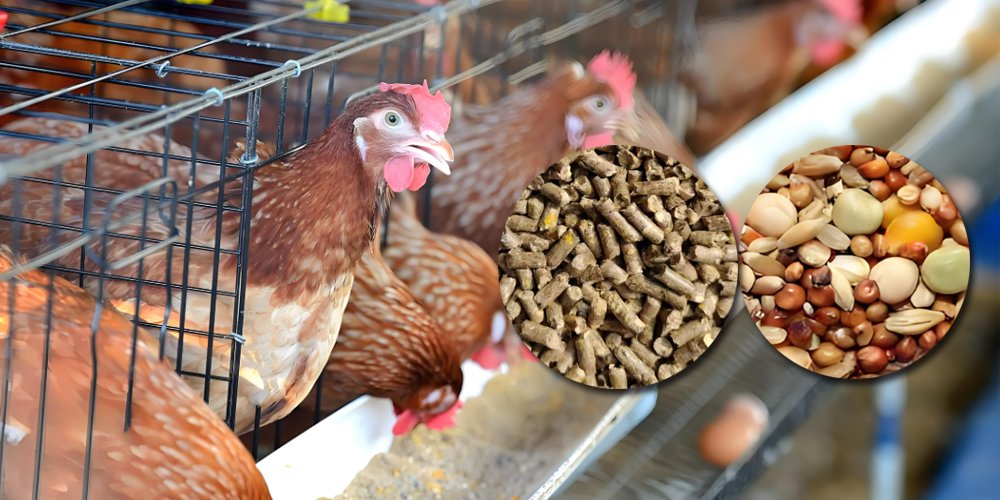
Making your own poultry feed pelletsis one of the best decisions you can make for your farm’s profitability and your flock’s health. It gives you full control over nutrition and can significantly lower your operational costs. The process involves grinding raw ingredients, mixing them according to a precise formula, and then using a pellet mill to create compact, nutritious feed. At FUDE Machinery, we manufacture the core equipment for this process, like pellet mills, and have helped countless farms build their own feed production lines.
This guide will share our practical knowledge with you.
Why Should You Use Pellet Feed for Poultry?
Using pellet feed significantly improves feed efficiency, reduces waste, and ensures every chicken gets a balanced diet. When chickens eat loose mash, they tend to pick out their favorite ingredients (usually larger pieces of corn) and leave the fine, dusty vitamin and mineral powders behind. This is called selective feeding. It leads to unbalanced nutrition and a lot of wasted feed on the floor. Pellets solve this problem completely. Each pellet is a complete, compact package containing all the necessary ingredients in the correct ratio. Every bite is a balanced meal.
As equipment manufacturers, we see the results firsthand with our clients. Farms that switch from mash to pellets report a better Feed Conversion Ratio (FCR), meaning their chickens gain more weight from less feed. The heat used during the pelleting process also has a major benefit: it gelatinizes starches, making them easier for the chickens to digest, and it kills harmful bacteria like Salmonella. This leads to a healthier flock with lower mortality rates. The pellets are also denser, easier to handle and store, and create far less dust in your chicken house.
Feed Types Compared: Mash vs. Pellets
Feed Type
Main Advantage
Main Disadvantage
What This Means For Your Farm
Mash Feed
Low processing cost
High waste, selective feeding, poor hygiene
You may save on equipment, but you lose money on wasted feed and potentially less healthy birds.
Pellet Feed
Balanced nutrition, low waste, high hygiene
Requires investment in a pellet mill
A smart investment that pays for itself through feed savings, faster growth, and improved flock health.
Crumble Feed
Small size for chicks
An extra processing step (crumbling)
The ideal starter feed, made by breaking down pellets. You’ll need a crumbler after your pellet mill.
What Are the Main Ingredients for Poultry Feed?
A balanced poultry feed formula is built on three main categories: energy sources, protein sources, and micro-ingredients like vitamins and minerals. Getting this mix right is the key to healthy, productive chickens. The exact ingredients you choose will depend on local availability and cost. The good news is that many common agricultural products can be used.
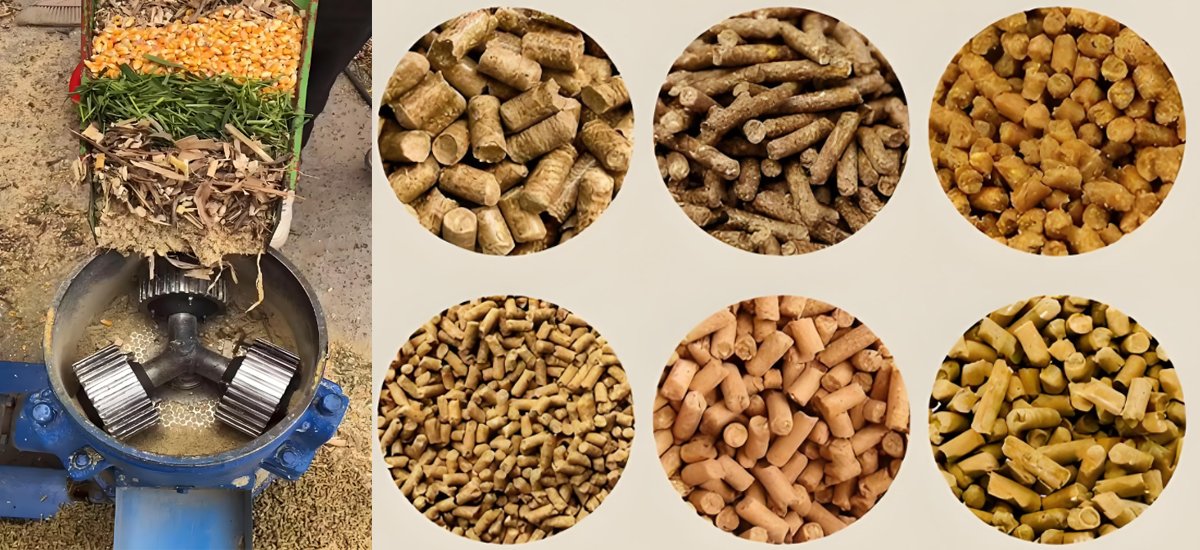
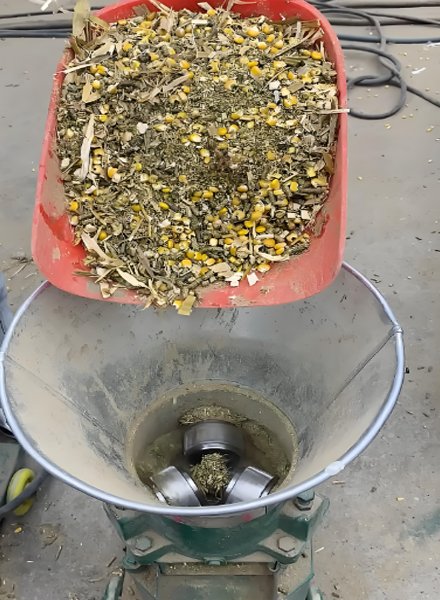
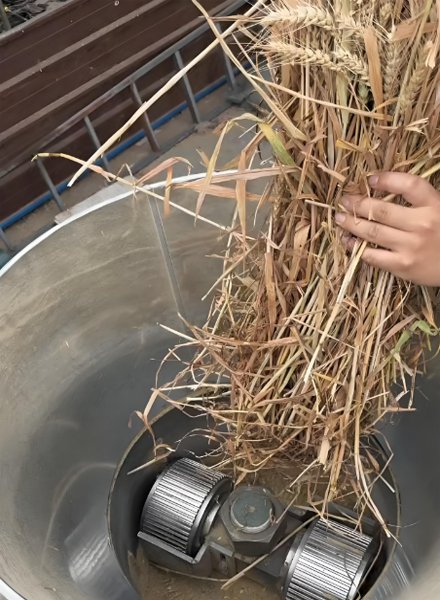
At FUDE Machinery, our equipment is designed to handle a wide variety of these materials. For instance, our hammer mills and straw crushers can efficiently grind corn, wheat, and even fibrous materials to the perfect size for mixing.
Energy Sources (60-70% of the formula): This is the bulk of the feed, providing the calories chickens need to live and grow.
Common Choices: Corn (maize), wheat, barley, sorghum, and other grains. Corn is the most popular due to its high energy content and digestibility.
Protein Sources (20-30% of the formula): Protein is essential for muscle growth in broilers and egg production in layers.
Common Choices: Soybean meal is the gold standard. Other options include fish meal, cottonseed meal, sunflower meal, and rapeseed meal.
Vitamins, Minerals, and Additives (1-5% of the formula): These are vital for bone health, immune function, and overall well-being.
Common Choices: You typically buy this as a pre-mixed package. It includes calcium (as limestone flour), phosphorus, salt, and a blend of essential vitamins (A, D, E, K, B vitamins) and trace minerals (copper, zinc, iron).
What is the Production Process for Poultry Feed Pellets?
The production process is a multi-stage system that turns raw ingredients into finished, packaged pellets. Each step is crucial for quality control and nutritional integrity. A well-designed production line ensures efficiency and consistency.
%alt A flowchart showing the five key stages of poultry feed production: Crushing, Mixing, Pelletizing, Cooling, and Packaging.
Step 1: Crushing Raw Materials
The first step is to grind all your grain ingredients into a fine, consistent particle size. This increases the surface area, making it easier for the chickens to digest and for the ingredients to mix evenly. A hammer mill is the standard machine for this job.
Step 2: Mixing the Ingredients
The ground grains are then moved to a large feed mixer. Here, you add the protein sources (like soybean meal) and the vitamin/mineral premix. The mixer blends everything thoroughly to ensure every single feed pellet will have the exact same nutritional profile. This step is critical to prevent nutritional deficiencies in your flock.
Step 3: Pelletizing the Mash
This is the core of the process. The mixed mash is fed into a feed pellet mill.
Conditioning: Before entering the pellet mill, the mash passes through a conditioner where hot steam is added. This is very important. The steam adds moisture and heat, which starts to cook the starches (improving digestibility) and kills harmful bacteria.
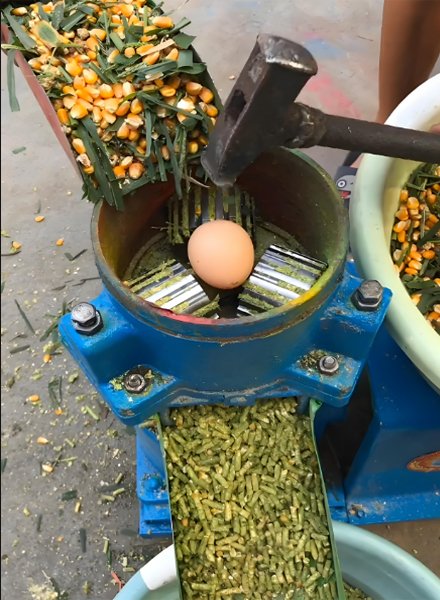
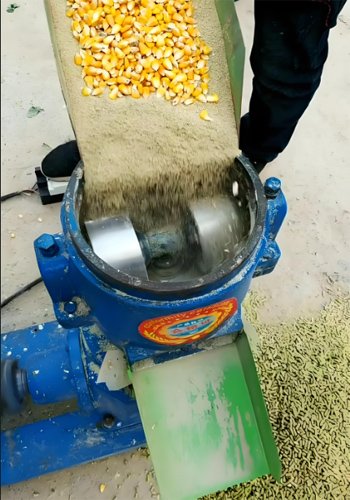
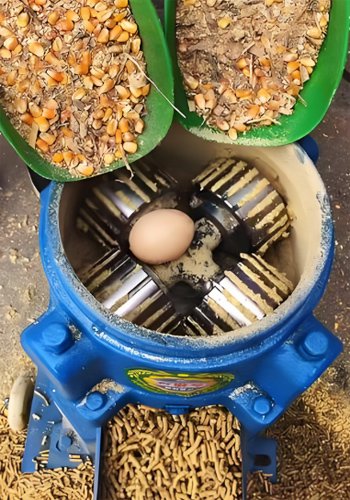
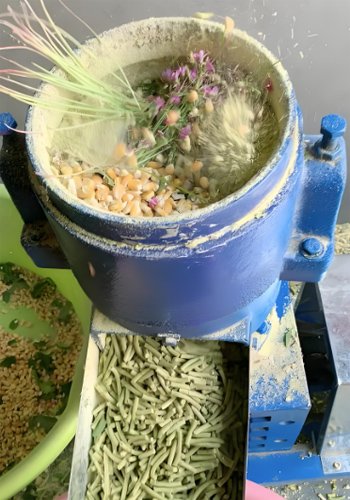
Pelleting: The hot, moist mash is then squeezed by rollers through the holes of a die. The intense pressure forms the dense pellets. The choice of machine is important here. For small farms, a flat die pellet mill is a cost-effective choice. For larger, commercial operations, a ring die pellet mill is essential for its high output and durability.
Step 4: Cooling and Crumbling
The pellets leave the mill hot (around 85°C) and soft. They are immediately moved to a counterflow cooler, which uses air to bring their temperature down. This removes excess moisture and hardens them, making them durable for transport. If you are making feed for young chicks, the cooled pellets can be passed through a crumbler, which breaks them into smaller pieces.
Step 5: Screening and Packaging
The final step is to pass the cooled pellets over a screen to sift out any dust or broken pieces. These fines are collected and sent back to the pellet mill, so there is no waste. The perfect, finished pellets are then weighed and packed into bags, ready to be fed to your flock or sold.
How Do You Formulate Feed for Different Chickens?
Broilers (meat chickens) and layers (egg-laying hens) have very different nutritional needs, so you must use different formulas. Broilers need high protein and energy to grow muscle mass quickly. Layers need less protein but require much more calcium to produce strong eggshells daily. Providing the wrong feed will lead to poor growth in broilers or weak eggs and health problems in layers.
Below is a table with example formulas. These are starting points. We always recommend consulting with an animal nutritionist to create the perfect formula based on your specific ingredients and flock requirements.
Ingredient
Broiler Starter (0-4 weeks)
Broiler Finisher (4-6 weeks)
Layer Hen (20+ weeks)
Corn (Maize)
45%
55%
62%
Soybean Meal
38%
30%
22%
Wheat Bran
10%
8%
8%
Limestone (Calcium)
1%
1%
7%
Vitamin/Mineral Premix
3%
3%
3%
Protein (Approx.)
~23%
~20%
~16%
Real-World Case:
A medium-sized poultry farm in Kenya with 5,000 layers was struggling with high feed costs and inconsistent eggshell quality. They invested in a small FUDE Machinery production line, including a hammer mill, a mixer, and a flat die pellet mill. By producing their own pellets using a high-calcium layer formula, they cut their feed costs by 25% and saw a 40% reduction in broken eggs within three months.
Frequently Asked Questions
Question 1: How much does it cost to set up a small poultry feed plant? The cost depends on the capacity. A small line for an on-farm setup, producing a few hundred kilograms per hour, can be quite affordable. A large commercial plant is a more significant investment. The key is that making your own feed typically has a payback period of 1-2 years due to the savings on commercial feed.
Question 2: What is the main difference between a feed pellet mill and a wood pellet mill? They operate on a similar principle, but a feed pellet mill is designed specifically for soft, nutritious ingredients and runs at a lower compression ratio. It also must include a steam conditioner. A wood pellet mill is built to handle tough, fibrous wood and uses much higher pressure. You cannot use a wood pellet mill to make quality animal feed.
Question 3: How do I get the right feed formula for my chickens? While our guide provides examples, we highly recommend you consult with a local veterinarian or an animal nutritionist. They can analyze your available ingredients and create a formula perfectly tailored to your flock’s specific breed, age, and environment.
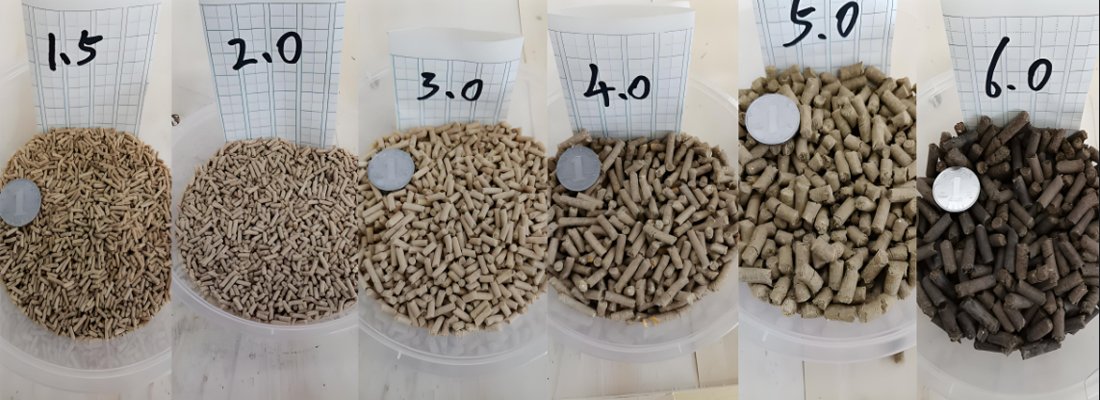
Question 4: What size pellets should I make? For young chicks (up to 4 weeks), you should use crumbles or very small pellets (2-3mm diameter). For adult broilers and layers, a standard pellet size of 4-5mm diameter is ideal. Our pellet mill dies can be easily changed to produce different sizes.
Summary and Recommendations
Making your own poultry feed pellets puts you in control. It allows you to create fresh, high-quality feed tailored to your flock’s needs, while significantly cutting costs and reducing waste. The process is systematic: crush your grains, mix them with protein and minerals, use a pellet mill to form the feed, and then cool and package it. Each step, from the right formula to the right equipment, contributes to the final quality.
Your next step is to assess your flock size and production needs. Calculate how much feed you use per week. This will help you determine the capacity you need. Once you have a clear idea, our team of experts at FUDE Machinery is ready to help you select the right equipment to build an efficient and profitable feed production system for your farm.
Contact us today to discuss your poultry feed project and get a free, no-obligation quote.
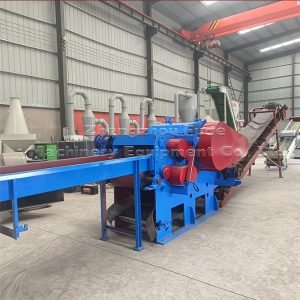
On site use of wood crusher Template crusher is a new and large-scale wood crushing equipment developed specifically for waste templates, bamboo plywood, shelves, brackets, pallets, and other materials on construction sites. It...
At FUDE Machinery, we know a wood shredder is much more than a machine for getting rid of waste. For many businesses, a pile of logs, branches, or old wood pallets is a problem. It costs money to haul away. A single shredder helps by reducing the...
 Fude Machinery-wood crusher manufacturer
HelloPlease log in