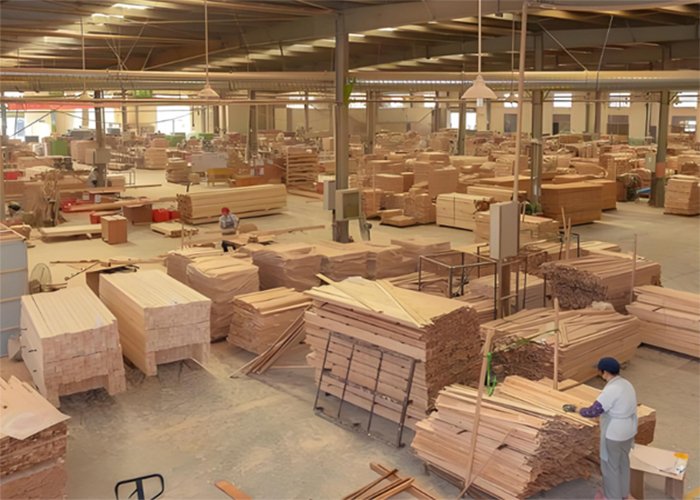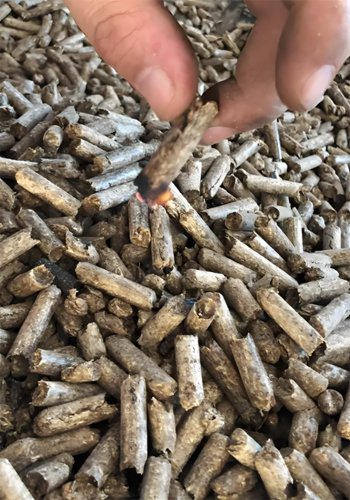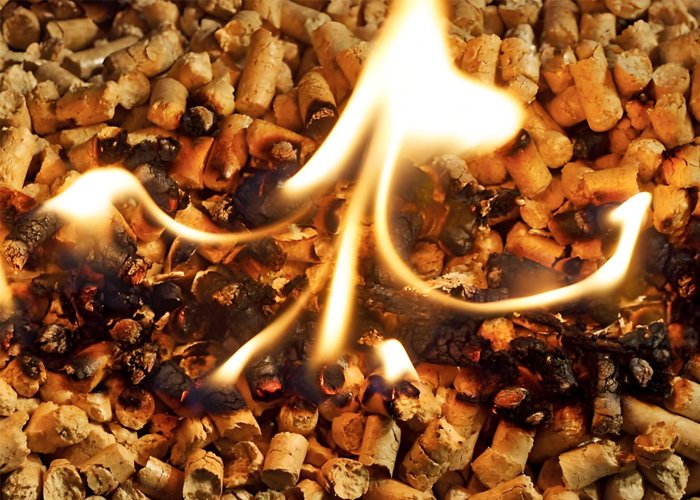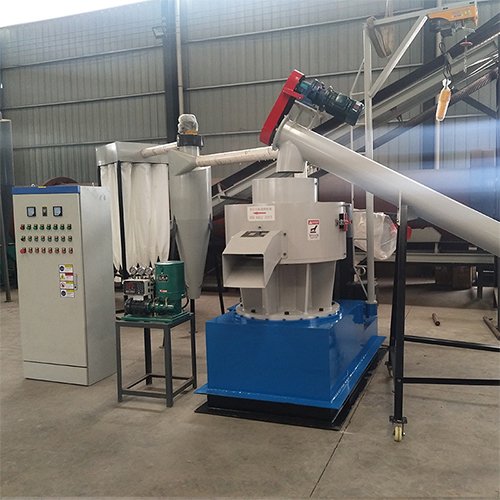
The waste residue from pallet factories can be crushed, crushed, and dried to produce pellet fuel, achieving resource reuse and reducing environmental pollution.
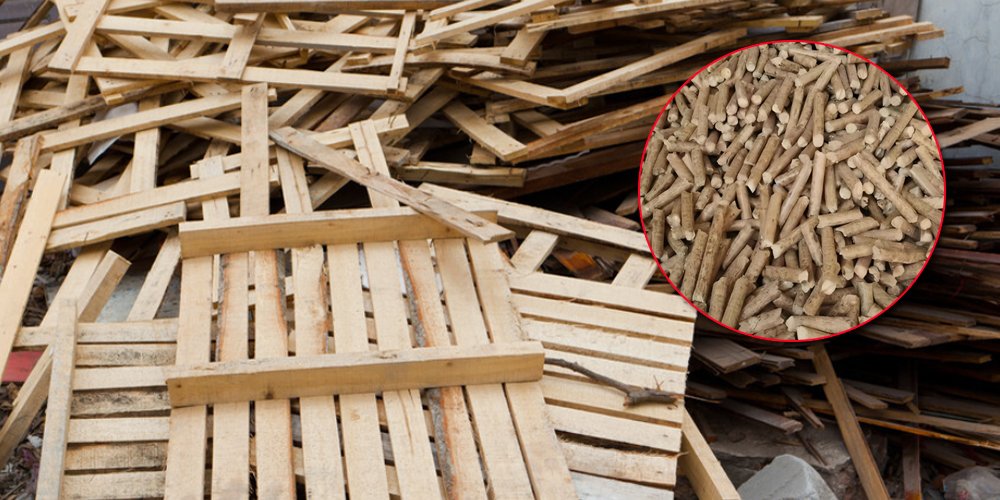
Make pallet factoryresidue into fuel pellets
An extensive pallet industry has become established as a result of the rapidly expanding use of mechanical handling equipment. Unitized loads of industrial and agricultural products are handled by a variety ofmechanical handling equipment such as lift trucks, racks, conveyors, slings, booms, and stackers. Pallets provideone of the foundations upon which toassemble these loads. Pallet parts generally come from the lower grades ofeither hardwood of softwood lumber. Some sound below-grade material may be included. During the palletproduction process,there is much fuel residues left which can be made into fuel pellets by wood pellet mill.
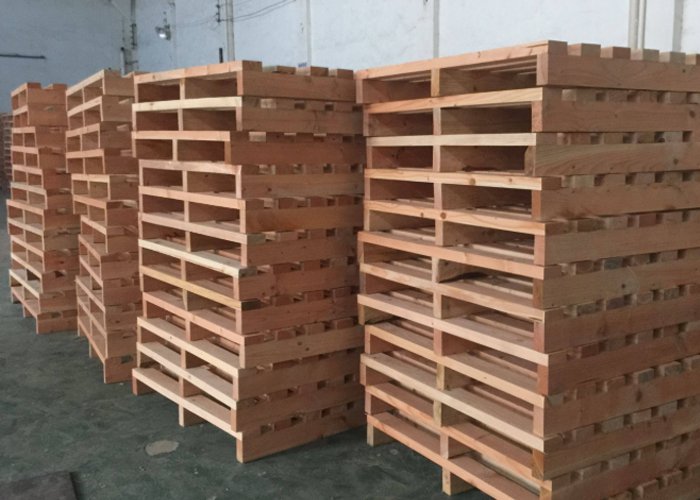
Stable Supply of Raw Material A wooden pallet is the structural foundation of a unit load which allows handling and storage effciencies.Wooden pallet production can be integrated with that of box, dimension, and other lumber products at the mill.In a pallet production plant, many procedures like chamfer, notcher, multiple cutoff saw, block cutoff, resaw willresult in wood residues such as sawdust, wood chips. It is estimated that approximately 45 to 55 percent of thelog input to a pallet plant is to become waste. These wood waste provide free and abundant raw materials forpellet production.
Demands ofBio-energy Markets:The development of bio-energy markets provide opportunity for making fuel pellets from pallet residues. Woodpellets are the most popular renewable energy sources available across the world. They are much denser thannatural wood and have a low moisture content ofless than 10%, which means that very little of the energyproduced is needed to evaporate water. Compared with wood waste direct combustion, wood pellets can be burntat high temperatures with high combustion efficiencies.
Benefits from Using Pallet Residues:Economical benefits;Using wood waste to make pellets can reduce landfll disposal and save more space.Wood pellets from wastes maybe a secondary product that adds value to pallet residues.Energy prices rise, which is a push for energy to be produced from pallet residues.Environmental benefts;Wood pellet fuel is a renewable resource and, therefore, a sustainable form of energyThe use of fuel pellets as energy reduces potential waste and pollution.
Fuel Pellet Production
Pallet Residues Collection:In small-scale pallet factory, wood wastes can be gathered by manual work, For large scale pallet production, atractor or bulldozer can be used to collect the residue.
Size Reduction:Collected pallet residues are in non-uniform. Only raw material of consistent quality can produce consistentquality pellets. Part of this consistency is the size of raw material particles used in the pellet mill. So use ahammer mill to reduce material size. The hammer mill will take wood residues and break them down into aconsistent smaller size, making drying and pressing through the pellet die quick and consistent. There are twokinds of hammer mills for choice: diesel driven hammer mills ans electricity driven hammer mills.
Material Drying:Pellet production is a high temperature process. The right moisture content of wood particles will produce thebest quality pellets, reduce energy consumption and reduce pellet mill downtime. So the materials must be driedContent moisture should be 10 to 18 percent for making biomass pellets. For small scale production, you canleave the waste particles in the sun to dry naturally, In large scale, you can place the waste in wood drver until itis dried to the desired moisture level.
Pelletizing:Wood pellet production doesn’t need to add binder as lignin, an element of wood, plays a role of binder and helpsto pelletize when it is melted by heat, Produce the pellets using a wood pellet mill or, for smaller batches, a pelletpress that includes a die and roller. The die is a metal piece with holes drilled through it. The roller goes acrossthe die and presses the wood through the holes into pieces the size of finished pellets. Pellet presses are ring dieor flat die pellet mill. Either types can be used to make wood pellets that are consistent in density andmoisture level.
Cooling:Cool pellets thoroughly, When the pellets come out of the pellet press, they will be hot and moist. Spread themout and allow them to cool and dry naturally. Or you can also choose a wood pellet cooler.
Package and Storage:Bag and store the pellets. Put the pellets in bags and seal the bags. The pellets will need to be stored in a dryplace where they will not become moist.
Introduction of Fuel Pellets
Wood pellets are a type of biomass fuel. Produced from compacted sawdust and other wood waste products, theyare cylindrical in shape and general measure between 6-10mm in diameter and 10-3omm in length. Wood pelletsproduce very little Co2 when burnt and are therefore widely recognised as one of the most eco-friendly fuels.
Advantages of wood chips:
High quality (shape and hydrous rate are stable)
dry, easy to store
burning under environmental compliance is possible
suitable for automatic combustion operation
made of regional renewable resources
energy density is higher than wood chips, suitable for transportation and storage
possibility to be an alternative for energy system from smaller to larger scale
Application of Fuel Pellets:
Wood pellet is mainly used as fuel for heating in home pellet stove and medium or small-scale electric power plant. The benefits of wood pellets for heating are affordability, sustainability and convenience.
Wood pellet can also be used for animal bedding. They are manufactured at high temperature to provide asterile and low dust environment. Biodegradable nature of wood pellets means that it is easy to dispose of andcan be used as a fertilizer or on the compost heap.
Source of Raw Materials:
Wood pellets are usually made from dry, untreated, industrial wood wastes like sawdust, shavings, or chip finesWood wastes are mainly organized in three major categories: forest biomass, wood processing residual byproducts and urban wood waste. And these wood residues can be divided into two types: logging residues andindustrial wastes. Industrial wastes are mainly from sawmill, plywood production, particleboard production.pallet factory and so on.
Development of Pellet Machine
The wood pellet machine is the core equipment for pellet production. With the rapid development of technology, two types of pellet machines have been developed: small flat die pellet machines and ring die pellet machines, which are driven by diesel engines and electric engines respectively and are suitable for areas with scarce and abundant electricity resources. With the rapid development of biomass energy projects, small wood chip pelletizers have become very popular. Small flat die pellet machines have a history of over 10 years in China, initially mainly used for processing pellets as feed. Now, small wood pellet machines allow you to use your own raw materials to make pellets or feed pellets.
The ring mold wood chip granulator is actually derived from the feed granulator and is favored for large-scale granulation production. The machine adopts advanced mechanical feeding method, where raw materials enter the granulation chamber at high speed and are evenly fed through a slider distributor.
The mature and complete granulation process is a granulation production line consisting of steps such as crushing, drying, granulation, cooling, and packaging. The key to a granulation plant lies in having appropriate equipment selection and production capacity standards, so that the production line is flexible and easy to operate, and can operate efficiently under energy-saving conditions, enabling pelletizers to produce granulation products by recycling waste wood.
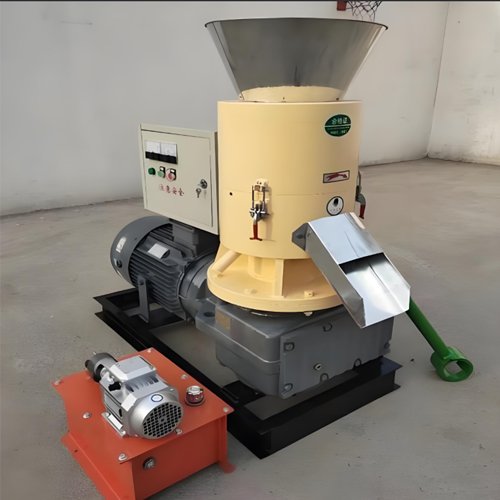
Zhengzhou Fude Machinery has always been committed to providing high-quality and high-performance wood pellet processing equipment solutions for global customers. With advanced production technology, strict quality control, and continuous innovative research and development capabilities, it has received satisfactory praise from customers. We have a professional technical team that deeply understands customer needs, recommends and answers equipment questions for customers, and teaches operational techniques.
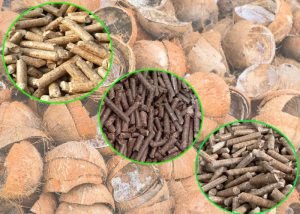
Building a coconut shell pellet plant is an excellent way to turn agricultural waste into a high-value, renewable energy source. The process involves several key stages. You must crush the hard shells, dry the material, press it into pellets, and...
HelloPlease log in