Rice hull charcoal production not only recovers a large number of farm wastes but also makes full use of the charred rice husks for processing various chemical products and farm fertilizers. Therefore, investing in the rice husk charcoal processing business is profitable for many farmers. They can make full use of the cheap raw materials and use the rice husk charring machine to produce high-quality rice husk charcoal to sell.
Why do we need to produce rice hull charcoal?
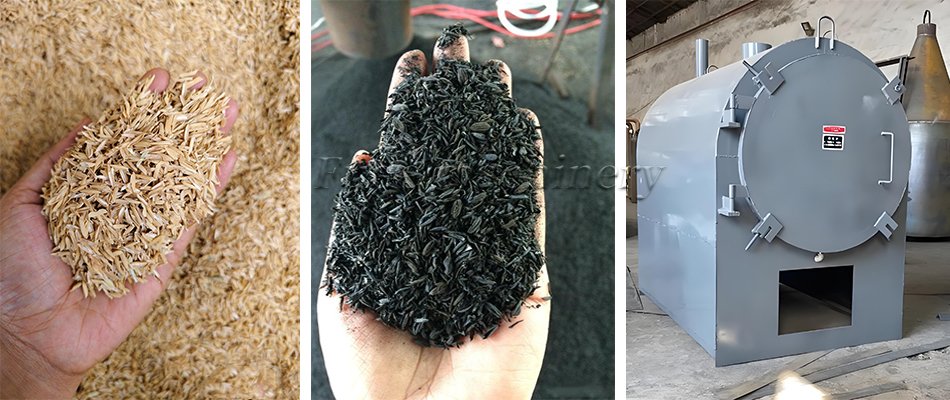
Rice husk is the waste left after rice milling and is generally referred to as coarse bran. For every 10 0 kg of the rice harvest, there is about 20 kg of rice husk waste. If this paddy waste is not properly disposed of, it will create a considerable environmental load.
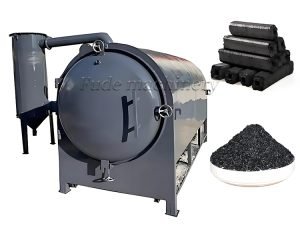
With the use of a rice husk charcoal making machine it is possible to turn this waste into a treasure that protects the soil.
In fact, there is a large amount of crop straw waste that can be recycled. In recent years, these wastes are gradually being used and are no longer being discarded or burned to cause pollution. Corn stalks, rice stalks, peanut bark, straw stalks, rice husks, etc. can all be processed into charcoal.
How to make rice hull charcoal efficiently?
Kiln-fired rice husk charcoal
This method of processing each rice husk charcoal is relatively simple. It only requires digging a shallow pit slightly in the ground and placing the wood or rice husk in the pit to burn it into charcoal. It is easy to operate, but the quality and production efficiency of rice husk charcoal are not high, and it is easy to cause air pollution.
Smokeless charcoal machine
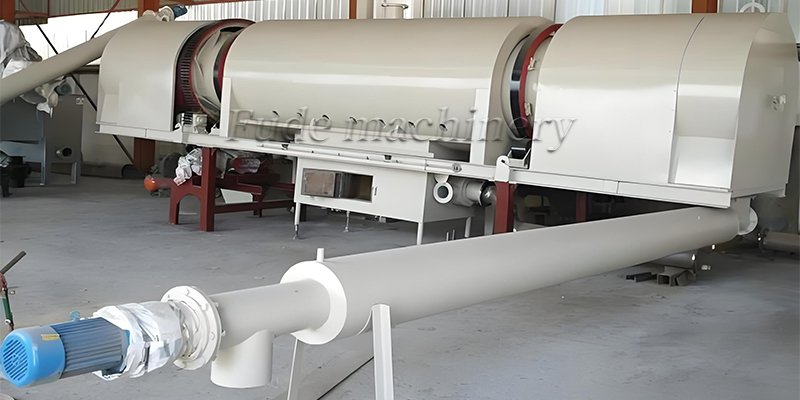
Using the smokeless carbonization furnace can produce rice hull charcoal continuously, with high production efficiency and no pollution. The emergence of this highly efficient biochar production process is also a guarantee of the industrial basis that charcoal-based fertilizers have been developed significantly in recent years.
What is the use of rice husk charcoal?
he chemically active rice husk charcoal obtained by charring rice husk is rich in silica, sodium, potassium, and calcium, which can be used to make toothpaste or tooth powder as an abrasive.
Rice husk charcoal can also be used to make activated charcoal face wash, which can effectively cure the enlarged pores of human skin. Rice husk charcoal is of great help to people in industry and agriculture. We can use rice husk charcoal to generate heat and electricity, and also provide fuel to refine new energy.
In agriculture, rice hull charcoal has a pH of about 8.5-9.0 and can function as a soil acid-alkaline neutralizer for acidified (pH less than 4.5) soils. Each gram of rice husk charcoal has a specific surface area of thousands of square meters, which helps to absorb harmful substances such as lead, cadmium, and ammonia from the soil and improve land use.
Advantages of making rice husk charcoal
The advantages of making rice husk charcoal are remarkable. From the perspective of soil improvement, rice husk charcoal is alkaline, which can neutralize the acidic soil, adjust soil pH and create a suitable environment for crop growth; its porous structure enhances the soil’s permeability and water retention, like installing countless “small channels” and “small reservoirs” in the soil, which is good for root respiration and water retention. Its porous structure enhances soil permeability and water retention, like installing countless “small channels” and “small reservoirs” in the soil, which is conducive to root respiration and water conservation. In agricultural cultivation, rice husk charcoal is rich in potassium, silicon and other elements, which can improve crop resistance to pests and diseases, enhance the strength of stalks, reduce the risk of collapse, and improve the quality and yield of agricultural products. In terms of environmental protection, rice husk is an agricultural waste, and making it into charcoal realizes the recycling of resources, reduces the environmental pollution caused by incineration, and reduces the dependence on traditional fertilizers, which contributes to the green and sustainable development of agriculture.
Application Scenarios of Rice Husk Charcoal
In agriculture, it can improve the acidic soil, improve the structure, enhance the air permeability and water retention, and its potassium and silicon elements can promote growth, disease and insect resistance, enhance the quality and yield of agricultural products, and be used for planting a variety of crops. In horticulture, it can improve the air permeability and drainage of potting soil, and prevent the condensation, which is conducive to the growth of flowers and green plants. In environmental protection, it can be used in sewage treatment to adsorb heavy metal ions and organic pollutants; it can also repair soil pollution and reduce the activity of pollutants. In animal husbandry, as bedding can absorb the moisture and odor of livestock and poultry feces, and keep the environment dry and clean.
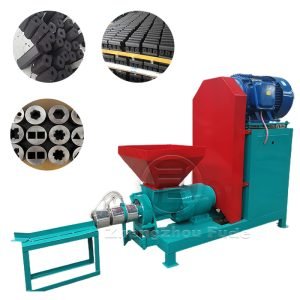
Production equipment includes: sawdust machine, branch crusher, forced feed crusher, wood crusher, chipper, charcoal machine production line, biomass pellet mill The company will continue to adhere to the “quality first, customer first” business philosophy, to provide customers around the world with higher quality wood equipment solutions.
 Fude Machinery-wood crusher manufacturer

HelloPlease log in