Making wood pellets involves a clear, multi-step process. First, you prepare your raw material by crushing it. Then, you dry it to the perfect moisture level. After that, a wood pellet mill presses the material into dense pellets. Finally, you must cool and package the pellets. As a manufacturer at FUDE Machinery, we have helped hundreds of clients set up their wood pellet production lines. This guide shares our direct experience with you.
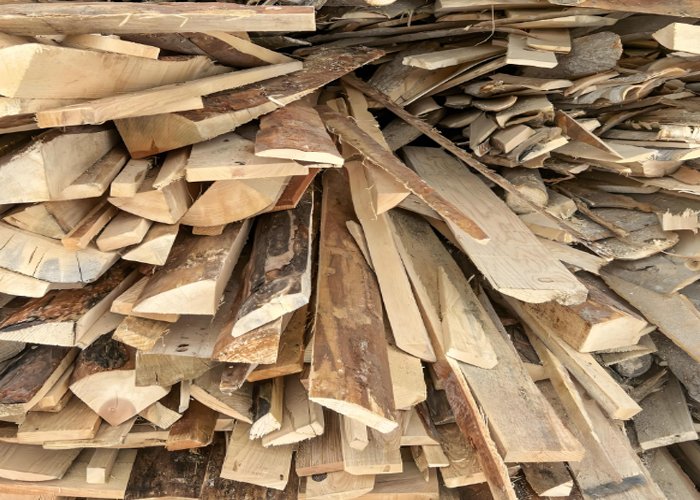
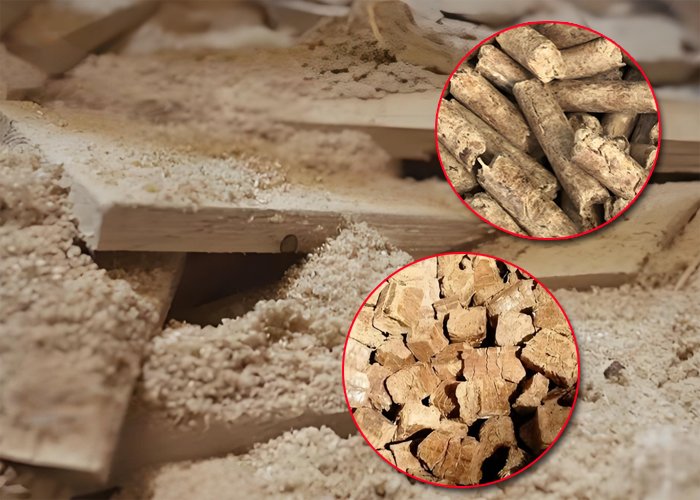
You can use a wide variety of biomass materials to make wood pellets. The most common material is wood. This includes things like logs, tree branches, sawdust from sawmills, and even wood waste from furniture factories. But you are not limited to just wood. Many of our clients also use agricultural waste. This includes materials like straw, corn stalks, bamboo, coconut shells, and sugar cane residue. The key is that the material must be organic and have low ash content.
As manufacturers, we have seen businesses succeed with many different inputs. Your choice of raw material directly impacts your process and the final pellet quality. For example, softwoods like pine are often easier to pelletize because they contain more natural lignins. Lignin acts as a natural glue when heated. Hardwoods like oak produce very dense pellets but may require more pressure or a small amount of binder. The most important factor is consistency. Using a consistent, clean raw material source is the foundation of a stable operation.
You must make sure your material is free from contaminants like plastic, metal, or rocks. These can damage your equipment and ruin the quality of your pellets. This is especially important for businesses like waste wood recycling centers that handle mixed materials.
Common Raw Materials Compared
Material Type
Ease of Processing
Typical Ash Content
What This Means For You
Softwood (Pine)
Easy
Low (<0.5%)
Produces high-quality pellets with less energy, ideal for premium fuel.
Hardwood (Oak)
Medium
Low (<0.7%)
Creates very dense, long-burning pellets, but may wear equipment faster.
Straw/Stalks
Difficult
High (5-10%)
Cheaper raw material, but produces higher ash pellets suitable for some industrial boilers, not residential use.
Practical Tips and Suggestions
For Wood Processing Plants: Use your own sawdust and offcuts. This turns your waste into a profitable product.
For Farms: Use a straw crusher to process agricultural residue like corn stalks into a viable raw material for animal bedding or fuel.
For Beginners: Start with clean softwood sawdust if possible. It is the most forgiving material and makes the learning process much easier.
Why is Crushing the First Critical Step?
Crushing creates a uniform material size, which is essential for consistent drying and pelletizing. A wood pellet mill cannot handle large, irregular wood chunks. The material must be broken down into a consistent, sawdust-like texture. For your a wood pellet mill to work correctly, the input material size should be less than the diameter of the holes in the pellet die. A common rule is that the material should be around 3-5mm in size. This small, uniform size allows heat and moisture to distribute evenly through the material.
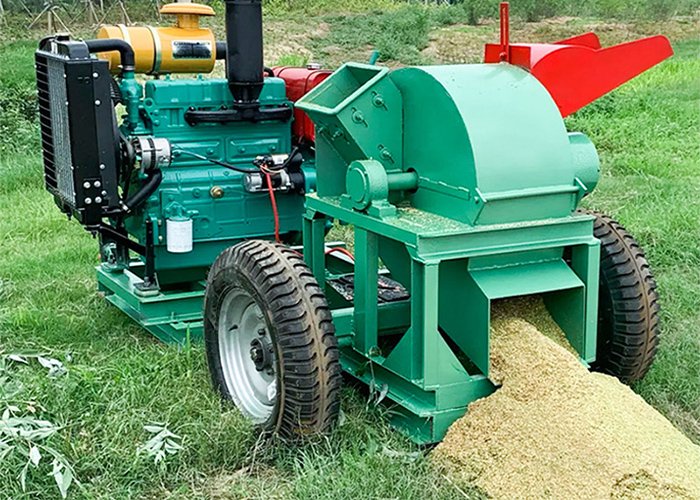
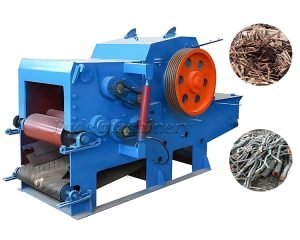
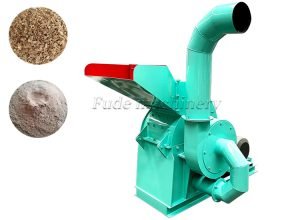
At FUDE Machinery, we always tell our clients that the final pellet quality begins at the crusher. If your material size is inconsistent, you will face many problems. Larger pieces can clog the pellet mill, causing downtime and potential damage. They also don’t dry at the same rate as smaller pieces, which creates moisture imbalances. This leads to weak, crumbly pellets that fall apart. We provide different machines for this stage. A wood crusher machine uses hammers to break down smaller materials like branches or offcuts. For larger logs or wood waste, a wood chipper is needed first to create smaller chips, which are then fed into a hammer mill. Investing in the right crushing equipment ensures a smooth, efficient process from the very beginning. Many of our mobile crushers are popular with landscaping companies because they can process tree branches directly on site.
How Does Moisture Content Affect Pellet Quality?
The ideal moisture content for wood pellet production is between 12% and 15%. This is a very strict requirement. If your material is too dry (below 10%), it will not bind together properly in the pellet mill. The pellets will be brittle and dusty. This is because there isn’t enough moisture to help activate the natural lignin. If your material is too wet (above 17%), the pellet mill will create excess steam. This steam gets trapped in the pellets, causing them to expand and crack as they cool. The result is weak pellets with a poor density.
How Does a Wood Pellet Mill Work?
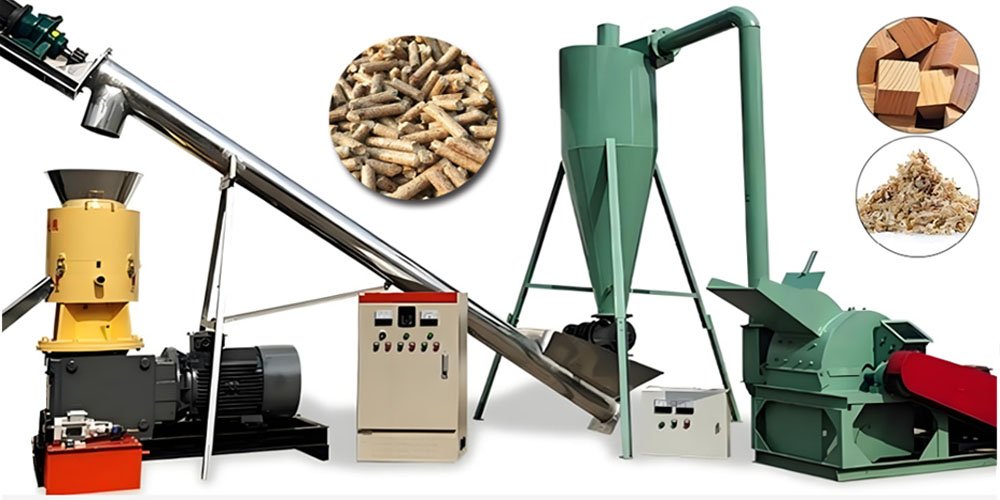
A wood pellet mill uses a die and rollers to force the prepared sawdust through small holes under intense pressure and heat. This combination of pressure and friction generates heat, typically reaching 100-130°C. This heat softens the lignin within the wood, which is a natural polymer. As the material is squeezed through the holes in the die, the softened lignin acts as a natural glue, binding the particles together. A blade on the outside of the die then cuts the extruded material into pellets of a set length.
There are two main types of pellet mills we manufacture.
Flat Die Pellet Mill: The die is a flat, horizontal disk with holes. Rollers press down on the material, forcing it through the die. These machines are excellent for smaller operations, easier to maintain, and work well with softer, less dense materials. They are a great starting point for farms or small workshops.
Ring Die Pellet Mill: The die is a vertical ring that rotates. Rollers on the inside of the ring press the material outward through the holes. These are high-capacity machines designed for continuous, industrial production. They are standard in any serious biomass energy plant.
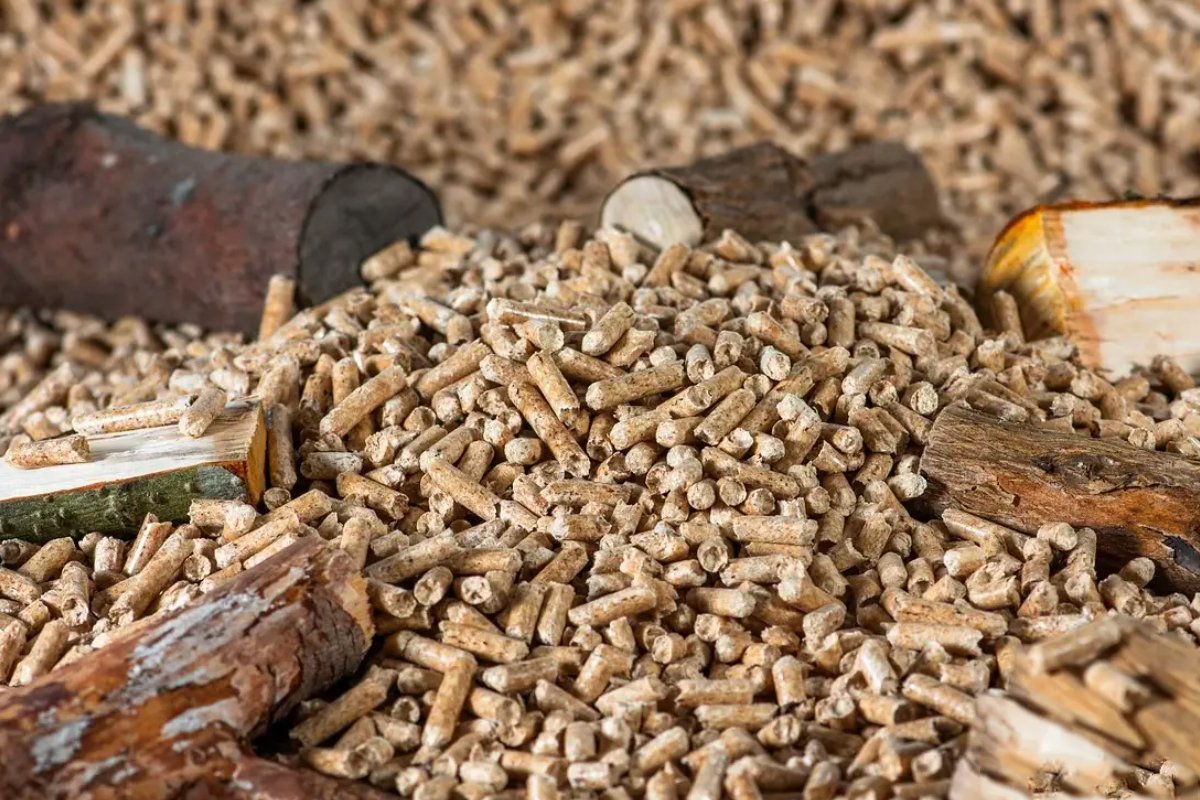
The result is a dense, uniform, and stable fuel source. Good pellets will have a shiny surface, which indicates the lignin has melted and reset properly. They will be hard to break and will sink in water, showing good density.
Why Must You Cool and Screen New Pellets?
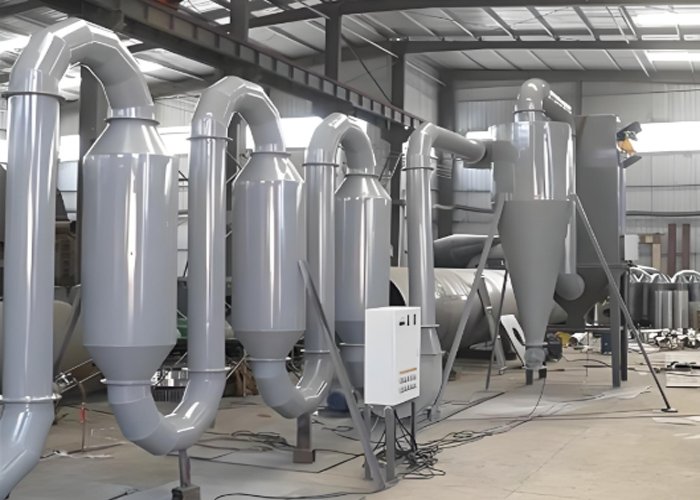
Newly made pellets are hot (60-80°C) and soft. Cooling hardens them, and screening removes any fine dust or broken pieces. This step is vital for ensuring the durability and stability of the final product. When pellets exit the mill, they are too fragile to be packaged or transported. They need time to cool down and solidify. A counterflow cooler is the professional equipment for this. It uses a stream of ambient air to gradually lower the pellet temperature. This slow cooling prevents thermal shock, which can cause cracks in the pellets.
Once cooled, the pellets go through a screener. The screening process separates the perfect pellets from any dust or undersized fragments. This is a crucial quality control step. Selling pellets mixed with dust is unprofessional and can cause problems for the end-user’s combustion system. The good news is that this dust is not waste. The fine material separated by the screener can be put directly back into the raw material supply and run through the pellet mill again. This makes the process very efficient and minimizes waste. We integrate cooling and screening systems into every complete wood pellet production line we design.
2025 Trends in Wood Pellet Production
The wood pellet industry is always evolving. As a global supplier, we see the new trends emerge firsthand. For 2025, the biggest developments are in automation, raw material diversity, and decentralized production. Equipment is becoming much smarter. Many of our new production lines include PLC control systems. This allows an operator to monitor and adjust the entire process, from the crusher to the packer, from a single screen. This improves efficiency and reduces labor costs.
Latest Developments at a Glance
Intelligent Controls: Sensors on dryers and pellet mills automatically adjust settings for optimal performance, saving energy and improving consistency.
Material Flexibility: We are engineering equipment that can more easily switch between different types of biomass, like wood and straw, without major re-tooling.
Mobile Solutions: There is growing demand for containerized or mobile pellet lines. These complete, small-scale plants can be moved to where the raw material is, such as a forest or large farm, drastically cutting transportation costs.
The market is also moving towards using a wider range of agricultural residues. As the demand for biomass energy grows, sourcing is becoming more creative. We are working with clients to turn materials once seen as waste, like grape vines and olive pits, into high-value fuel pellets. This focus on waste valorization is a key driver of innovation in our industry.
Frequently Asked Questions
Question 1: How much does it cost to set up a wood pellet plant? The cost varies greatly depending on the scale and level of automation. A small, farm-scale line might start from a few thousand dollars, while a large industrial plant can be a major investment. The key is to calculate your return based on raw material cost and the local price of pellets. We can help you design a line that fits your budget.
Question an I make wood pellets from wet, fresh wood? No, you cannot. Fresh wood must be crushed and then dried to 12-15% moisture before it can be pelletized. Feeding wet material directly into a pellet mill will only create steam and clogged machinery, not pellets. A dryer is an essential piece of equipment.
Question 3: What is the main difference between a flat die and a ring die pellet mill? The main difference is scale and efficiency. A flat die mill is best for small to medium production capacities and is generally more affordable. A ring die mill is built for large-scale, continuous industrial production and offers higher efficiency and output for commercial operations.
Question 4: Do I need to add a binder to my material? For most clean wood materials, you do not need a binder. The natural lignin in the wood acts as the glue. However, for some low-lignin materials like certain agricultural straws or when dealing with very low moisture, a small amount of natural binder like starch might improve pellet quality.
Summary and Recommendations
To successfully make wood pellets, you must master a series of connected steps. It begins with selecting a clean, consistent raw material. You must then crush this material to a small, uniform size of 3-5mm. After that, drying the material to a precise moisture content of 12-15% is critical. The heart of the operation is the pellet mill, which uses heat and pressure to form the pellets. Finally, cooling and screening the pellets ensures they are durable and ready for sale. Every step is important; a weakness in one stage will affect the entire process.
If you are ready to turn wood or agricultural waste into a valuable product, the next step is to plan your specific operation. Consider your available raw materials, your target production capacity, and your market. Our team at FUDE Machinery is here to help. We can provide expert advice and design a customized equipment solution that meets your needs and budget.
Contact us today for a free consultation and a customized quote for your project.
BBQ charcoal, also known as barbecue charcoal, is a type of charcoal specifically designed for grilling and barbecuing food. Its popularity stems from its ability to provide consistent and long-lasting heat, making it an ideal choice for outdoor ...
 Fude Machinery-wood crusher manufacturer

HelloPlease log in