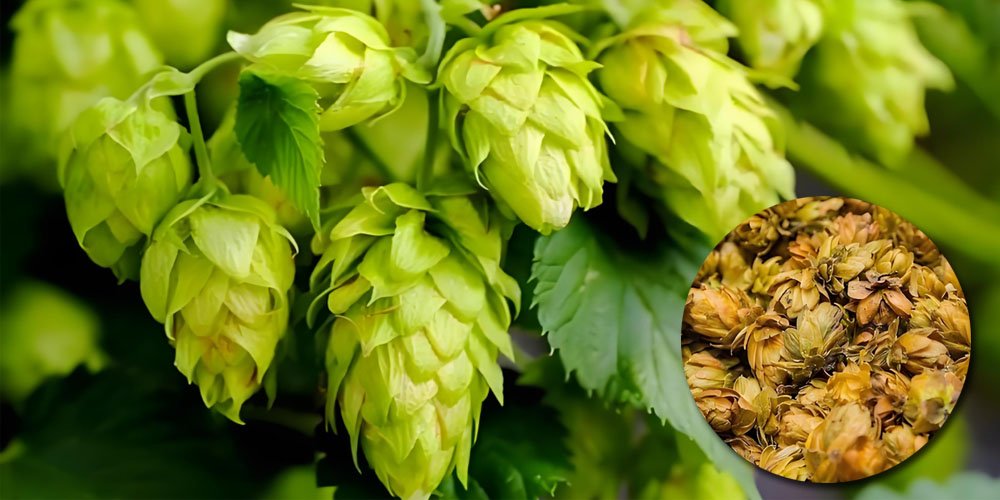
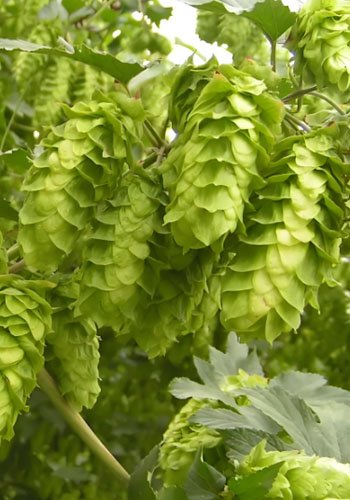
Hops are the pine-cone shaped flowers of a climbingvine that is native to the temperature regions of NorthAmerica, Europe and Asia. The plant has male andfemale bines, but only the female bines develop conesIn brewery, hops provide bitterness to balance thesweetness of malt sugars, as well as flavors, aromas.resins that increase head retention, and antiseptics toretard spoilage. It is the flower of the hop plant used inbrewing. Hop flowers are composed of thin, green,papery, leaf-like bracts. At the base of these bracts arewaxy, yellow lupulin glands that contain alpha acids responsible for bitterness and essential oils that give beerflavor and aroma, which are prized to brewers.
Forms of Hops for Brewing
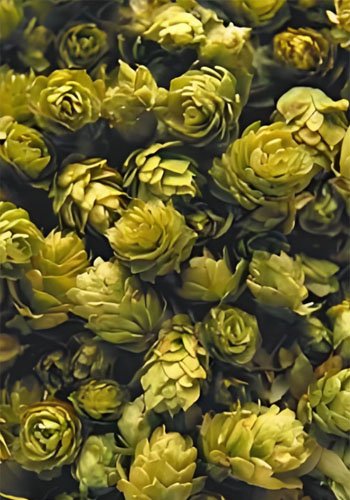
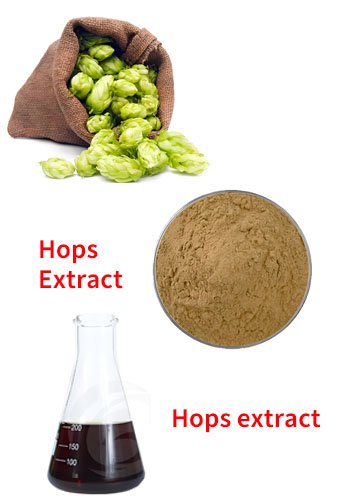
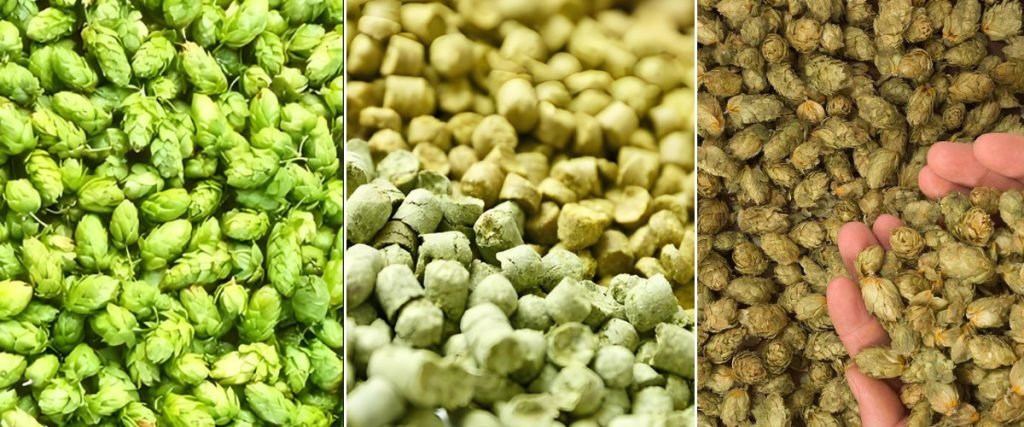
There are several forms of hops for brewers: whole-leaf, plugs, hops extracts, and hops pellets.
Whole-leafhops:Whole-leaf hops are the whole flowers that have been dried and uncompressed. Whole leaf hops have less surfacearea exposure to wort than pellets and are less efficient for bittering, so more of them are required to impart anequal amount of bitterness compared to pellets, which results in greater loss to the brewer. Their bulk also makesthem more difficult to store and more susceptible to spoilage
Hop plugs:Hop plugs are whole flowers that have been dried and compressed into a plug about an inch in diameter. Hopplugs have less surface area exposure to wort and thus are less efficient for bittering, so more of it is required toimpart an equal amount of bitterness than hop pellets.
Hop extracts:Hop extracts are the alpha acids and essential oils that are pulled from the cones using heat and various solvents.
These concentrated liquid extracts can be used in the brewing process just like hops. There are separate extractsfor bittering, flavor, and aroma. They are mostly used by large breweries. Hop extracts are easy to store and can be kept for long periods of time without spoilage. Their concentrated state and lack of vegetative matter reducesthe amount that must be used and eliminates wort loss. Their concentration can make them diffcult to useproperly in small batches however, and some claim undesirable flavors from their use.
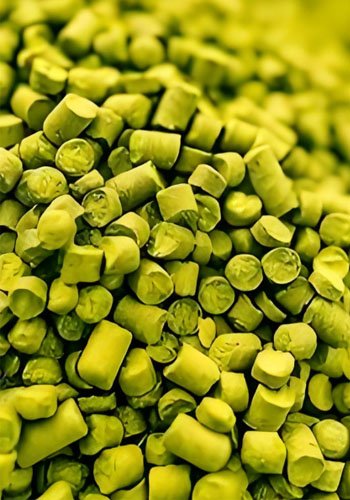
Hops pellets:Hop extracts are the alpha acids and essential oils that are pulled from the cones using heat and various solvents.These concentrated liguid extracts can be used in the brewing process just like hops. There are separate extractsfor bittering, flavor, and aroma. They are mostly used by large breweries. Hop extracts are easy to store and canbe kept for long periods of time without spoilage. Their concentrated state and lack of vegetative matter reducesthe amount that must be used and eliminates wort loss. Their concentration can make them diffcult to useproperly in small batches however, and some claim undesirable flavors from their use.
What equipment is used for granulation of hops?
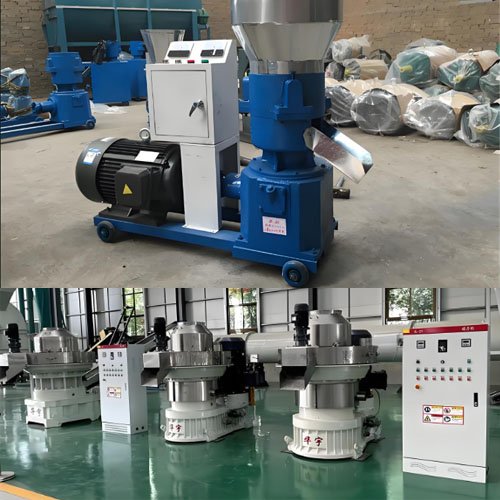
The main equipment used for hop granulation includes hop crusher, hop pellet machine, drying equipment, cooling equipment, etc. These devices work together to ensure that hops maintain their quality and functional characteristics during the granulation process.
Hops crusher
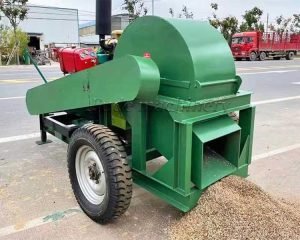
The hops crusher is used to crush dried beer pollen into small particles for subsequent granulation processing. According to the special characteristics of the material, a hammer crusher can be selected. The hammer crusher crushes hops by high-speed rotating hammer heads, which can effectively reduce the particle size of hops and avoid excessive dust generation.
Hops granule machine
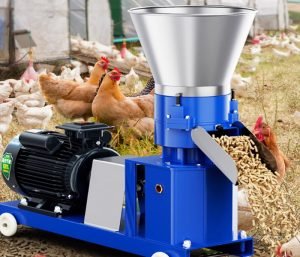
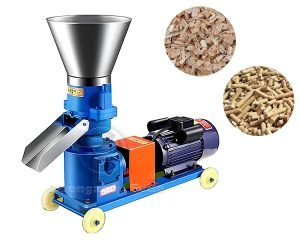
The hop pellet machine is the core equipment for hop granulation, mainly used to compress crushed hops into pellets. According to different molds, hop pellet machines can be divided into flat mold pellet machines and ring mold pellet machines. The ring mold pellet machine has become the preferred equipment both domestically and internationally due to its high output and low energy consumption. During the granulation process, hops are compressed by molds and rollers to form particles with a certain strength and shape. It should be noted that heat is generated during the granulation process, so the temperature must be controlled to avoid high temperatures damaging the composition of hops.
drying equipment
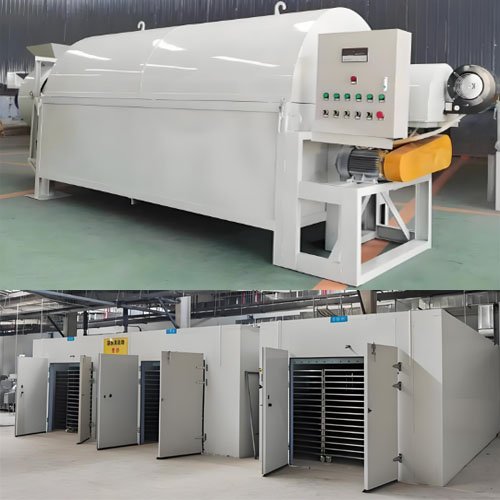
Before the granulation of hops, it is usually necessary to dry them first. Drying equipment is used to remove moisture from hops to ensure their stability during subsequent processing. Common drying equipment includes drying rooms, dryers, etc. These devices rapidly dehydrate hops while maintaining their aroma and nutritional value through heating and ventilation. In China, many hop processing plants are equipped with professional drying equipment to ensure the quality of hops.
Hops granulation is a complex process involving multiple steps and equipment. From crushing, drying, granulation to cooling, every step requires precise control and professional equipment support. Hops crusher, hop pellet machine, drying equipment, and cooling equipment work together to ensure the quality and functionality of hop pellets. With the development of hop pellet technology, more and more breweries are adopting advanced granulation equipment to improve production efficiency and product quality.
Why Hops Pellets Are Commonly Used Form of Hops?
Hops have three main ingredients of relevance to brewers: a-acids, b-acids and essential oils.
Brewers normally concern themselves with only two of the three ingredients: a-acids andessential oils; alpha acids are responsible for bitterness and essential oils gives beer flavor and aroma. However, all three of these components loss as hops age. The rate ofloss depends on the storage temperature, the amount of air present, and the hop variety. The lower the temperature, the less the hops deteriorate. Therefore for optimum preservation of hop’s valued qualities, they should be stored as cold as possible and away from air. Compared to other three types hops, hopspellets can not only keep out a lot of oxygen, but also their compact form allows them to be easily vacuum packedto slow the deterioration, so the season hop brokers take all remaining unsold bales of poor-storing hops intopellets;, the reason pellets are so prevalent in the home brewing trade is that they deteriorate more slowly thanwhole hops when stored in less ideal conditions; microbrewers like hops pellets from two additional reasons:they are easy to remove from the wort if the brewery uses a whirlpool separator, and they take up much lessstorage space, making it much more practical to keep them cold. Furthermore hops pellets offer brewersconsistency in alpha/beta acid levels and the pellet format is available in volume supply year round.
International Market Supply of Hop Pellets
Hops are grow in relatively few countries throughout the world. Due to hops latitudinal sensitivity, production is restricted to those countries situated between the 35th and 55th parallel north and south of the equator. Thedominant hop producing region are Western Europe, Northwestern USA and China, and the mainmanufacturing regions of hops pellets are Northwestern USA, EU and Asia.The international market for hops ischaracterized by a few large players who own the majority of the world’s pelletizing machines and extractmachine, and a large number of small players. Therefore it has much market share for the people who want tostart hops pellets business.
Zhengzhou Fude Machinery’s hop pellet machine has a high production capacity and is suitable for the needs of breweries of different scales; This device is not only used for the production of hops particles, but also for processing other biomass materials such as corn stover, wheat stover, straw, sawdust, etc., with wide applicability. Choosing our hop pellet machine not only improves production efficiency and product quality, but also reduces production costs, providing a more economical and environmentally friendly solution for breweries.
Success with a feed pellet machine hinges on consistent raw material preparation (moisture, size, mix), understanding binder science, selecting the right die (type and compression ratio), considering wear part metallurgy, and calculating total co...
Thinking any machine that cuts wood is a "sawdust maker"? While saws create dust, relying on them for bulk sawdust production is inefficient and misses the point of purpose-built machinery. For dedicated, efficient production of wood chips or s...
 Fude Machinery-wood crusher manufacturer

HelloPlease log in