Success with a feed pellet machine hinges on consistent raw material preparation (moisture, size, mix), understanding binder science, selecting the right die (type and compression ratio), considering wear part metallurgy, and calculating total cost of ownership, not just the purchase price.
Making high-quality feed pellets consistently involves more than just buying a machine. As part of Fude Machinery, specializing in equipment like pellet mills, I want to share practical insights gathered from countless customer interactions and industry experience.
Why is Raw Material Consistency the ‘Hidden Ingredient’?
Many users focus solely on the pellet machine’s specs, overlooking the most crucial factor. Yet, inconsistent raw materials are the root cause of most pelleting problems.
Are you experiencing frequent die blockages or pellets that crumble easily? It’s likely your raw material preparation needs attention, not necessarily the machine itself.
Consistent moisture content (typically 13-18%), uniform particle size, and a homogeneous mix are vital for quality pellets and machine longevity.
Moisture Content
This is arguably the most critical parameter. The right amount of moisture acts as a lubricant during pelleting and helps activate natural binders in the feed ingredients.
Too Dry: Leads to excessive friction, high energy consumption, rapid die/roller wear, and powdery pellets that don’t hold together.
Too Wet: Can cause die blockages as the material struggles to pass through. Pellets may be soft, mushy, or fracture due to steam escaping as they exit the die. The ideal range is usually 13-18%, but this varies with the specific formulation. A reliable moisture meter is an essential tool.
Particle Size
The raw ingredients must be ground fine enough to pass smoothly through the die holes and compact properly. Large particles create voids, leading to weak pellets and potential blockages.
General Rule: Particles should generally be smaller than the diameter of the die holes.
Impact: Consistent, fine grinding ensures better ingredient mixing and uniform compaction within the die. Invest in a good hammer mill or grinder appropriate for your ingredients.
Homogeneity
All ingredients, including micro-ingredients and binders, must be thoroughly mixed. Uneven distribution leads to inconsistent pellet quality and nutritional value.
Problem: Pockets of unmixed material can cause pelleting difficulties and variations in pellet hardness and durability.
Solution: Use an efficient feed mixer for an adequate duration to ensure all components are evenly dispersed.
The Role and Challenge of Binders
Binders are substances added to feed formulations to improve pellet durability, reduce fines (powdery material), and sometimes add nutritional value or improve water stability (crucial for fish feed). Common binders include molasses, starches (like corn or wheat), lignosulfonates, and specialized commercial binders.
Why Guessing is Risky
Incorrect Percentage: Too little binder won’t provide the needed durability. Too much can make the feed sticky, leading to die blockages, increased energy consumption, and potentially affecting palatability or digestion.
Ingredient Interaction: Binders interact differently with various feed components (proteins, fats, fibers). What works for one formulation might not work for another.
Die Wear: Some binders can be abrasive or affect the flow characteristics through the die, potentially increasing wear.
Nutritional Impact: Binders dilute the primary nutrients. Their inclusion must be accounted for in the overall nutritional balance of the feed.
The Right Approach
Define Needs: Determine the required pellet hardness and durability based on the target animal, feeding system, and storage/handling conditions (e.g., aquaculture feed needs high water stability).
Consult Experts: Work with an animal nutritionist or feed consultant. They understand ingredient properties and can recommend the appropriate binder type and inclusion rate for your specific formulation.
Start Small & Test: When introducing a new binder or formulation, start with small test batches and observe the pelleting process and final pellet quality. Adjust moisture and binder levels systematically.
Flat Die vs. Ring Die: Which is Right Beyond Just Scale?
The simple advice is often “flat die for small scale, ring die for large scale.” While generally true for capacity, this overlooks crucial operational differences.
Are you choosing solely based on expected output? The die type impacts material tolerance, wear rates, pellet quality, and operational flexibility more than just scale suggests.
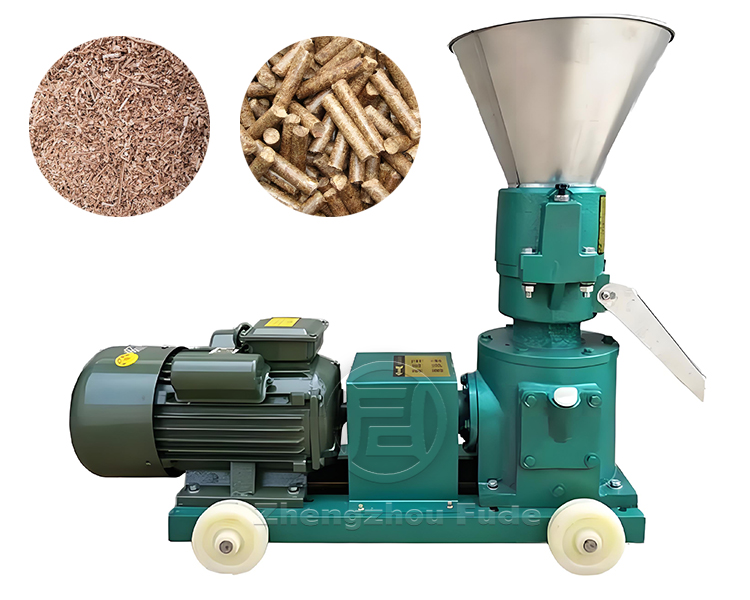
Flat dies tolerate inconsistent materials better and are easier for die changes. Ring dies offer lower wear and better uniformity but need precise prep and higher investment.
Deeper Dive into Die Types
The choice between a flat die and a ring die pellet mill involves trade-offs that go beyond simple production volume. Understanding these nuances helps you select the machine best suited to your specific operational context.
Feature
Flat Die Pellet Mill
Ring Die Pellet Mill
Considerations
Operation
Rollers rotate over a stationary horizontal die.
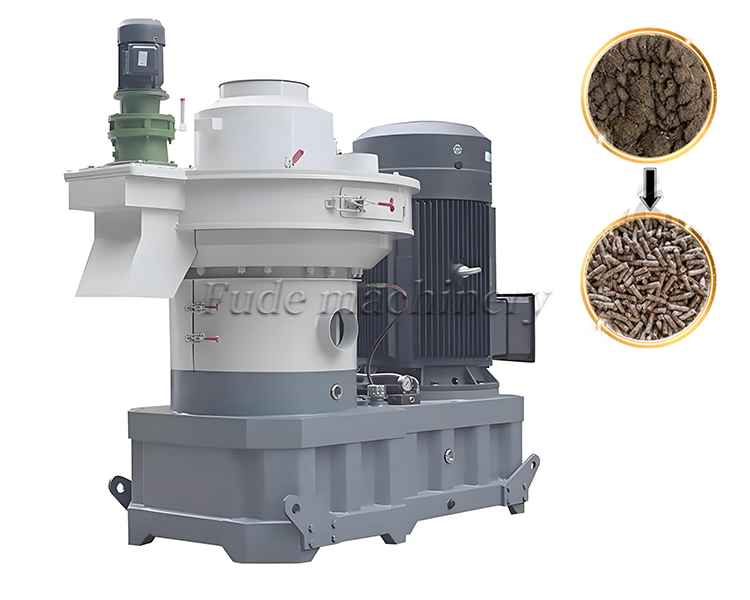
Die rotates around stationary or counter-rotating rollers.
Ring die generally ensures more consistent pressure application.
Capacity
Typically lower (suited for smaller farms, labs).
Typically higher (suited for commercial feed mills).
This is the “scale” argument, but other factors are important.
Material Tolerance
Generally more forgiving of slight variations in moisture & particle size.
Requires more consistent, well-prepared raw material.
If your material prep isn’t perfect, a flat die might be less prone to issues (but quality may still suffer).
Wear Rate
Higher friction between rollers and die can lead to faster wear per ton.
Lower wear rate at optimal operation due to rolling action.
Ring dies can be more cost-effective long-term for high-volume production due to lower wear part costs per ton.
Pellet Uniformity
Can be slightly less uniform due to pressure variations.
Generally produces more uniform pellets.
Critical for some applications, less so for others.
Die Change
Generally simpler and faster.
Can be more complex and time-consuming.
Important if you frequently change formulations requiring different dies.
Heat Generation
Can generate slightly more heat due to friction.
Generally generates less heat during pelleting.
A concern for heat-sensitive nutrients (vitamins, enzymes).
Initial Investment
Lower.
Higher.
Balance upfront cost against long-term operating costs and required capacity/quality.
Choose based on your capacity needs, material preparation capabilities, frequency of formula changes, required pellet quality, and budget.
Is the Die Compression Ratio Right for Your Feed?
Different animals need different pellet densities. This is mainly controlled by the die’s compression ratio, a detail often overlooked.
Are your pellets too hard for young animals or too soft for robust handling? Using a die with the wrong compression ratio is a common and costly mistake.
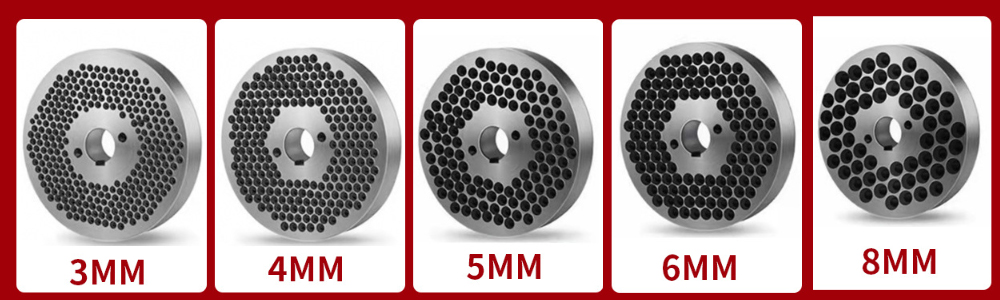
The compression ratio (effective hole length / diameter) dictates pellet hardness. Ensure your supplier offers various ratios and guides you based on your specific feed formulation.
Digestibility & Palatability: Very hard pellets might be difficult for young or small animals to consume or digest.
Durability: Pellets need sufficient hardness to withstand handling, transport, and feeding systems without crumbling into fines. Aquaculture feed needs specific water stability.
Machine Strain: Forcing material through an unnecessarily high compression ratio die puts extra strain on the rollers, bearings, and motor.
Understanding Compression Ratio (L/D)
The compression ratio is a fundamental specification of a pellet die. It represents the relationship between the effective length (L) of the die hole and the diameter (D) of the hole.
Higher Ratio (e.g., 10:1 or higher): Material stays under pressure longer. This results in denser, harder pellets. Requires more energy. Often used for cattle feed, fish feed (requiring water stability), or biomass pellets.
Lower Ratio (e.g., 5:1 to 8:1): Material passes through more quickly with less compaction. Results in softer pellets. Uses less energy. Often suitable for poultry mash, piglet feed, or rabbit feed where high hardness isn’t needed or desired.
Getting it Right
Specify Your Needs: Clearly inform the manufacturer about the type of animal feed you are producing (e.g., broiler starter, dairy cow ration, tilapia feed). Provide your formulation if possible.
Consult the Supplier: A reputable manufacturer like Fude Machinery has experience and can recommend the appropriate compression ratio range for your specific application.
Consider Multiple Dies: If you produce feed for different animals or with vastly different formulations, you may need multiple dies with different compression ratios.
Key Material Considerations
Alloy Steel Type: Common choices include chromium steels (like 40Cr) or chromium-manganese-titanium steels (like 20CrMnTi). These alloys provide a balance of hardness (for wear resistance) and toughness (to resist cracking under pressure). Avoid machines using basic carbon steel for these parts – it won’t last.
Heat Treatment: This is crucial. Processes like carburizing introduce carbon into the surface layer, which is then hardened through quenching. The carburizing depth (how deep the hardened layer goes) is critical. A deeper hardened layer generally means longer life. Ask the supplier for specifics (e.g., “carburized to a depth of 0.8-1.2mm”). Proper tempering after hardening is also needed to reduce brittleness.
Hardness: Measured typically in HRC (Rockwell Hardness Scale). A balance is needed – too hard can be brittle, too soft wears quickly. The ideal hardness depends on the alloy and application.
Stainless Steel Option: For formulations containing corrosive ingredients (like certain salts or acidic additives), high-chromium stainless steel dies (e.g., X46Cr13 or similar) offer superior corrosion resistance. They are more expensive but prevent premature die failure due to corrosion and maintain hole smoothness.
Beyond the Motor Rating
The kilowatt (kW) or horsepower (HP) rating of the main motor indicates the potential power draw, but the actual energy consumed to produce a ton of pellets depends heavily on the machine’s efficiency and operating conditions.
Conditioning New Dies: Are You Skipping This Vital Step?
New pellet dies, especially ring dies, need a “run-in” period to perform optimally. Ignoring this leads to immediate problems.
Experiencing blockages and poor pellets with a brand-new die? Improper or skipped conditioning is the likely cause, preventing smooth material flow.
Condition new dies with an oily, slightly abrasive mix (bran, oil, fine sand) to polish the holes. This prevents early blockages and ensures better pellet quality.
The Why and How of Die Conditioning
New die holes often have microscopic machining marks or slight roughness from manufacturing and heat treatment. This roughness increases friction, making it difficult for feed material to pass through smoothly, especially during initial startup. Conditioning polishes these holes, creating a smoother surface for better material flow and compaction.
The Conditioning Process
The Mix: Prepare a special conditioning mixture. A common recipe involves:
Wheat Bran or Rice Bran (acts as a carrier)
Vegetable Oil (provides lubrication)
Fine Sand (provides gentle abrasion – use sparingly and carefully!) The exact proportions vary, but aim for a mix that feels slightly oily and gritty. Consult your manufacturer for their specific recommendation. Never use coarse sand.
The Procedure:
Install the new die correctly.
Start the pellet mill and carefully feed the conditioning mix through.
Run the mix through the die for a period (often 30 minutes to several hours, depending on the die size and manufacturer’s advice) until pellets start forming relatively smoothly and consistently.
Discard the pellets produced during conditioning – they contain sand and are not suitable for feed.
After Operation: Similarly, before shutting down the machine after processing feed, it’s good practice to run a small amount of an oily, non-compacting mixture (like oily bran, without sand) through the die. This pushes out residual feed, preventing it from hardening in the holes overnight or during downtime, which makes the next startup much easier.
While it seems like an extra step, proper conditioning and shutdown procedures are essential investments in time that prevent significant frustration and downtime later.
Moisture: The Critical Balancing Act
As mentioned under raw material consistency, moisture plays a dual role in pelleting:
Lubrication: Helps the feed pass through the die holes with less friction.
Binding: Heat and pressure in the die activate natural binders (like starches and proteins) in the feed, and moisture is essential for this process (gelatinization).
Common Moisture-Related Problems
Pellets Too Soft / Crumbly: Often caused by insufficient moisture. The material is too dry to bind properly under pressure. There isn’t enough moisture to facilitate the gelatinization of starches or the plasticization of proteins.
Pellets Fracturing / Expanding / Mushy: Often caused by excessive moisture. As the pellet exits the high-pressure die, the superheated water flashes into steam, causing the pellet structure to crack or expand rapidly. They may also feel soft or mushy immediately after pelleting.
Die Blockages: Can be caused by either extreme – too dry increases friction, while too wet can create a sticky mass that plugs the holes.
The Solution: Measure and Adjust
Don’t guess your moisture content. Environmental humidity, ingredient storage, and seasonal changes can all affect it.
Invest: Purchase a reliable moisture meter suitable for grain or feed mash. Calibrate it regularly.
Test: Regularly test the moisture content of your mixed raw material before it enters the pellet mill.
Adjust: If the moisture is outside the optimal range (typically 13-18%, but confirm for your specific formulation), adjust accordingly. This might involve adding a small amount of water (ensure thorough mixing afterwards) or using slightly drier ingredients if possible. Make small, incremental adjustments.
Checking and correcting moisture is the single most effective first step in troubleshooting poor pellet quality.
The Ongoing Cost of Wear Parts
Dies and roller shells are consumables – they will wear out and require replacement. The frequency depends on:
Hours of operation
Type of raw materials (abrasiveness, hardness)
Quality of the wear parts themselves (metallurgy, heat treatment)
Ignoring the cost and availability of these parts when making the initial purchase is a major oversight.
Questions to Ask Before Buying
Price List: Request a current price list specifically for replacement dies (with your required compression ratio) and roller shells compatible with the machine model you are considering.
Availability / Lead Time: Ask about the typical stock levels and lead times for these parts. Are they readily available from the supplier or a local distributor, or do they need to be specially ordered with long waiting periods?
Supplier Stocking: Does the supplier maintain a good inventory of common wear parts? A supplier committed to supporting their customers will invest in keeping spares on hand.
Standardization: Does the machine use common or proprietary parts? Machines using more standardized wear parts might offer more sourcing options, potentially keeping costs competitive.
Shipping Costs: Factor in potential shipping costs, especially if parts need to be imported quickly.
A lower initial machine price can be quickly negated by high spare part costs or extended downtime waiting for replacements. Choose a supplier, like Fude Machinery, who understands the importance of reliable parts support and maintains accessible inventory.
Conclusion
Success in feed pelleting requires attention to detail, from consistent raw material preparation to understanding die specifics and choosing a reliable supplier. By considering these insights, you can avoid common pitfalls and make informed decisions. Fude Machinery is here to partner with you, offering reliable equipment and expert guidance.
As an important equipment in the wood processing industry, the wood splitting machine has a series of advantages and disadvantages. The following is a detailed analysis of the advantages and disadvantages of the wood splitting machine: In summary,...
Piles of wood waste cluttering your space? Disposal costs eating into profits? Our wood crushers turn waste into valuable resources, boosting your bottom line. A wood crusher is a machine designed to break down large pieces of wood into smaller, m...
Got waste wood? Need cheap energy? Biomass energy can help you use your wood and save money. Biomass energy is easy to make from wood waste. You can turn things like tree branches and sawdust into fuel or charcoal. We make the machines that help y...
When selecting and configuring an airflow dryer, multiple factors need to be considered to ensure that the equipment can meet production needs and achieve the expected drying effect. Here are some key steps and suggestions:
 Fude Machinery-wood crusher manufacturer


HelloPlease log in