It is well known that poultry feed costs account for 65-75% of the total cost of poultry production and operation. Therefore, proper chicken feed formulation is very important. Sometimes, a small mistake in poultry formulation can increase the cost of production or cause huge losses to the poultry producer or poultry farming industry. Chicken feed formulation is the process of meeting the nutritional requirements of chickens through the optimal combination of different chicken feed ingredients. At the same time, human society is an economic society, just to ensure the normal growth of chicken is not enough, but also need to realize the chicken grow faster, spend less money, earn more money and many other requirements. In addition to the animal’s own growth and development, reproduction and other needs for energy and protein, there are human requirements for them, such as the requirements for chicken meat tender, so that human beings must artificially change the animal’s nutritional requirements in order to achieve a certain purpose.
The optimal formula for homemade chicken feed
Before making poultry feed or setting up feed mill plant for poultry, it is needed to have a full understanding of chicken feed formula:
Nutrient requirements of different poultry, like laying hens, broilers or breeders.
Feed composition in terms of nutrient content and nutritional and processing limitations.
A scientific and reasonable chicken feed formula not only makes chickens grow well, effectively improves their strength and promotes their survival rate. At the same time, the standardisation of chicken feed formula can better save the cost of chickens farming, and the compound probiotics significantly improve immunity and stress resistance, prevent persistent diarrhoea, gastroenteritis, cluster enteritis and intestinal infections, and reduce mortality.
Egg chicken feed formula
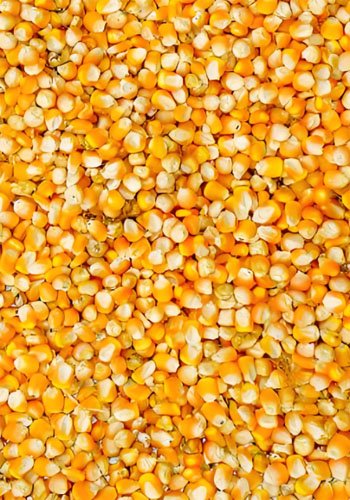
Formula 1: Bran 3.2%, maize 62%, soybean meal 31%, calcium hydrogen phosphate 1.3%, rock flour 1.2%, additives 1%, salt 0.3%.
Formula 2: Soya bean meal 24%, maize 61.7%, wheat bran 4.5%, vegetable meal 4%, rock meal 1.2%, fish meal 2%, salt 0.3%, calcium hydrogen phosphate 1.3%, additives 1%.
Formula 3: a) Corn 62.7%, bran 4%, soybean meal 25%, fish meal 1.5%, vegetable meal 3%, stone meal 1.2%, calcium hydrogen phosphate 1.3%, salt 0.3%, additives 1%.
Note that the additives should contain amino acids, vitamins, growth promoters and trace elements.
Feed Formula for Broiler
Formula 1: Soya bean meal 38%, stone meal 1%, maize 55.3%, cooking oil 3%, salt 0.3%, additives 1%, calcium hydrogen phosphate 1.4%.
Formula 2: Corn 54.2%, soybean meal 34%, salt 0.3%, rock flour 1%, cooking oil 3%, vegetable meal 5%, additives 1%, calcium hydrogen phosphate 1.5%.
Formula 3: Vegetable meal 4%, soybean meal 32%, rock meal 1%, corn 55.2%, calcium hydrogen phosphate 1.5%, fish meal 2%, cooking oil 3%, additives 1%, salt 0.3%
Keys for Chicken Feed Making
Raw Material Selection
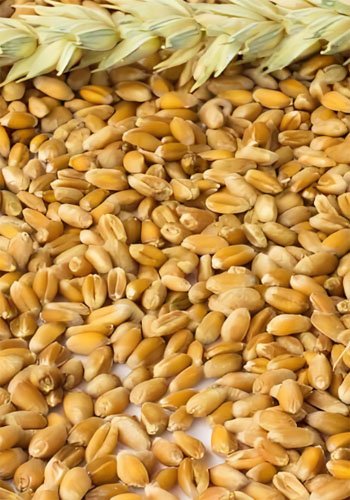
Raw material selection gives priority to local feed crops, such as wheat, rice and maize, and then the purchase of additives, premix raw material concentrates, etc., as appropriate. Even if they are reliable raw materials, attention should be paid to their use ratio, just as wheat cannot be used in its entirety to replace energy raw materials, and vegetable meal cannot replace animal-derived protein.
Absorption Rate of Raw Materials
Chicken farmers often make mistakes when formulating feeds based on relevant information, without paying attention to the absorbability of feed ingredients. For example, in protein feed, the absorption rate of rapeseed meal, soybean meal, fish meal and cotton meal gradually decrease. Some feeds with high protein content sell for less than feeds with low protein content. However, the imbalance of phosphorus and calcium in the ratio of added mineral elements can cause blood and diseased bone disease. For example, 2/3 of the calcium is absorbed in baker’s and mussel shells and 1/3 in lime in chicken meat.
Homemade chicken feed pellet equipment
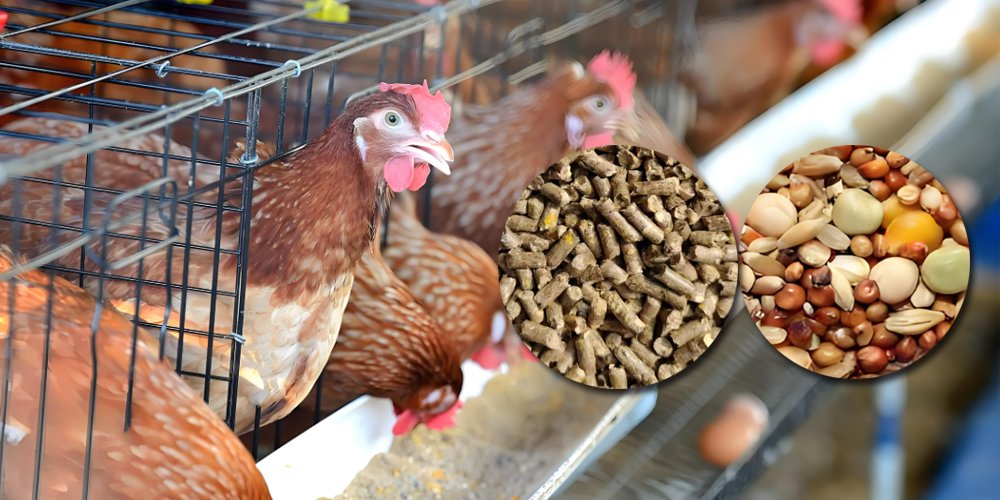
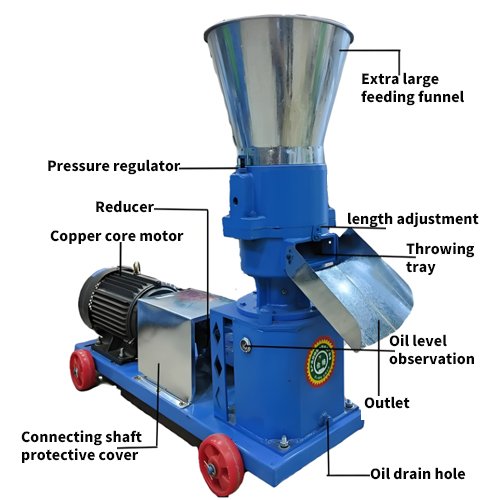
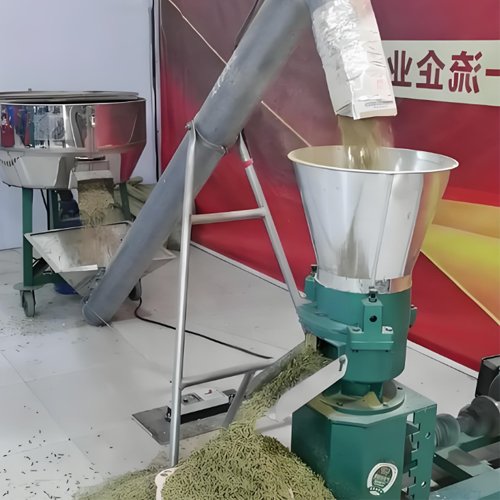
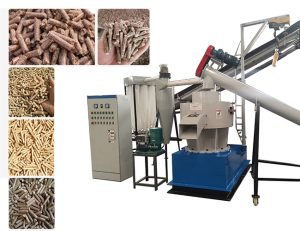
A feed pellet machine is a specialized equipment used to process chicken feed raw materials into granular feed, with advantages such as high efficiency, uniformity, easy storage, and transportation. Its main functions include raw material crushing, mixing, conditioning, extrusion molding, and cooling, which can improve feed utilization, reduce waste, and enhance the nutritional absorption and health status of chickens.
The structure of a feed pellet machine usually includes a raw material inlet, a crushing system, a mixing system, a molding system, a cooling system, and a packaging system. Among them, the molding system is the key, which squeezes the mixed feed raw materials into particles through a ring mold or a flat mold, and the particle size can be adjusted according to the breed and growth stage of the chicken.
When choosing a chicken feed pellet machine, it is necessary to consider its production capacity, power, material (such as stainless steel or carbon steel), and whether it has automatic control and intelligent adjustment functions. For example, the SZLH420 feed pellet machine is suitable for a yield of 1-3 tons/hour and is suitable for use in small and medium-sized breeding farms. In addition, some high-end models are equipped with magnetic separation devices that can remove iron impurities and ensure feed safety.
The advantages of a feed pellet machine are: improving feed conversion rate: pellet feed is easier to digest than powdered feed, reducing waste; Extended shelf life: pellet feed has low moisture content and is not easily spoiled; Easy to store and transport: compact particle structure reduces transportation costs; Enhance chicken appetite: Granular feed has a good taste and increases feed intake by 10% -15%.
Overall, the feed pellet machine is an indispensable equipment in modern chicken farming, which can significantly improve breeding efficiency and economic benefits.
If you are interested in learning more about animal feed formulas or chicken feed formulas to start your own poultry feed production business, or would like to learn more about how to make poultry feed, please send your inquiry immediately. Zhengzhou Fude Machinery is a professional manufacturer of animal feed processing machinery. We have helped our clients establish small or commercial scale feed factories in different countries such as Nigeria, South Africa, Kenya, Australia, Pakistan, the Philippines, Dubai, Mali, Australia, Uzbekistan, and Russia. We have practical experience in poultry feed production, including poultry feed formulation.
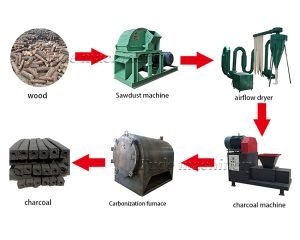
The production line for making charcoal mainly refers to the machine-made charcoal production line, which includes four main equipment: crusher, dryer, rod making machine, and carbonization furnace. Here is a detailed introduction about these four...
Struggling with scattered waste piles or costly material transport? Heard about mobile crushers but unsure if they fit, or which type you really need? Let an old hand with in the field cut through the noise. A mobile crusher combines processing po...
Choosing the right briquetting machine involves understanding different forming principles (screw vs. stamping vs. hydraulic), matching them to raw materials, intended use (fuel vs. charcoal), and considering wear parts costs. Many factors influen...
Worried about rising feed costs? Want more control over ingredients? Making your own chicken feed is possible. You can make chicken feed by getting ingredients, grinding them down, mixing correct amounts for nutrition, and then using a pellet mach...
 Fude Machinery-wood crusher manufacturer


HelloPlease log in