Search the whole station Products

Feed Pellet Mill

wood recycling machine 3870

Definition and product functions of pellet machine

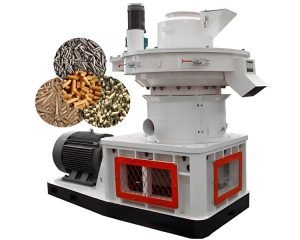
A feed pellet machine is a mechanical equipment that crushes raw materials such as corn, soybean meal, straw, forage, and rice husk, and then physically squeezes them into granular feed. Its core functions include:

  • Wide adaptability of raw materials: can handle single or mixed raw materials, such as crop straw, grain processing by-products, grass, etc.
  • Particle molding stability: Through mold compression, particles with a diameter of 2.5-20mm and adjustable length are produced to meet the needs of different animals.
  • Nutrient retention and enhancement: The high-temperature and high-pressure molding process can kill parasitic eggs and pathogenic microorganisms, while denaturing the trypsin resistance factors in grains, improving feed digestibility.
  • Convenient storage and transportation: Granular feed has a low moisture content (usually ≤ 12%), is not easy to mold, and is convenient for long-term storage and long-distance transportation.

Table of Contents

Feed Pellet Mill parameters: support customization


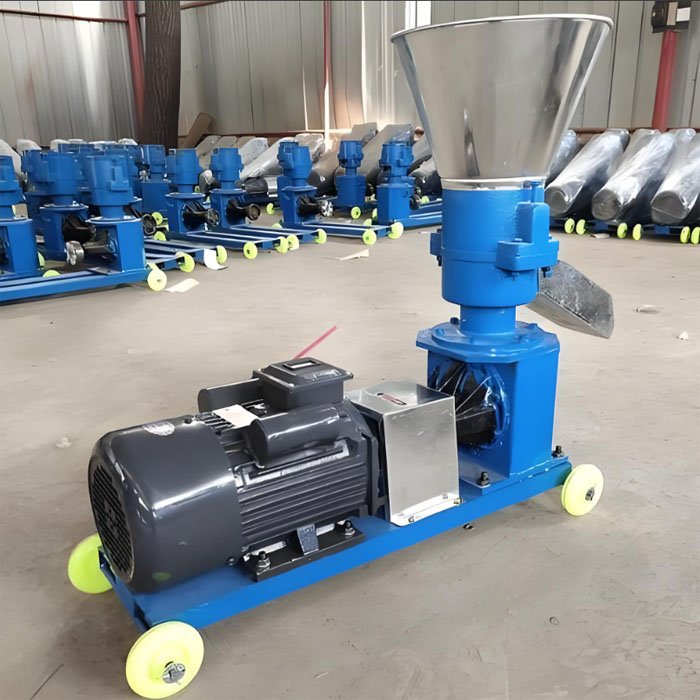
ModelPower (kW)Yield (kg/h)External dimensionsFlat mold speed
1503-470-200820*310*750320
1604-4.5150-250850*310*780370
2107.5400-5001100*450*930370
26015400-7001240*530*1190370

Customizable equipment according to customer requirements

Product advantages of pellet machine

  • Efficient and energy-saving
  • The motor power covers 2.2-150 kilowatts, and the single machine output ranges from 50 kilograms/hour to 15 tons/hour.
  • The unit energy consumption of the ring mold pellet machine is as low as 30-50 kWh/ton, while that of the flat mold machine is 50-80 kWh/ton.
  • Strong durability
  • Key components such as ring molds and pressure rollers are made of alloy steel and undergo special heat treatment, with a service life of up to 2000-5000 hours.
  • Modular design facilitates quick mold replacement and adapts to different particle size requirements.
  • intelligent control
  • Some models are equipped with automatic lubrication systems, temperature monitoring devices, and fault alarm functions to reduce the difficulty of manual operation.
  • Support variable frequency speed regulation, which can adjust the extrusion pressure and speed according to the characteristics of the raw materials.

Types of pellet machines


According to its structure and working principle, feed pellet machines are mainly divided into the following types:

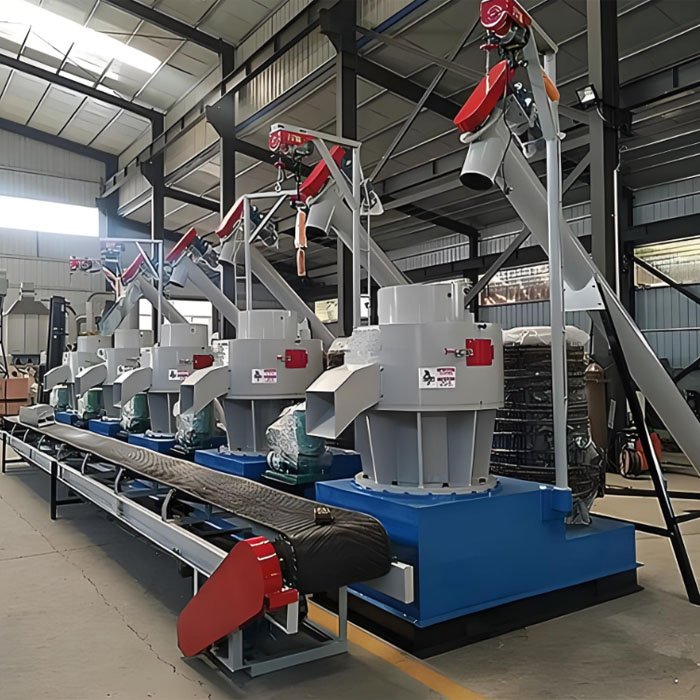
  • Ring mold feed pellet machine
  • Features: Adopting a circular mold and pressure roller extrusion, suitable for large-scale production.
  • Advantages: High production capacity (up to 15 tons/hour per machine), uniform particle size, and low energy consumption.
  • Application scenarios: Large scale feed processing plants, breeding groups.
  • Flat mold feed pellet machine
  • Features: The mold is flat and the pressure roller presses vertically downwards, suitable for small-scale production.
  • Advantages: Simple structure, convenient operation, and low maintenance cost.
  • Application scenarios: Small and medium-sized livestock farms, family farms, and straw comprehensive utilization projects.
  • Specialized feed pellet machine
  • Straw feed pellet machine: optimized design for coarse fiber raw materials such as corn straw and wheat bran, equipped with special molds and conditioners to improve straw utilization.
  • Aquatic feed pellet machine: It can produce floating or sinking pellets to meet the needs of aquatic animals such as fish and shrimp.
  • Pet feed pellet machine: supports small batch and multi variety production, with smooth pellet surface and good palatability.

The benefits of pellet feed for animals


  • Improved Digestibility: The heat from the pelleting process makes starches easier to digest, meaning your animals get more nutritional value from the same amount of feed.
  • Better Feed Conversion Ratio (FCR): Because they are getting more nutrients and wasting less feed, animals grow faster and more efficiently. A better FCR means lower cost per kilogram of gain.
  • Increased Hygiene: The heat kills pathogens like Salmonella, leading to healthier livestock and lower veterinary bills.
Feature ComparisonTraditional Mash FeedFUDE Machine Pelleted FeedWhat This Means For Your Farm
WasteHigh (selective eating, spillage)Very LowYou buy less feed to achieve the same growth, directly saving money.
DigestibilityModerateHigh (due to heat gelatinization)Your animals gain weight faster on the same amount of feed, shortening production cycles.
Storage & HandlingDifficult, dusty, attracts pestsEasy, compact, cleanYou save time and labor in daily feeding operations and reduce storage losses.
HygieneRisk of bacteriaLow risk (heat pasteurizes feed)Your animals are healthier, reducing the need for treatments and improving overall herd vitality.

Application scope ofpelletizer machine

  • Poultry farming: Granular feed can reduce feed waste and increase the feed intake and growth rate of chickens, ducks, and geese.
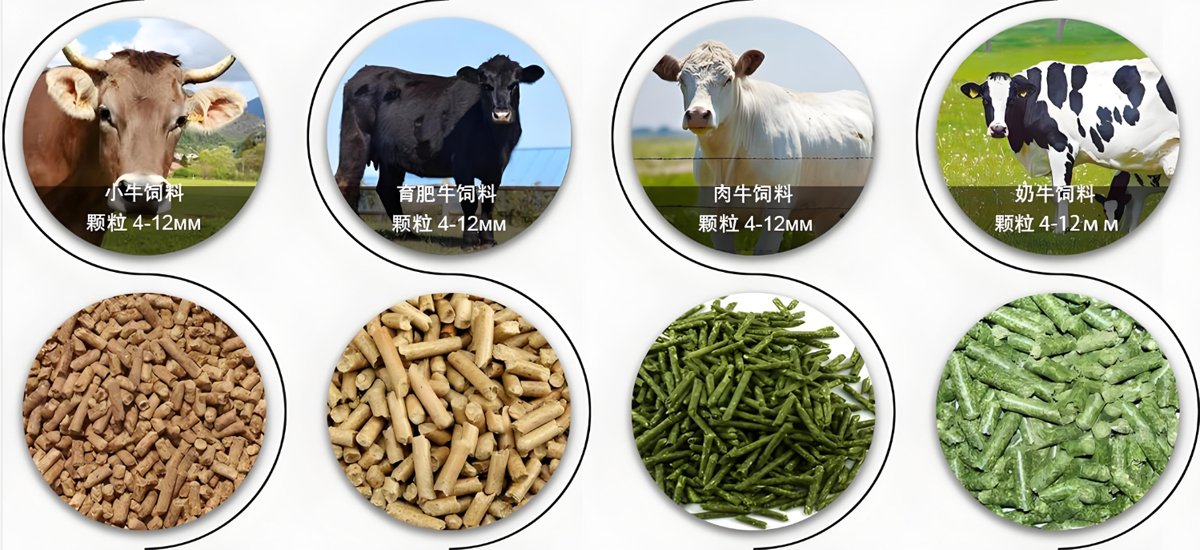
  • Ruminant animals: After consuming pellet feed, the rumen fermentation efficiency of cattle and sheep is improved, and daily weight gain increases by 10% -15%.
  • Aquaculture: Floating pellet feed is easy to observe the feeding amount, while settling pellets can reduce water pollution.
  • Comprehensive utilization of straw: Agricultural waste such as corn straw and wheat straw is converted into feed pellets, and each ton of straw can replace 0.3 tons of grain, reducing breeding costs by more than 30%.
  • Biomass energy: By adjusting the mold and process parameters, biomass fuels such as sawdust particles and rice husk particles can be produced, with a calorific value of 4000-4500 kcal/kg.

Nutrients in animal feed

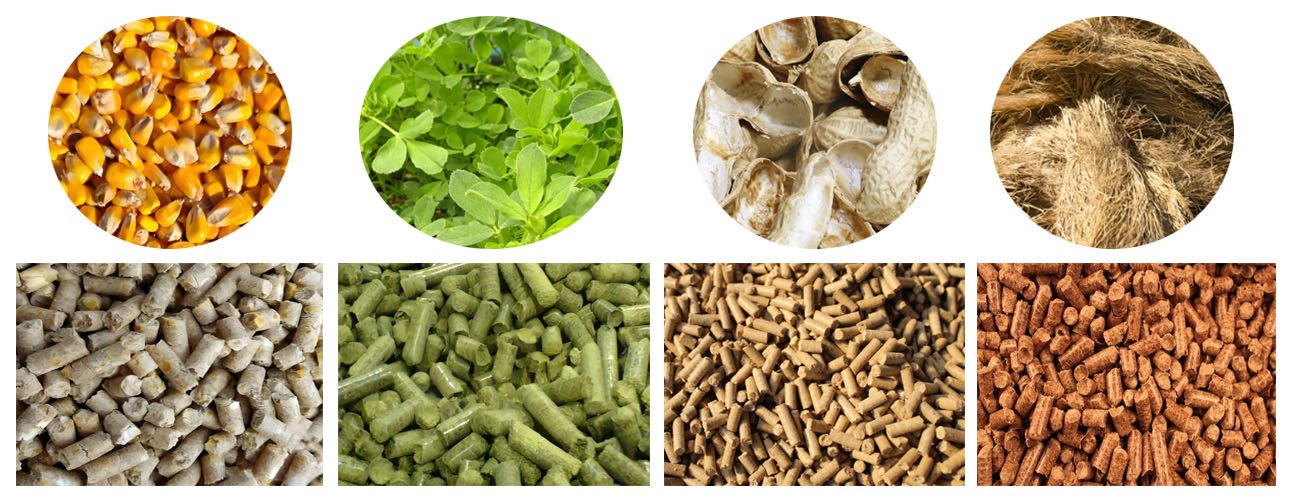
  • Grains (for energy): Corn, wheat, barley, sorghum, rice bran.
  • Protein Sources: Soybean meal, cottonseed meal, rapeseed meal, fish meal, bone meal.
  • Fiber Sources: Alfalfa, grass, wheat straw, peanut shells.
  • Additives: Vitamins, minerals, and other premixes can be blended in to create a complete feed.

How to Choose the Right Feed Pellet Mill for Your Operation


To choose the right feed pellet mill, you must match the machine’s capacity and die size to your specific livestock and production scale. A small poultry farm has very different needs from a large cattle feedlot. Answering these three questions will guide your decision.

1. What is Your Required Capacity?

How many animals do you feed, and how much feed do they consume daily? Our models are rated by their output in kilograms or tons per hour. Be realistic about your needs. It’s often wise to choose a machine with slightly more capacity than you currently need to allow for future growth.

2. What Pellet Size Do You Need?

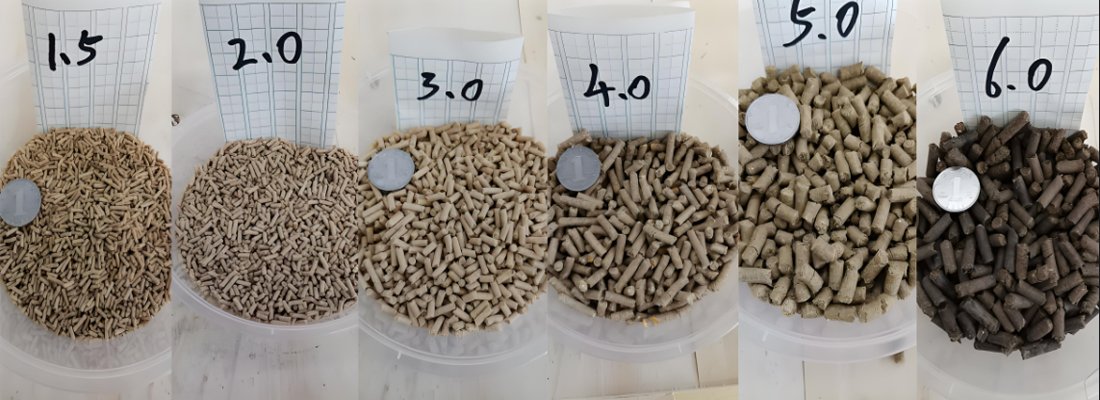
  • 2.5 mm: Ideal for baby chicks and small ornamental fish.
  • 3-4 mm: Excellent for growing chickens, ducks, rabbits, and most aquaculture fish.
  • 5-6 mm: Suitable for pigs, goats, and sheep.
  • 8-10 mm: Best for adult cattle and other large livestock.
  • Our feed pellet mills come with interchangeable dies, so you can produce different pellet sizes with the same machine.

Do You Need a Diesel or Electric Motor?

  • Electric Motor: This is the most common choice. It is quieter, cleaner, and more cost-effective to run if you have a reliable power source at your processing site.
  • Diesel Engine: Offers portability. If you need to make feed in a remote field or location without electricity, a diesel-powered model provides complete independence.
pelletizer

Q&A on Particle Machines

Question 1: What is the difference between a flat die and a ring die pellet mill?
flat die pellet mill, like the ones we specialize in for farm use, has a horizontal die and is ideal for small to medium-scale production. They are simpler, more robust, and easier to maintain. A ring die mill has a vertical die and is used for very large, industrial-scale feed production (over 2 tons/hour).

Question 2: Do I need to add a binder to the materials?
In many cases, no. The natural lignins in the plant materials and the moisture content are often enough to bind the pellet under pressure. For some very low-starch materials, a small amount of binder like molasses or bentonite clay can improve pellet durability.

Selling feed pellet machines: comprehensive recommendations


feed pellet mill is a strategic investment in your farm’s independence and profitability. By taking control of your feed production, you lower your costs, reduce waste, improve animal health, and ultimately produce a better final product. The key is to choose a machine that matches your scale of operation and the specific needs of your livestock.

  • Small scale breeding farms (annual output<1000 heads): It is recommended to use a flat mold pellet machine (such as the 120 type, with a yield of 80-100 kg/hour).
  • Medium sized breeding farms (annual output of 1000-5000 heads): Optional ring mold pellet machine (such as 250 type, with a production capacity of 0.6-1.5 tons/hour).
  • Large feed mills: It is recommended to install automated production lines, including crushing, mixing, conditioning, granulation, cooling, and other processes.

Your next step is to calculate your daily feed requirements and identify the raw materials you have readily available. With that information, our team can help you select the perfect pellet mill and any necessary pre-processing equipment to create a complete, efficient feed production line for your farm.

The prev: The next:

Related recommendations

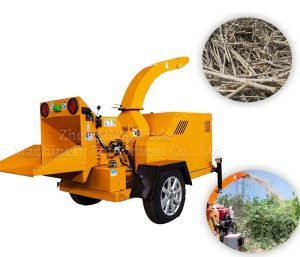
  • branch shredder

    1674

    Wood shredder for branches is a new type of ideal equipment for producing sawdust. It has added a side feed port and slicing device to the original foundation, which can convert larger diameter round wood, square wood, leftover materia...

    View details
  • drum chipper machine

    1788

    drum wood chipper machine is a specialized equipment for making wood chips, widely used in the production of wood chips in papermaking, particleboard, high-density fiberboard factories. It can cut high-quality industrial wood chips such a...

    View details
  • Wood peeling machine

    2081

    The wood peeling machine is mainly composed of feeding mechanism, discharging mechanism, cutting disc, transmission system, chassis, and other parts, and belongs to one of the wood processing machinery series products; The wood peeling machi...

    View details
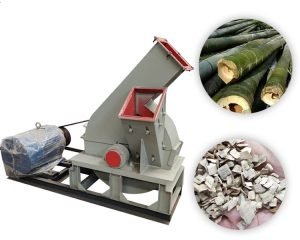
  • wood chipper

    349

    Wood chip machine, also known as wood chip crusher, sawdust crusher, is a mechanical equipment designed for wood processing, through the physical crushing of wood, branches, bamboo and fibrous materials into wood chips or sawdust, widely used i...

    View details
Click Cancel to reply