A large industrial wood chipper cuts logs, branches, slabs, and forestry residue into uniform wood chips. FUDE supplies heavy-duty wood chipping solutions for sawmills, biomass plants, paper mills, panel factories, and wood processing companies.
The machine can be configured according to your raw materials, required chip size, production target, feeding method, and discharge system.
A large wood chipper is an industrial machine designed to process a high volume of wood materials continuously. Compared with a small branch chipper, it has a stronger feeding system, larger cutting chamber, heavier knife roller or disc, and more durable wear parts.
The machine usually includes:
Hydraulic or mechanical feeding rollers
A large drum or disc cutting system
Replaceable chipping knives
A hydraulic power unit
A discharge conveyor or outlet
An electrical control cabinet
Safety guards and emergency stop devices
Large wood chippers are commonly used when a company needs stable chip size and continuous operation. They are suitable for both primary wood processing and biomass preparation.
What Materials Can a Large Wood Chipper Process?
The correct machine depends on the type, size, and moisture content of your raw material. A large industrial wood chipper can be configured for materials such as:
Tree trunks and logs
Forestry branches
Sawmill slabs
Wood offcuts
Small-diameter timber
Bamboo and similar fibrous materials
Wood processing residue
Clean pallets and boards, when suitable
Forestry and agricultural biomass
Before feeding the machine, remove stones, metal, concrete, and other hard foreign objects. Nails and metal parts may damage the knives, rotor, or feeding system.
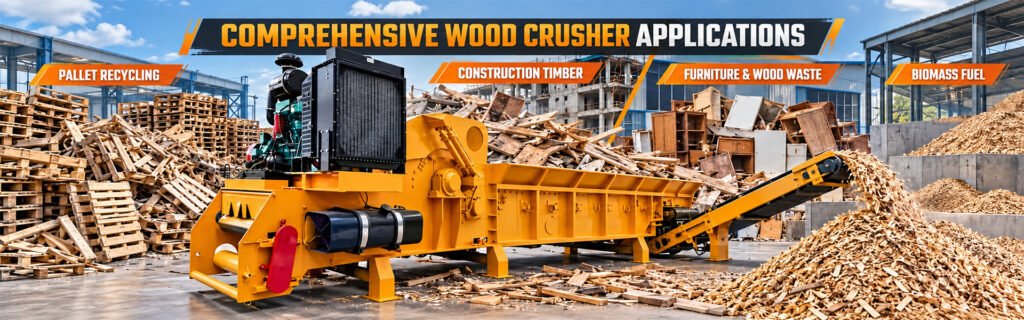
If your main material is mixed waste wood, used furniture, or pallets containing a large amount of metal, compare this machine with an industrial wood crusher.
Large Wood Chipper Reference Configurations
FUDE can provide different configurations for small-diameter wood, logs, branches, slabs, and continuous industrial production.
The following specifications are reference configurations for drum-type industrial chippers. Final capacity, motor power, and feeding equipment should be confirmed according to your project requirements.
Model
Knife Roller Diameter
Feeding Opening
Reference Weight
Recommended Application
FD218
800 mm
280 × 700 mm
7,000 kg
Branches, small logs, slabs
FD2110
1,000 mm
330 × 1,050 mm
12,500 kg
Medium and large wood processing
FD213
1,300 mm
400 × 1,250 mm
18,000 kg
Heavy-duty industrial wood chipping
The final configuration may include a different feeding opening, knife quantity, hydraulic system, conveyor length, motor arrangement, or discharge method.
For an accurate quotation, please provide:
Raw material type
Maximum material diameter
Required output capacity
Desired chip length
Available power supply
Required feeding and discharge method
Installation space
How Does the Large Wood Chipper Work?
The working process includes four main steps.
1. Material Feeding
Logs, branches, or slabs are placed on the feeding table or conveyor. The feeding rollers pull the material into the cutting chamber at a controlled speed.
Hydraulic feeding helps maintain stable pressure when the material has different diameters or irregular shapes.
2. Cutting
The wood enters the knife roller or cutting disc. Sharp replaceable knives cut the wood into chips as the rotor turns at high speed.
The cutting structure is designed for continuous operation and stable chip production.
3. Chip Size Control
Chip size depends on several factors:
Knife position
Knife sharpness
Feeding speed
Rotor or drum design
Wood diameter
Material moisture
Screen or discharge arrangement
The final chip size should be selected according to the next production process. Paper mills, panel factories, biomass plants, and pellet factories may require different chip specifications.
4. Discharge
After cutting, the wood chips are discharged through an outlet, belt conveyor, screw conveyor, or other transfer system.
The discharge system can be connected to a chip storage area, screening machine, dryer, hammer mill, or biomass pellet production line.
What Are the Applications of Wood Chips?
The chips produced by a large wood chipper can be used in different industries.
Pulp and Paper Production
Uniform wood chips are used as raw material for pulp and paper production. Stable chip size helps improve the following pulping process.
Particleboard and Wood Panels
Wood chips can be transferred to a screening, drying, and panel production system. The correct chip size improves material mixing and product consistency.
Biomass Fuel
Clean wood chips can be used as boiler fuel or biomass fuel. The required moisture content and chip size depend on the combustion system.
Biomass Pellet Production
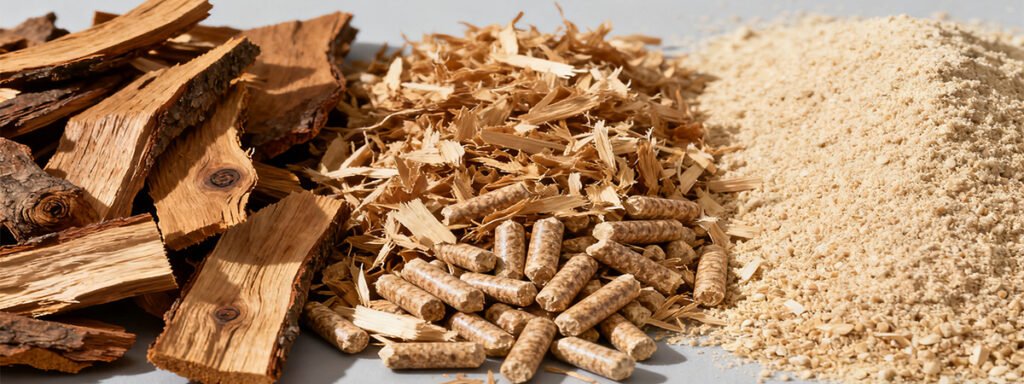
Wood chips are commonly used as an intermediate material for pellet production. A typical process may include chipping, screening, drying, hammer milling, pelletizing, cooling, and packing.
The best choice depends on your wood diameter, required capacity, chip size, and site conditions.
Large Wood Chipper Feeding Options
The feeding system affects machine performance and safety. Common options include:
Manual feeding table
Belt conveyor
Hydraulic feeding rollers
Log feeding platform
Loader-assisted feeding
Automatic feeding line
For irregular branches and mixed-length logs, hydraulic feeding rollers can help maintain a stable cutting process.
For a complete production line, the chipper can be connected with conveyors, magnetic separators, screening machines, dryers, hammer mills, and storage systems.
Electric or Diesel Power?
The power system should be selected according to your working environment.
Electric drive is usually suitable for factories with a stable power supply. It is easier to integrate into an automated production line.
Diesel or engine-driven systems may be suitable for forestry sites, outdoor operations, or locations without a stable grid connection.
FUDE can help you select the drive system according to:
Local voltage and frequency
Available power supply
Required production capacity
Fixed or mobile operation
Installation environment
Local service conditions
The exact motor power should be confirmed after reviewing the raw material and capacity requirements.
Installation Requirements
A large wood chipper requires a solid installation foundation and enough space for feeding, maintenance, and chip discharge.
Before installation, prepare:
A level concrete foundation
Enough space for raw material storage
A safe loading area
Space for chip conveyors
Electrical power or fuel supply
Access for maintenance
Proper dust and noise control
Safe operator walking areas
The machine should be installed by qualified technicians. Operators should receive training before starting regular production.
Knives should be checked regularly. Blunt knives increase power consumption and may reduce chip quality.
Before opening the cutting chamber, stop the machine, disconnect the power supply, and follow the required lockout procedure.
How Much Does a Large Wood Chipper Cost?
The price of a large wood chipper depends on the complete configuration. Important cost factors include:
Chipper model
Knife roller or disc size
Feeding opening
Motor or engine power
Feeding conveyor
Hydraulic system
Discharge conveyor
Control cabinet
Spare knives
Installation requirements
Shipping destination
A machine with a larger feeding opening and heavier cutting system normally requires a higher investment. A complete line also costs more than a standalone chipper.
For this reason, FUDE recommends selecting the machine according to the actual material and production target instead of choosing only by price.
How to Choose the Right Large Wood Chipper
Use the following steps before requesting a quotation.
Step 1: Identify Your Raw Material
Tell us whether you process logs, branches, slabs, pallets, bamboo, or another material.
Step 2: Measure the Largest Material
Provide the maximum diameter, length, thickness, and average moisture content.
Step 3: Confirm Your Production Target
Tell us the required output per hour and whether the machine will operate continuously or intermittently.
Step 4: Select the Desired Chip Size
Different applications require different chip sizes. Confirm the required size with your next production process.
Step 5: Choose the Feeding Method
A conveyor, hydraulic roller, loader platform, or automatic feeding system may be required depending on the raw material.
Step 6: Confirm the Installation Conditions
Provide the available voltage, workshop dimensions, foundation conditions, and discharge direction.
After receiving this information, FUDE can recommend a suitable machine configuration and provide a quotation.
Frequently Asked Questions
What is a large wood chipper used for?
A large wood chipper is used to process logs, branches, slabs, and forestry residue into wood chips for pulp, paper, panels, biomass fuel, and pellet production.
Can it process wet wood?
It can process many types of wet wood, but moisture affects feeding, cutting, chip quality, and downstream drying requirements. Please provide the average moisture content before selecting the machine.
Can it process wood with nails?
Clean wood is recommended. Wood containing nails or metal should be sorted first. If the material contains a large amount of metal, an industrial wood crusher and metal separation system may be more suitable.
Can the chip size be adjusted?
Chip size can be affected by the knife setting, feeding speed, rotor structure, and material condition. The final configuration should be selected according to your required application.
Does FUDE provide complete production lines?
Yes. FUDE can help configure a wood chipping system with feeding, conveying, screening, drying, grinding, pelletizing, and storage equipment according to the project requirements.
What information is needed for a quotation?
Please provide the raw material, maximum diameter, required output, desired chip size, power supply, feeding method, and destination port or delivery location.
Request a Large Wood Chipper Configuration
A suitable large wood chipper should match your raw material and production process.
Send FUDE the following information:
Raw material photos or videos
Maximum material diameter
Required output capacity
Desired chip size
Moisture content
Power supply
Feeding and discharge requirements
Installation location
Our team can recommend a suitable configuration, prepare technical information, and provide a quotation for your project.
Contact FUDE today for a large industrial wood chipper solution.
Horizontal wood splitter, suitable for board making, paper making and other manufacturers producing wood chips, is ideal for auxiliary production of wood chip equipment. The wood splitter is the core equipment in the field of woodchip processing, ...
A wood chipper machine cuts logs, branches, bamboo, and other woody materials into uniform wood chips. At FUDE Machinery, we configure wood chippers according to your raw material, required capacity, feeding size, power supply, and target chip siz...
Sawdust Crusher is a highly efficient and multi-functional wood processing equipment designed for crushing wood waste (such as branches, chips, trimmings, bark, bamboo, etc.) and fibrous materials (such as corn stalks, sorghum stalks, thatch, etc....
What is a dryer boxes? The box dryer is designed and manufactured specifically for drying sawdust, wooden boards, and veneer. It has the characteristics of high drying output, significant energy-saving effects, and low maintenance.Mainly comp...
 Fude Machinery-wood crusher manufacturer



HelloPlease log in