 Fude Machinery-wood crusher manufacturer
What will be the trend of the wood crusher market in the next 5 years
478These trends will bring new opportunities and challenges to the development of the wood crusher industry
View detailsSearch the whole station Products
Fish farming needs good feed. Bad feed wastes money and hurts fish health. What is the best feed choice?
The best fish feed depends on the fish species, age, and farming goal. It needs balanced nutrients, high digestibility, and often comes as stable pellets that float or sink properly. Quality feed ensures healthy growth and higher yields.
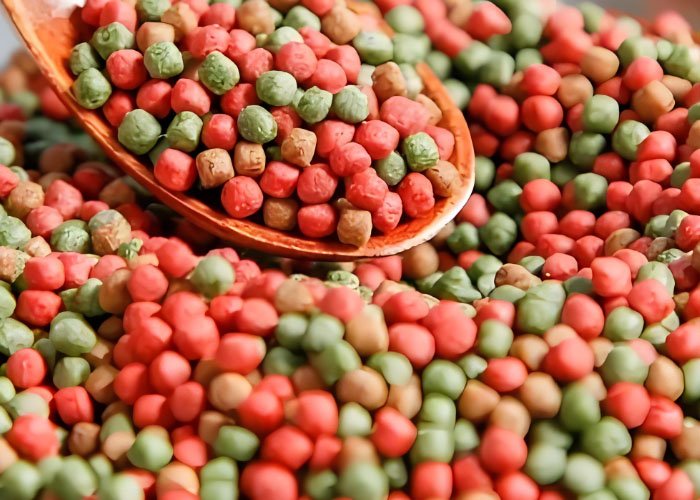
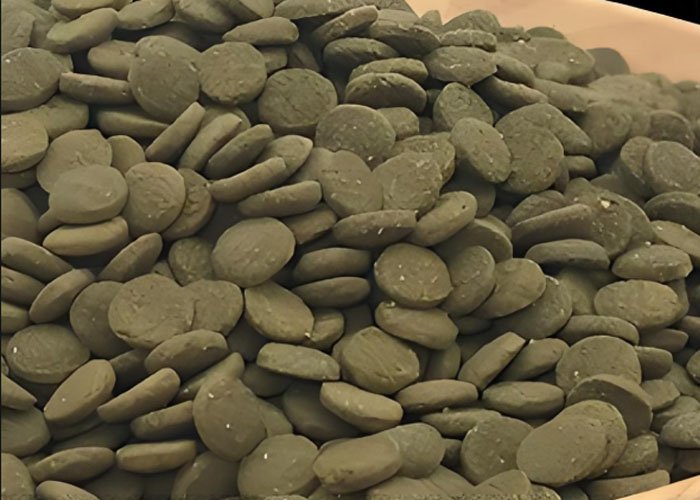
Finding the right feed is important. But how is good fish feed actually made? The process matters just as much as the ingredients.
You buy fish feed. Is it good quality? Poor feed means slow growth. Learn good feed qualities.
Good fish feed has the right protein, fat, carbohydrate, vitamin, and mineral balance for the specific fish. It must be highly digestible. It also needs to stay together in water, especially for pellets.
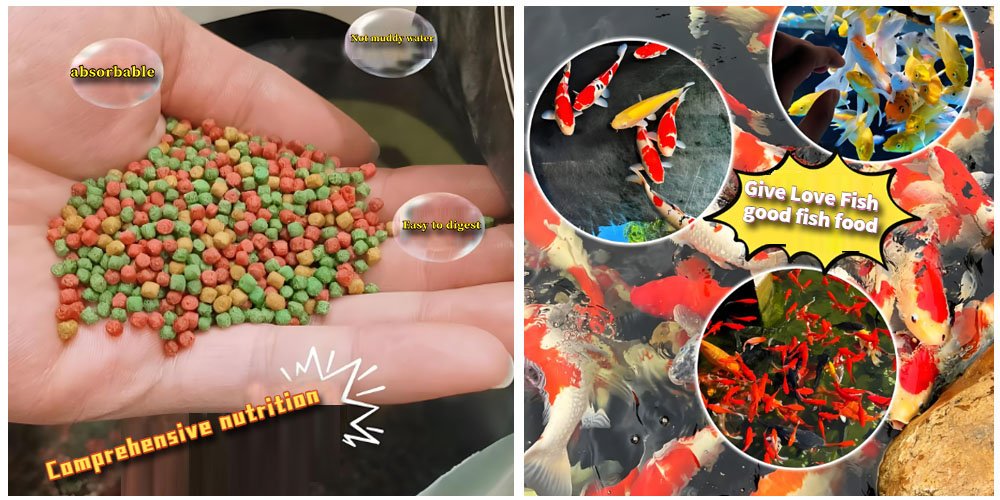
Good fish feed is not just one thing. It has many important parts. These parts work together. They make the fish grow well and stay healthy. Without these parts, the fish will not do well. You need the right mix for your fish. Different fish types need different things. Young fish need different things than old fish. The goal of farming also changes what feed is best.
Fish need protein. Protein helps them grow muscle. Fish also need fats. Fats give them energy. Carbohydrates give energy too. But fish use fats better for energy than carbohydrates. Fish need vitamins. Vitamins help their bodies work right. They also need minerals. Minerals build bones and other body parts. A good feed has all these in the right amounts. Too much of one thing or too little of another is bad. The recipe must be correct.
Fish must use the feed. They eat it. Then their body breaks it down. This is digestion. The feed must be easy for the fish body to break down. If it is hard to digest, the fish does not get the nutrients. The feed passes through the fish. This is a waste of food. It is also bad for the water. Undigested food makes the water dirty. Dirty water is bad for the fish farm. Good feed is made from things fish can digest well.
Most fish eat in water. The feed goes in the water. It must stay solid. It must not fall apart fast. If feed falls apart fast, nutrients go into the water. Fish cannot eat dust. They eat pieces. If the feed becomes dust in water, it is lost. This is waste. It makes the water dirty. Good feed stays solid in water for some time. This is very true for pellet feed. Pellets must hold their shape. This lets the fish eat them. It keeps the water clean. The way the feed is made helps it stay stable.
Fish feed comes in many shapes. Flakes, powders, pellets. Which is best? Wrong shape means waste.
Pellet feed is often best for commercial fish farming. It is dense, has low dust, sinks or floats controllably, and nutrients are bound together. This reduces waste and water pollution.
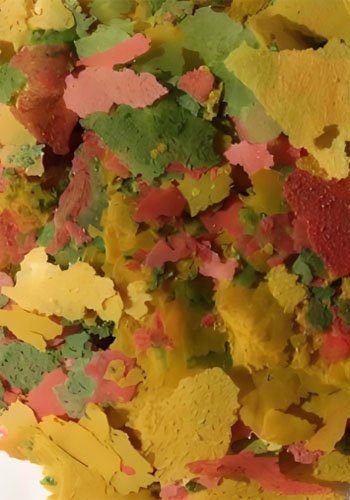
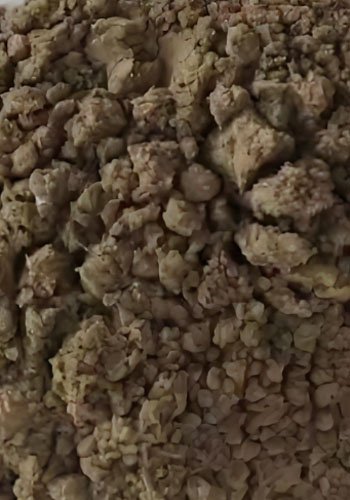
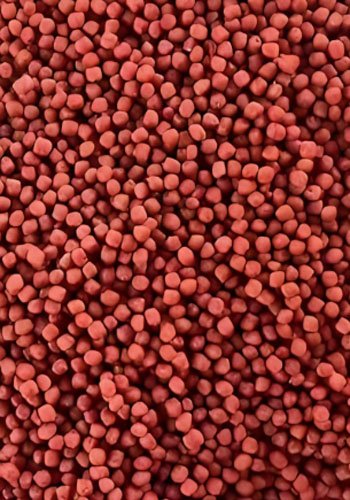
Fish feed comes in different forms. Flakes are very small and flat. Powder is like dust. Pellets are small, hard pieces. For small fish, flake or powder might work. But for bigger fish and for farming many fish, pellets are usually the best. Pellets are made using pellet machine. These machines make the feed into a good shape. The shape helps the farmer and the fish. It makes feeding easier. It makes the farm better.
Pellets have many good points. They are dense. This means you can store more feed in a smaller space. They have very little dust. Dust is bad for fish. It can hurt their gills. Pellets are also easy to handle. You can put them in feeders easily. Pellets hold all the ingredients together. Every pellet should have the same nutrition. This means each fish gets balanced food. With powder or flakes, small bits might separate. Nutrients might not be even.
Flakes and powders have problems for large farms. They create dust. This dust is bad. They do not stay in the water well. Much of the flake or powder can dissolve or float away fast. This means less food for the fish. It also makes the water dirty very quickly. Dirty water has less oxygen. It can harm the fish. Feeding large ponds or tanks with flakes or powder is hard. Much of the feed can be lost. This costs the farmer money.
The shape of the feed changes how fish eat it. Some fish eat at the top of the water. Some eat in the middle. Some eat at the bottom. Pellets can be made to sink fast or slow. They can also be made to float. This depends on how they are made. This lets farmers feed different types of fish in the same farm. Or they can feed the same fish type at the right level. This makes sure the fish find the food. It makes sure they eat it.
What goes into fish food? It is not just fish meal. Knowing ingredients helps you choose.
Fish feed uses various ingredients for balanced nutrition. Common materials include fish meal, soy meal, corn, wheat, animal by-products, vitamins, and minerals. The mix depends on the fish.
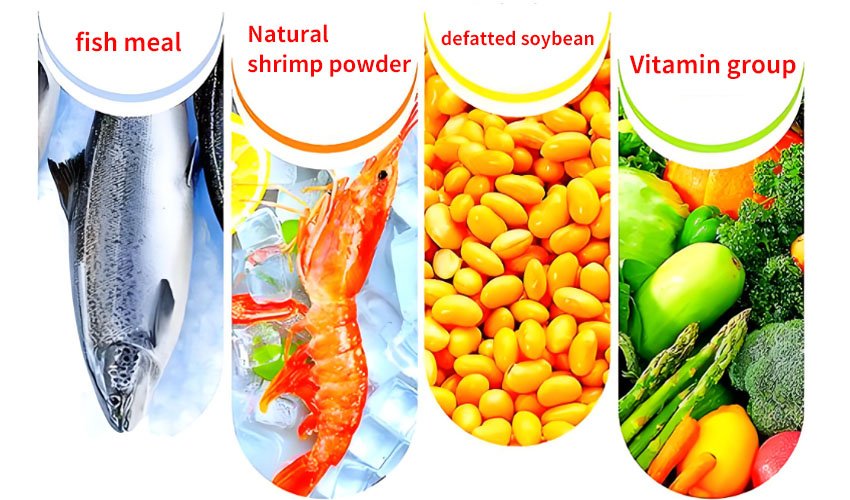
Fish feed recipes are complex. They use many different raw materials. These materials provide the protein, energy, and other nutrients fish need. The exact list of ingredients changes. It depends on the type of fish. It depends on the fish’s age. It also depends on the price and availability of ingredients. Farmers want to use ingredients that are good for the fish and not too expensive. All these materials need to be processed first. They must be ground into small pieces. Then they are mixed together.
| Ingredient Category | Examples | Main Benefit | Preparation Needed |
|---|---|---|---|
| Protein Sources | Fish meal, Soy meal, Corn meal | Growth | Grinding, Mixing |
| Energy/Binders | Corn, Wheat, Oils | Energy, Pellet Shape | Grinding, Mixing, Heating |
| Vitamins/Minerals | Vitamin/Mineral Premix | Health, Body Functions | Careful Mixing |
Making good pellets is key. Raw stuff becomes feed pellets. What is the process?
Fish feed pellets are made by grinding ingredients, mixing them, conditioning with steam, and then pushing the mix through a die in a pellet mill. Drying and cooling follow to ensure stability.
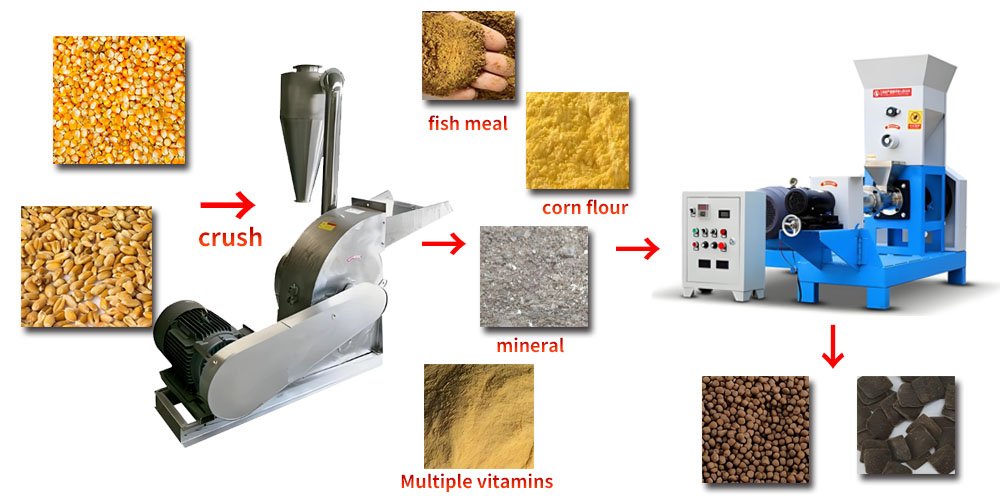
Making fish feed pellets is a process with several steps. Each step is important. If one step is done wrong, the final pellet might be bad. The feed will not have the right quality. It might fall apart in water. It might not have the right nutrients in each piece. The process starts with raw materials. It ends with finished pellets. This requires special machines at each stage. This includes grinders, mixers, and especially pellet machines. The right machinery makes good pellets.
| Process Step | Purpose | Key Machine Used | Result |
|---|---|---|---|
| Grinding | Make ingredients small | Crusher, Grinder | Fine powder/meal |
| Mixing | Blend all ingredients evenly | Mixer | Uniform feed mix |
| Conditioning | Add heat and moisture | Conditioner (with steam) | Soft, sticky mix |
| Pelletizing | Form dense pellets | Pellet Mill | Hot, moist pellets |
| Cooling and Drying | Remove heat and moisture | Cooler, Dryer | Hard, stable pellets |
Want good feed pellets? A key machine is needed. What machine makes pellets?
A pellet machine is essential because it forms the mixed feed into dense, durable pellets. This process locks in nutrients, improves water stability, reduces dust, and makes feeding efficient. It is the heart of pellet production.
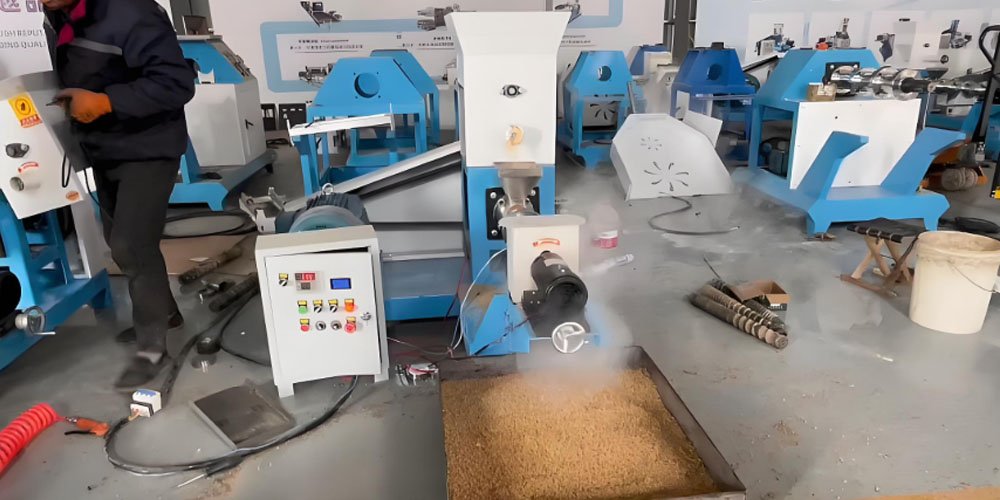
Making fish feed in pellet form is not possible without a pellet machine. This machine is the most important part of the pellet production line. It takes the prepared mix and gives it the shape and structure needed for good fish feed. The quality of the pellet machine affects the quality of the final pellet. A good machine makes strong, uniform pellets. A bad machine makes weak pellets that break easily. This leads to waste and problems on the fish farm.
A good pellet machine makes pellets that are all very similar in size and shape. Why is this important? It means that when you feed the fish, every fish gets a pellet that is about the same. This helps ensure all fish grow at a similar speed. It also means that automatic feeders work better. Machines that spread feed rely on the pellets being uniform. If pellets are different sizes, the feeder cannot spread them evenly. Uniform size also helps with controlled sinking or floating.
The pelletizing process in the machine uses pressure and heat (from conditioning and friction). This process helps bind the ingredients together tightly. It locks the nutrients inside the pellet. This binding is key for water stability. A well-formed pellet will stay together in water for a long time. This gives the fish enough time to find and eat the feed. The machine also helps create floating or sinking pellets by using different methods or dies. Floating pellets are good for fish that eat at the surface. Sinking pellets are for fish that eat lower down.
Using pellet feed makes fish farming more efficient. Because pellets are dense and uniform, they are easy to store, transport, and feed using machines. Less feed is wasted because the pellets are stable in water and easy for fish to eat. This saves money on feed costs. It also means less pollution in the water from wasted food. The pellet machine makes this efficient form of feed possible. It is an investment that pays off for large-scale fish farms.
Choosing the best fish feed means looking at nutrients, form, and how it is made. Quality pellets made with reliable machines are vital for success.
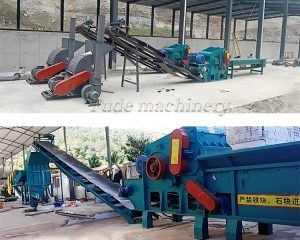
These trends will bring new opportunities and challenges to the development of the wood crusher industry
View details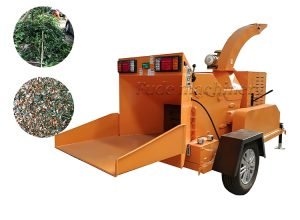
Branch crushers play an important role in resource recycling, environmental protection, and sustainable development
View details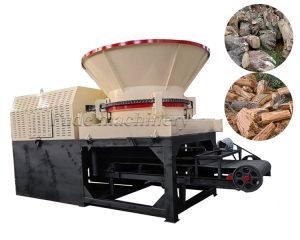
It is a machine that crushes large materials such as tree stumps into sawdust
View details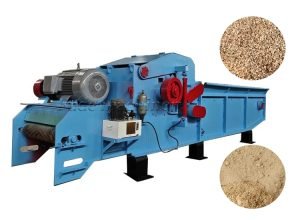
A wood crusher is a machine specifically designed for processing wood waste
View details
HelloPlease log in