Pellets are solid fuels manufactured from biomass materials such as agricultural and forestry waste. Emerging from the wave of biomass energy, pellets have become a popular eco-friendly clean energy source in the market. They not only expand options for energy utilization but also open new avenues for profitability.
Pellets serve diverse purposes, including biofuel, animal feed, power generation, and fertilizer. Biofuel represents one of their most common applications. We will analyze the production processes and uses of pellets made from various raw materials.
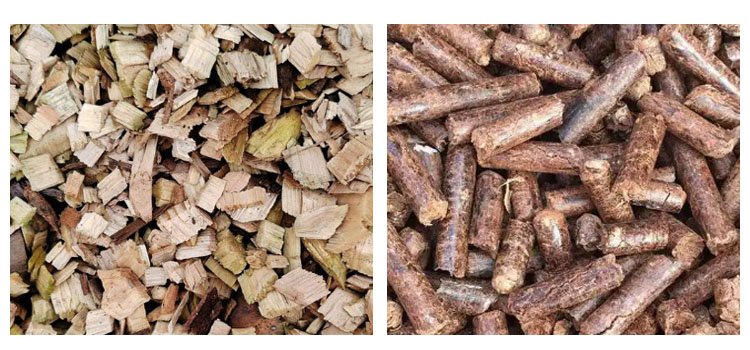
The most common answer to “what are pellets made out of” is wood. This is the classic material for high-quality biomass pellets. Wood pellets have a high energy density and burn very cleanly. The source of this wood is typically waste from other industries. This means you do not need to cut down fresh trees. Instead, you can use byproducts from sawmills, furniture factories, and logging operations. These businesses produce huge amounts of sawdust, wood shavings, wood chips, and offcuts. For them, it is a waste product that they often have to pay to get rid of. For you, it is a perfect raw material.
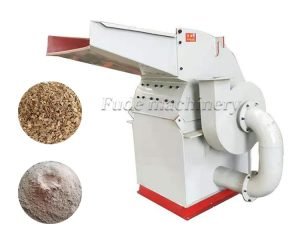
This is a very profitable business model. You take a waste product from another industry and transform it. Ourwood crusher is the first step. It can take larger pieces like branches or offcuts and break them down. Then, our specialized sawdust machine can process the material into a fine, uniform powder. This powder is then ready for the pellet mill. By setting up a pellet plant near these wood processing industries, you secure a cheap and steady supply of raw material. This turns a disposal problem for them into a profitable opportunity for you.
Wood chips generated during wood processing
Beyond wood, a huge range of agricultural waste is also an excellent answer to what are pellets made out of. After a harvest, farms are left with tons of leftover material. This includes things like wheat straw, corn stalks, rice husks, cotton stalks, and sugarcane bagasse. In many places, this material is either left to rot in the field or burned, which causes pollution. This presents a massive opportunity for a new business. You can collect this agricultural residue and use it as the raw material for biomass pellets. These pellets may have slightly different burning characteristics than wood pellets, but they are an excellent fuel for industrial boilers.
This creates a new revenue stream for the agricultural sector. As a business owner, you can turn this widely available and very low-cost material into a valuable product. Our complete wood pellet production line can be designed to handle these specific materials. Because agricultural residues can be bulky, our mobile crushers are also a great option. You can take the machine directly to the farm to do the initial processing. This reduces your transportation costs. It is a smart way to create value from something that was previously considered garbage.
The carbon dioxide released during wood pellet combustion is largely offset by the carbon dioxide absorbed by trees during their growth, forming a “carbon cycle” that significantly reduces net greenhouse gas emissions.
The calorific value of wood pellets typically ranges from 4200 to 4800 kcal/kg, comparable to some low-grade coal (such as lignite), but with higher combustion efficiency.
High density (1.1–1.4 g/cm³), compact structure, stable flame during combustion, reducing unburned carbon loss.
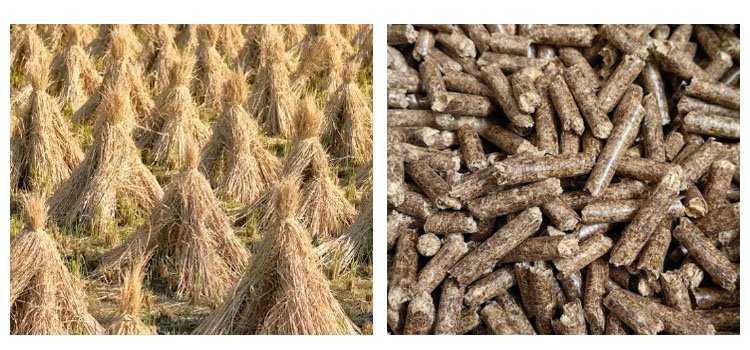
Straw pellets, as a type of biomass pellet, are manufactured from agricultural crop residues such as wheat straw, corn stalks, and rice straw. Through processes of crushing and high-temperature, high-pressure compression molding, they offer multiple advantages including environmental sustainability, high efficiency, and cost-effectiveness.
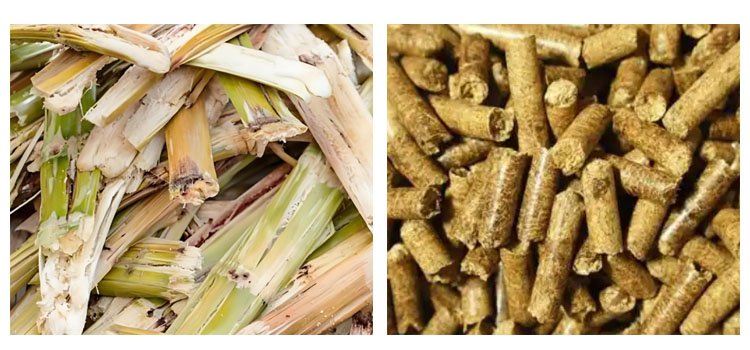
Sugarcane bagasse pellets, as a type of biomass pellet, utilize the residue left after sugar extraction from sugarcane as raw material. They offer significant advantages such as environmental friendliness, low carbon footprint, high renewability, low cost, and broad applicability.
As a substitute for coal in boiler heating, drying equipment, and steam generators, fuel costs amount to 80% of coal and 55% of natural gas.
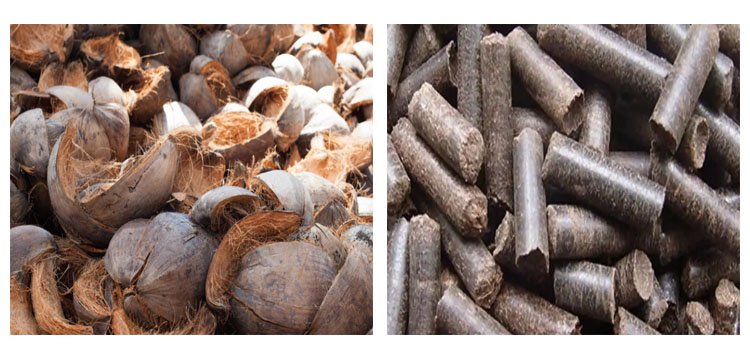
Activated Carbon Production: Coconut shell pellets serve as premium raw material for manufacturing high-quality activated carbon, widely used in gas purification, exhaust gas treatment, and solvent recovery.
Biomass Fuel: Can be processed into coconut shell fuel pellets for use in boiler heating, drying equipment, steam generators, and other applications, replacing coal and natural gas.
Can industrial waste be used to produce pellet fuel?
Yes, the list of what pellets are made out of extends to other industrial and even post-consumer waste. The key principle of pelletizing is densifying any combustible biomass. This opens the door to some unique raw materials. For example, waste paper and cardboard from recycling centers can be pelletized. This creates a fuel with a consistent quality. In tropical regions, waste from processing coconuts (coconut shells and husks) and palm oil production (empty fruit bunches) can be used. These are very tough and fibrous materials, but with the right crushing and drying equipment, they make excellent, high-energy pellets.
This shows the true flexibility of our equipment. As a manufacturer, we have experience with a huge range of materials. We can customize the dies on our pellet mills and the settings on our crushers to handle your specific type of waste. Do you have access to a large supply of a unique biomass byproduct? Contact us. We can analyze your material and design a production process. This is our strength as a factory-direct B2B partner. We provide customized solutions to help you turn your specific waste stream into a profitable pellet business. The possibilities are much wider than just wood.
Raw Material Type
Common Examples
Key Benefit for Your Business
FUDE Machine Focus
Wood-Based Waste
Sawdust, wood chips, branches
High energy content, clean burning
Heavy-duty wood crusher, sawdust machine.
Agricultural Residue
Straw, corn stalks, rice husks
Very low cost, widely available
Mobile crusher, customized pellet line.
Industrial/Other Waste
Paper, coconut shells, bagasse
Turns unique waste into profit
Customized crushing and pelletizing solutions.
Feed Materials
Corn, soybean meal, grass
Create high-value animal feed
Specialized feed pelletizer machines.
What are feed pellets made out of?
It is important to know that the term ‘pellets’ can also refer to animal feed. When we talk about what are pellets made out of in the context of agriculture, the ingredients are completely different, but the technology is similar. Feed pellets are not made for burning. They are a carefully formulated mix of ingredients designed for animal nutrition. These raw materials can include corn, wheat, soybean meal, alfalfa, grass, and various vitamin and mineral premixes. The goal is to create a dense, complete and easy-to-digest food for livestock, poultry, and fish.
The technology of densification is central here. The general processes of pelleting and briquetting are about making loose materials dense. For feed, this process makes the feed easier to store and transport. It also prevents animals from selectively eating only their favorite ingredients. Each pellet contains a balanced mix of all the required nutrients. We also manufacture specialized feed pellet machines for this application. If your business is in agriculture, you can use our equipment to produce your own high-quality animal feed. This can significantly reduce your operating costs compared to buying pre-made feed.
Applications of Particles in the Industry
Biomass Pellet Fuel: Manufactured from agricultural and forestry waste (such as straw, rice husks, wood chips) through compression molding technology.
Residential Heating: Replaces coal with high combustion efficiency and low pollutant emissions, improving indoor air quality.
Industrial heating: Supplies thermal energy to industries including papermaking, food processing, and chemicals, reducing corporate reliance on traditional fossil fuels.
Power generation: Biomass power plants utilize pellet fuel to generate steam, driving turbine generators to produce electricity with significantly lower carbon emissions than fossil fuels.
Biomass pellets as organic fertilizer: The ash residue from burned biomass pellets is rich in trace elements such as potassium, phosphorus, and calcium.
Application: Enhances soil fertility and provides nutrients for crops.
Advantages: Enables the recycling of agricultural waste and reduces environmental pollution.
Equipment for Making Pellets – Biomass Pellet Machine
Biomass pellet machine is a biomass energy pretreatment equipment, mainly used to use agricultural and forestry processing waste such as sawdust, straw, rice husk, bark and other biomass as raw materials. Through pretreatment and processing, it solidifies into high-density pellet fuel. This granular fuel can replace firewood, raw coal, fuel oil, liquefied gas, etc., and is widely used for heating, household stoves, hot water boilers, industrial boilers, biomass power plants, etc.
Feed pellet machine, which uses corn, soybean meal, straw, grass, rice husk and other raw materials as raw materials, directly presses them into pellet feed after crushing the raw materials. It is widely used in large, medium and small aquaculture, grain and feed processing plants, livestock farms, poultry farms, individual farmers and small and medium-sized farms.
Questions Regarding Granule Forming
Question 1: What is the best raw material for making pellets? The “best” material is the one that is most available and affordable for your business. Wood is popular for its high energy content. But agricultural waste like straw can be very profitable if it is abundant in your area. Our engineers can help you test your specific material.
Question 2: Do I need to add a binder when making pellets? For most wood materials, you do not need a binder. The natural lignin inside the wood acts as a glue when heated under pressure. For some agricultural materials with low lignin content, a natural binder like starch may be needed. We can advise you on this.
Question 3: Can I mix different raw materials to make pellets? Yes, you can. Mixing materials is a great way to improve pellet quality or use various types of waste. For example, mixing sawdust with straw can create a very good pellet. Our technicians can help you find the best ratio for your materials.
Question 4: Does the raw material need to be dry? Yes, this is very important. For successful pelleting, the moisture content of your raw material should be between 12% and 15%. If it is too wet, you will need a rotary dryer to reduce the moisture before it goes into the pellet mill. We provide these as part of our complete production lines.
Start Your Pellet Mill Business
So, what are pellets made out of? The answer is: almost any biomass waste you can find. From the sawdust on a factory floor to the straw left in a field, a huge variety of materials can be transformed into valuable fuel or feed pellets. This is what makes the pellet business so attractive. You can build a successful company based on the specific low-cost resources available in your region. The key is having the right machinery.
The most important factor is a reliable and efficient production line that is tailored to your specific raw material. That is what we specialize in at FUDE Machinery. As a factory-direct manufacturer, we provide complete, customized solutions. We can supply everything from the initial crusher and dryer to the final pellet mill and packaging machine. If you have a source of biomass waste and want to turn it into profit, we have the engineering expertise and the equipment to make it happen.
Contact us today to discuss your raw material. We will provide a professional and competitive solution for you.
In the thriving charcoal industry, the charcoal making machine price plays a crucial role for charcoal producers and manufacturers. The affordability and cost-effectiveness of these machines directly impact the profitability and competitiveness of...
Need power? Want to use natural materials? Biomass energy is a good choice. It uses organic stuff for power. The main sources of biomass energy are wood and forest residues, agricultural crops and residues, waste materials, and energy crops. These...
The principle of a wood crusher is mainly based on the dual effects of mechanical cutting and high-speed airflow impact. Here is a detailed explanation: Wood crushers have a wide range of applications in various fields such as wood processing, bio...
 Fude Machinery-wood crusher manufacturer



HelloPlease log in